About Flacourtia indica (Burm.fil.) Merr.
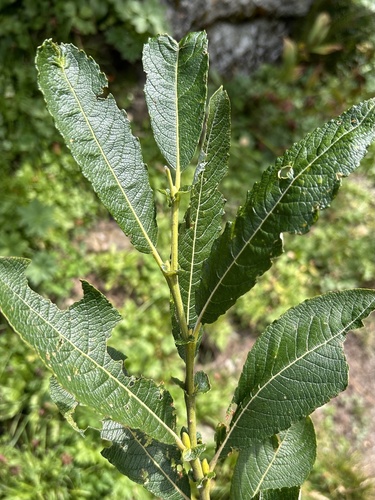
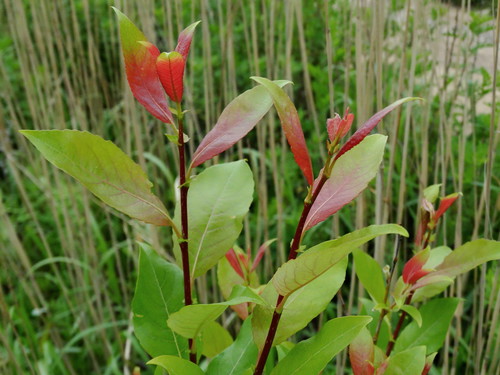
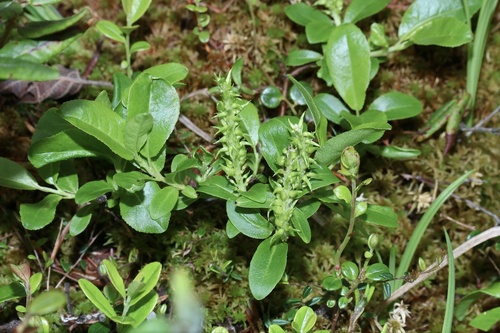
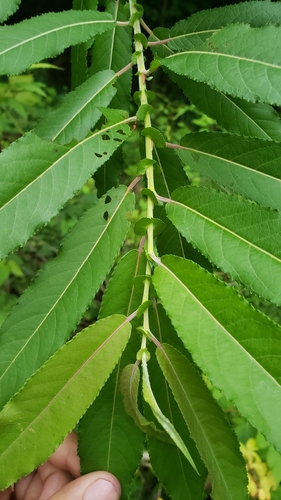
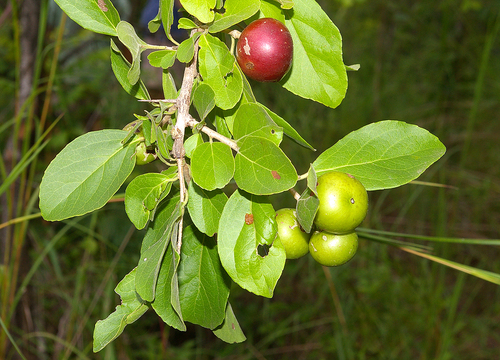
Flacourtia indica (Burm.fil.) Merr. is a bushy spiny shrub or tree. It grows up to 25 feet (7.6 m) tall when in shrub form, and reaches a maximum height of around 50 feet (15 m) when growing as a tree. Its drooping branches hold oval leaves, and birds disperse the plant's seeds. The thorns of this tree are similar to those of lime or lemon trees; contact with the thorns causes a nasty stinging pain. This species is native to Bangladesh, Botswana, Burundi, Cambodia, southeastern China and Hainan (China), Comoros, Democratic Republic of the Congo, Republic of the Congo, Ethiopia, Assam and the Laccadive Islands (India), Java, the Lesser Sunda Islands and Sulawesi (Indonesia), Kenya, Laos, Madagascar, Malawi, Malaysia, Mozambique, Myanmar, Namibia, Nepal, Pakistan, Philippines, Rwanda, Aldabra (Seychelles), Singapore, Somalia, Sri Lanka, Cape Provinces, KwaZulu-Natal and Northern Provinces (South Africa), Sudan, Tanzania, Thailand, Uganda, Vietnam, Zambia and Zimbabwe. It has been introduced to Angola, Bahamas, Chad, Dominican Republic, Hawaii, Jamaica, Leeward Islands, Mauritius, Nicobar Islands, Puerto Rico, Réunion, Society Islands, and Trinidad and Tobago. The ramontchi fruit of Flacourtia indica is around an inch thick, red when unripe and purple when ripe. It is very fleshy, and holds 6 to 10 seeds in layered carpels. Its pulp is yellow or white, sweet with an acidic tang. The fruit is eaten raw, or made into jelly or jam, and can be fermented to make wine. The plant's leaves and roots are used in herbal medicine to treat snakebite. Its bark is considered effective for treating arthritis. Most parts of the plant are used to treat cough, pneumonia, and bacterial throat infection, and it has also been used to treat diarrhoea. In India, it is used in folk medicine to treat functional disorders including rheumatoid arthritis and gout. Its berries are edible; bark can be ground with sesamum oil and used to address rheumatism. The fruit extract has documented diuretic, hepatoprotective, and antidiabetic properties (Patro et al. 2013). Flacourtia indica contains the glucoside flacourside and the ester flacourtin, and antimalarial compounds have been found in its aerial parts. The tree is planted as a living fence, and was one of the species used for the Indian Inland Customs Line. Its wood is used for firewood and small wooden tools such as plough handles. This plant is recognized as an occasionally invasive introduced species in some locations. It has been cultivated in Florida, United States, and now grows as a weed in some parts of the state.