About Ficus villosa Blume
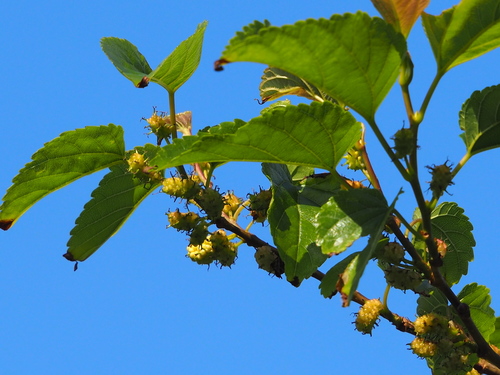
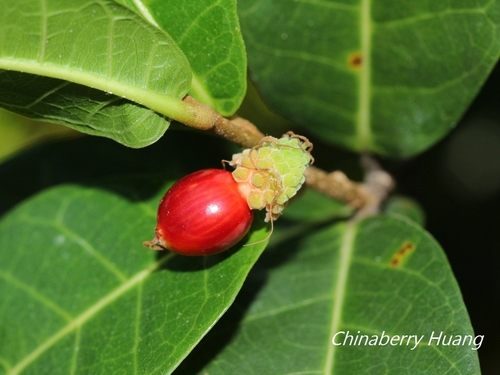
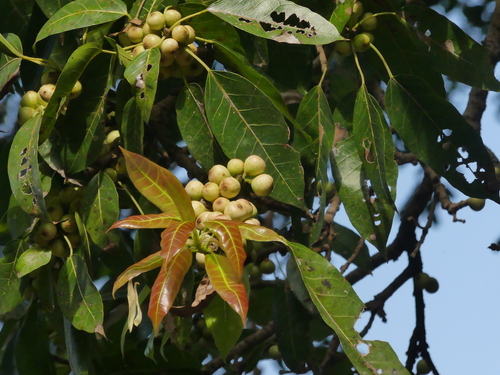
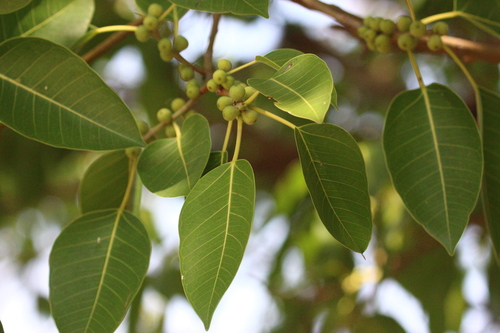
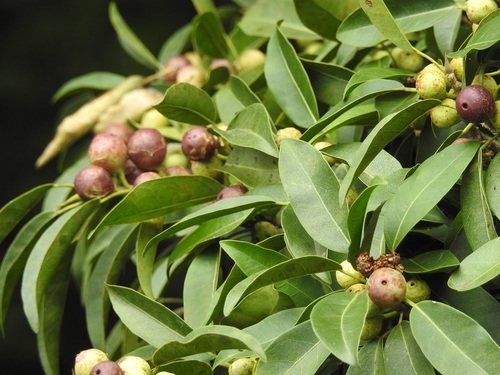
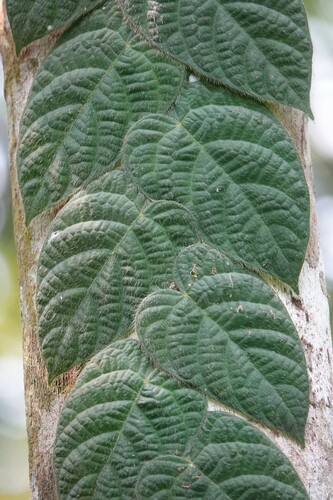
Ficus villosa Blume (F. villosa) is a climbing vine. It has been recorded reaching 2.4 meters in length when grown in home gardens, while in the wild it grows several feet high up tree trunks. Mature plants produce alternate, stalked leaves with thick, leathery leaf blades up to 30 centimeters long; the upper surfaces of these mature leaves have sunken venation. Juvenile leaves of Ficus villosa are heart-shaped, hairy, and measure around 3 to 6 centimeters. Juvenile leaves start out reddish, and fade to green as they mature. The stems of this species are woody, and release latex when cut. Its flowers are small, inconspicuous, and cream-coloured; after flowering, the plant develops round orange fruits. Ficus villosa is distributed across Southeast Asia, ranging from northeast India and southern China, south to Java, Sulawesi, and the Maluku islands of Indonesia. It occurs at altitudes up to 1700 meters, growing mainly in primary forests, secondary forests, and swamp forests. It grows prolifically within the Singapore Botanic Gardens, where it is often seen growing scandent on Calophyllum inophyllum trees. Ecologically, Ficus villosa is pollinated by fig wasps, and its seeds are primarily dispersed by birds and small mammals.