About Ficus sur Forssk.
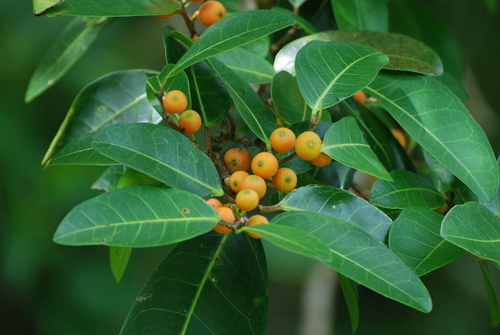
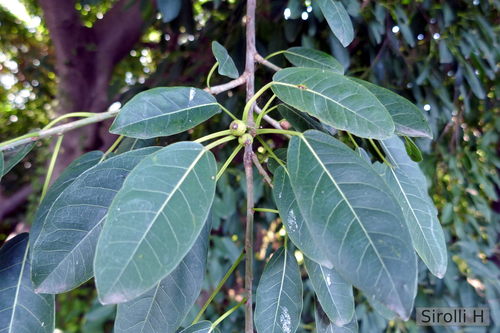
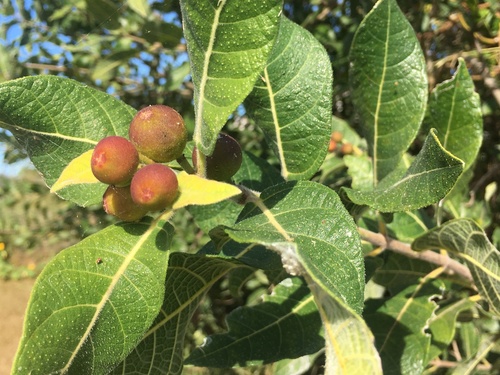
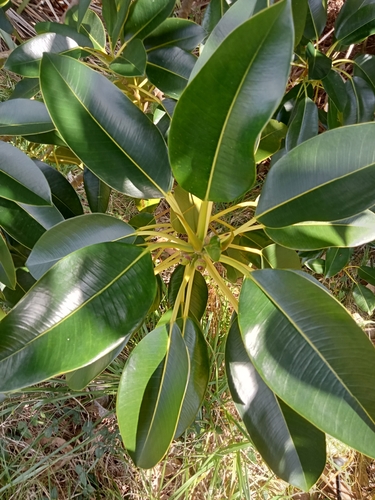
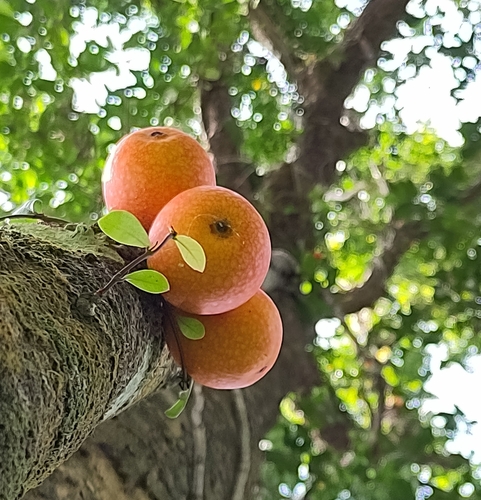
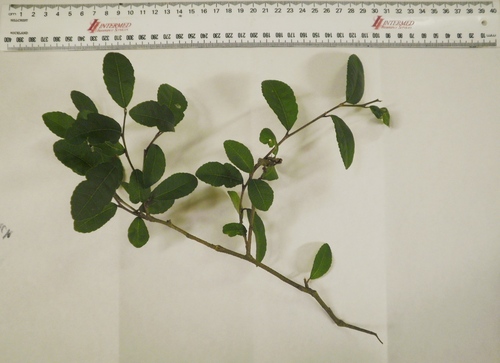
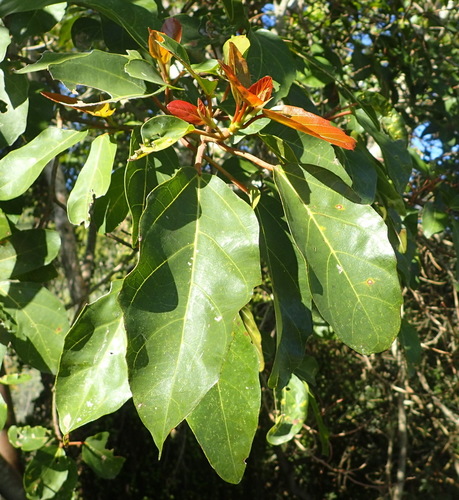
Ficus sur Forssk. is a fast-growing tree that can be either deciduous or evergreen. It typically reaches a height of 5–12 metres (16–39 ft), though it can grow as tall as 35–40 metres (115–131 ft). Large mature specimens develop a massive spreading crown, fluted trunks, and buttress roots. Its large leaves are alternate and spirally arranged, shaped ovate to elliptic, with irregularly serrated margins. Fresh foliage is a distinct red colour, and the papery, 1 cm long stipules are shed early. The bark of young Ficus sur is smooth and pale greyish-white, which differs from the flaky yellow bark of Ficus sycomorus. As the tree ages, its bark becomes darker and rough. The figs of Ficus sur grow on short or long drooping spurs, also called fascicles, that can emerge from surface roots, the trunk, or most often lower main branches. The figs measure 2–4 cm in diameter, and develop a rosy, speckled outer surface when ripe. Fig seeds are dispersed after passing through the intestinal tracts of birds, bats, and primates. Ficus sur ranges from Cape Verde and Senegambia across tropical West Africa to Cameroon and the Central African Republic, extends east to Eritrea, northern Somalia, and Yemen, and reaches south through all tropical eastern and southern African countries. It does not grow in Lesotho, or the dry interior regions of Botswana, Namibia, or South Africa. The species occurs in tropical forests and grassy woodlands, and grows at higher densities in well-watered, temperate upland habitats. It is absent or outnumbered in lower, warmer climates by Ficus sycomorus, a similarly cauliflorous species. In cooler climates it grows as a coastal tree, and in warmer interior climates it can be found at elevations up to 2,500 metres (8,200 ft). Across its large range, Ficus sur varies in leaf shape, texture of leaves and figs, deciduousness, and overall size. The figs of Ficus sur are edible, and are eaten fresh or dried by native people across many regions. They can also be used to make fig preserve when combined with other suitable fruits. Because their heavily clustered growth pattern suggests fertility, some Ficus sur trees in East Africa are venerated as sacred shrines in animist practices. The wood of the tree is light and soft, so it is not widely used commercially. All parts of the tree may exude latex, which has been used in traditional medicine. Latex from Ficus sur contains ursene and oleanane triterpenoids; oleanane triterpenoids may be effective for cancer treatment. A methanolic extract from the tree's roots is potentially effective against chloroquine-resistant malaria.