About Ficus salicifolia Vahl
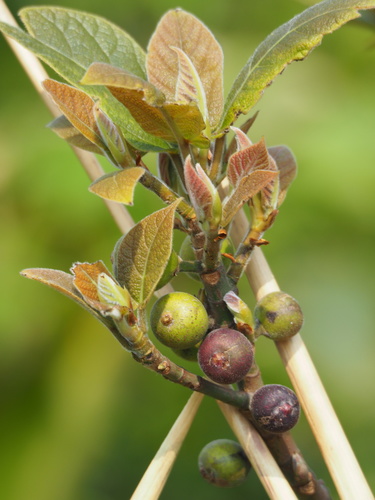
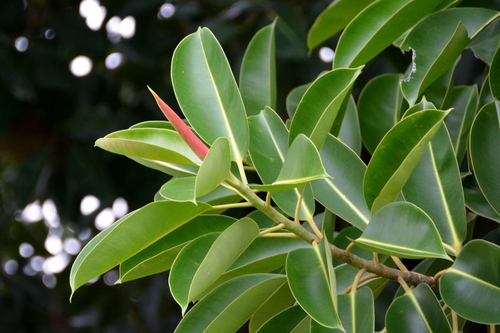
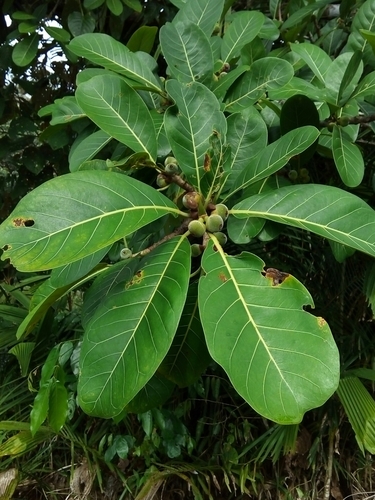
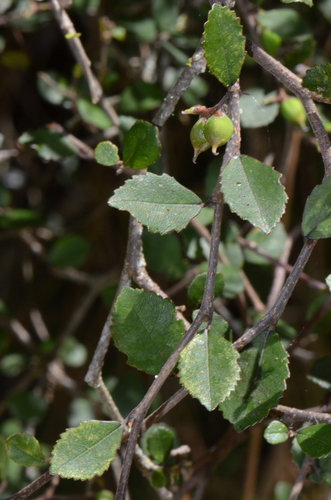
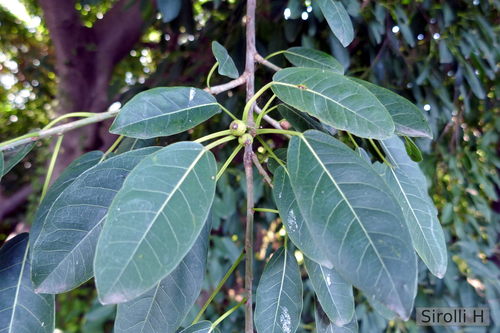
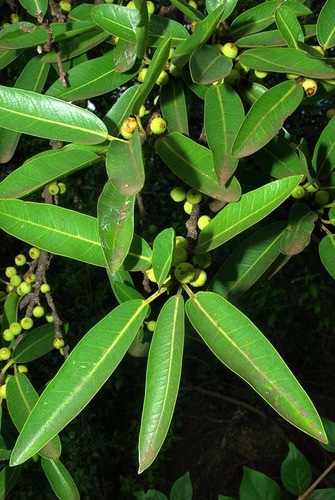
Ficus salicifolia Vahl has elliptic-oblong, leathery leaves that are roughly 7 to 10 cm (2.8 to 3.9 in) long, borne on long petioles, and often noticeably folded along the midrib. The sides of the leaves are nearly parallel, and distinct net-like veining can be seen on the leaf blade. Leaves are brittle and release a characteristic scent when broken or bruised. These leaves are toxic, and can cause nervous disorders or even death in cattle. This species produces small, smooth figs borne on short stalks, which measure around 4–6 mm (5⁄32–1⁄4 in) in diameter. The figs grow in dense clusters along branchlets in the leaf axils, and change color from white to yellowish-red with spots as they ripen. The figs are eaten by birds and mammals. Ficus salicifolia Vahl grows in Saharo-montane woodlands found in the Tassili n'Ajjer, Hoggar, Aïr, and Tibesti mountains, the Kerkour Nourene massif, and on Elba mountain in the Red Sea Hills. It is widespread across the eastern Afrotropics, ranging from southern Arabia and Socotra to the KwaZulu-Natal midlands of South Africa. Its pollinator wasp is Platyscapa awekei Wiebes., and recorded non-pollinating wasps associated with it are Otitesella serrata Mayr and Otitesella pseudoserrata van Noort.