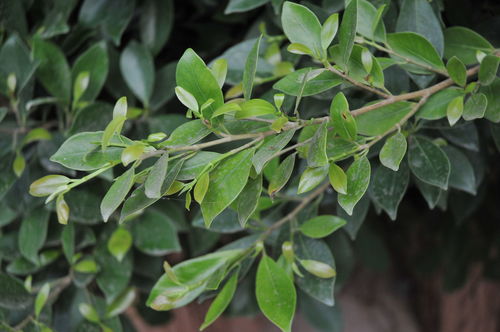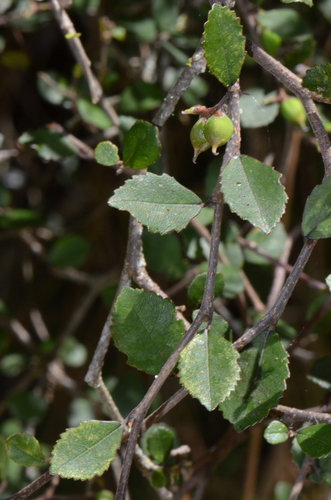
About Ficus religiosa L.
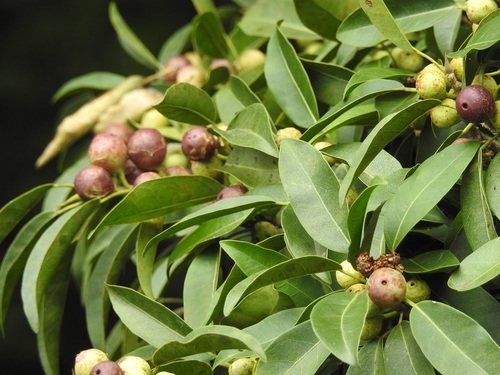
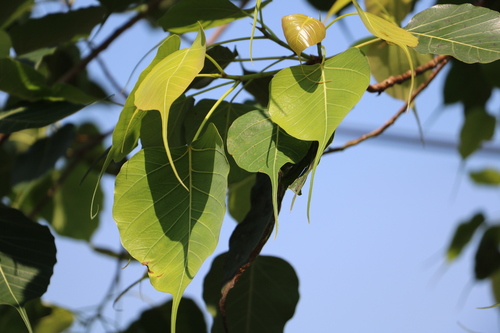
Ficus religiosa L. is a large dry season-deciduous or semi-evergreen tree that can reach up to 30 metres (98 ft) in height, with a trunk diameter of up to 3 metres (9.8 ft). Its leaves are cordate in shape, with a distinctive extended drip tip; they measure 10–17 centimetres (3.9–6.7 in) long and 8–12 centimetres (3.1–4.7 in) broad, with a 6–10 centimetres (2.4–3.9 in) petiole. The fruits are small figs 1–1.5 centimetres (0.39–0.59 in) in diameter, which are green when unripe and turn purple as they ripen. The Jaya Sri Maha Bodhi tree in Anuradhapura, Sri Lanka, is estimated to be more than 2,250 years old. Ficus religiosa is native to most of the Indian subcontinent, including Bangladesh, Bhutan, Nepal, Pakistan and India (covering the Assam region, Eastern Himalaya and the Nicobar Islands), as well as parts of Indochina: the Andaman Islands, Thailand, Myanmar and Peninsular Malaysia. It has been widely introduced to other regions, particularly the rest of tropical Asia, and also to Balochistan in Iran, Florida, and Venezuela. Ficus religiosa grows best at altitudes ranging from 10 metres (33 ft) up to 1,520 metres (4,990 ft). Due to the widespread suitable climatic conditions across different heat zones, it can grow at latitudes from 30°N to 5°S. It tolerates air temperatures between 0 to 35 °C (32 to 95 °F), and its growth slows down above this upper temperature limit. It can grow on a wide variety of soils, but prefers deep, well-drained alluvial sandy loam. It is also found growing in shallow soils, including rock crevices. It is tolerant of multiple climate zones, corresponding to Köppen climate classification categories Af, Am, Aw/As, Cfa, Cwa and Csa, and a wide range of soil types. It occurs in low-elevation forests in Paraguay, and has been recorded growing at 400 to 700 metres (1,300 to 2,300 ft) in China. As a native species in India, it occurs both naturally in the wild and is cultivated up to 1,520 metres (4,990 ft) elevation. Ficus religiosa is propagated and sold by specialty tree plant nurseries, used as an ornamental tree in gardens and parks in tropical and subtropical climates. Also called peepul or sacred fig, it is native to the Indian subcontinent and thrives in hot, humid weather. It prefers full sunlight and can grow in all soil types, though loam is the most suitable. Planting uses soil with a pH of 7 or below. While it can grow indoors in a pot, it grows best outdoors. Young peepul trees require adequate nutrition, full sunlight, and regular watering. Sacred fig occurs naturally in submontane forest regions. Like many Ficus trees, Ficus religiosa is well suited for bonsai training. In the Middle East, it is often planted as an avenue or roadside tree. It is cultivated in parks and along roadsides and pavements in the Philippines and Nicaragua, and occurs in low-elevation forests in Paraguay. In Thailand, this species (called โพ or "Pho" tree) grows across the country, and it is revered when growing in wats (Buddhist temples). Trees in wats are usually several hundred years old, with trunks up to 6.1 meters (20 feet) wide. Like all sacred trees in Thailand, the base of the tree is wrapped in saffron cloth. A yearly ritual for bo trees in wats involves purchasing "mai kam sii" (ไม้คำ้ศริ), crutch-shaped supports that are placed under spreading branches to hold them up. Money from the purchases funds the wat, which is a central part of Thai community life. Ficus religiosa is used in traditional medicine to treat around fifty different types of disorders, including asthma, diabetes, diarrhea, epilepsy, gastric problems, inflammatory disorders, infectious disorders, and sexual disorders. Farmers use the tree's trunk as a soil leveller: after seed harvesting, the rectangular trunk is attached to tractors to level soil.