About Ficus erecta Thunb.
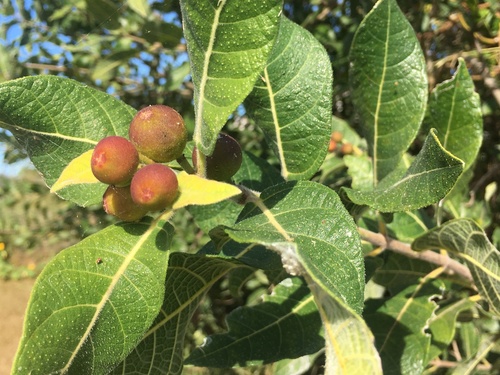
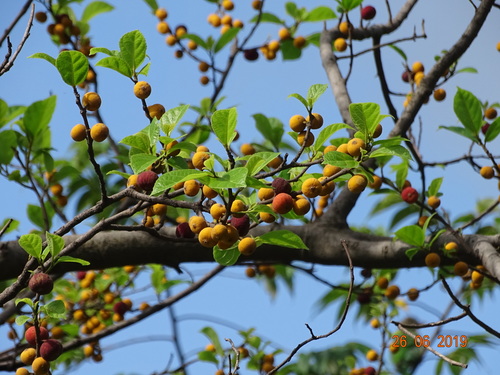
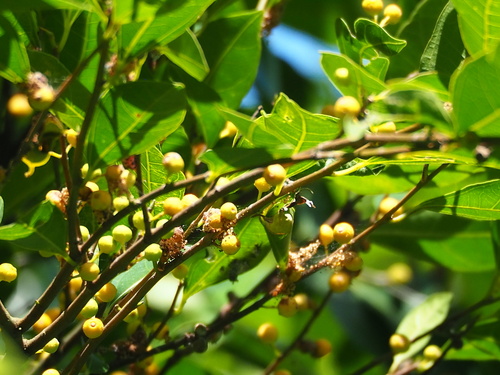
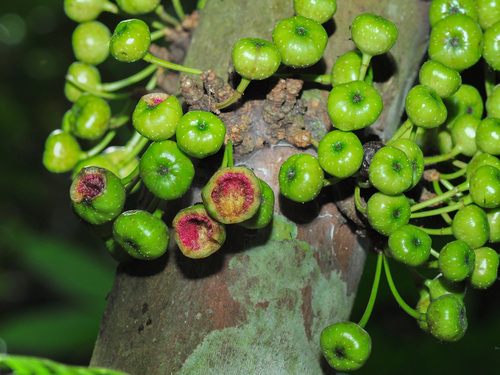
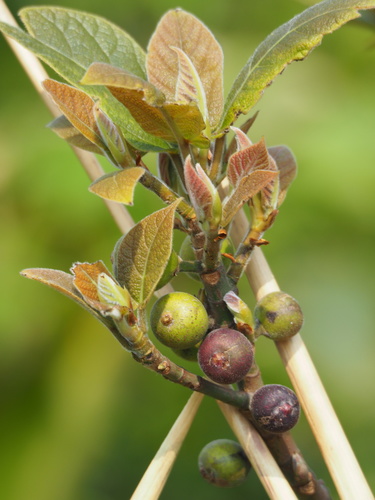
Ficus erecta Thunb., also synonymized as Ficus beecheyana and commonly called the Japanese fig, is a species of flowering plant in the mulberry family Moraceae. Its native distribution covers the eastern Himalayas, Assam, Bangladesh, Vietnam, southern China, Taiwan, Jeju Island of South Korea, the Ryukyu Islands, and Japan. This species is a deciduous or semideciduous shrub or small tree that reaches 2 to 7 meters (7 to 23 feet) in height, and it typically grows alongside streams. Ficus erecta is documented to be dioecious, and it produces small sweet fruits measuring 1.0 to 2.5 centimeters (0.4 to 1.0 inch) in diameter. It is pollinated by the fig wasp Blastophaga nipponica. Local people eat the fruit of Ficus erecta. Fiber from its bark can be used to make paper, and the species is occasionally planted as an ornamental tree. Ficus erecta has high resistance to Ceratocystis fimbriata, the pathogen that causes Ceratocystis canker in the common fig Ficus carica. For this reason, its genome has been sequenced to support breeding of resistant strains of F. carica.