About Ficus deltoidea Jack
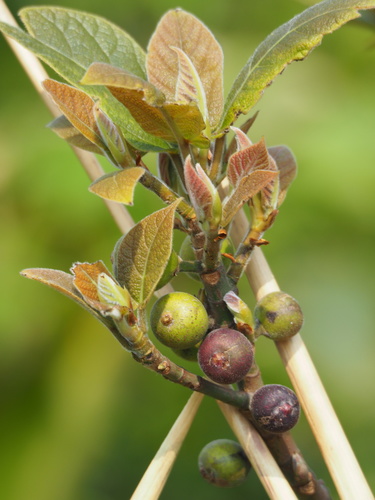
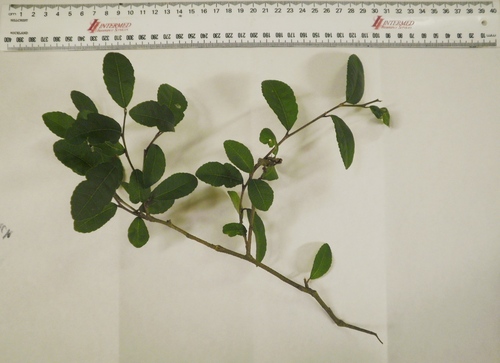
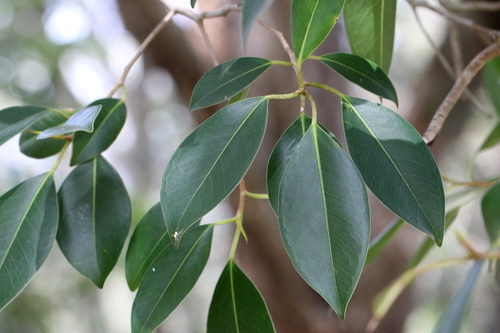
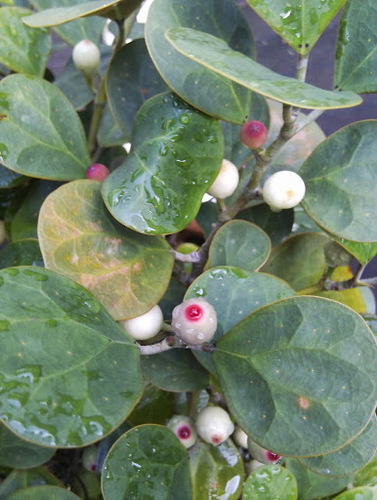
Ficus deltoidea Jack is an evergreen shrub or small tree that grows up to around 2 m tall. It has thick deltoid-shaped leaves, which are rounded at the apex and taper at the base. The upper surface of its leaves is dark and shining green, while the lower surface is golden yellow with black spots. Male and female plants are physically distinct: female plants have large, round leaves, while male plants have small, round, elongated leaves. This species can grow as a terrestrial plant on land, as a lithophyte on stone, or as an epiphyte attached to other plants. It grows wild in eastern Peninsular Malaysia (Kelantan, Terengganu), Sumatra, Java, Borneo (Sabah, Sarawak, Brunei, and Kalimantan), Celebes, Palawan, and Mindanao, and is used by traditional medical practitioners in these regions. Ficus deltoidea is grown as an ornamental plant. In regions where winter temperatures drop below 10 °C (50 °F), it requires glass protection over the winter. It needs a sunny, sheltered position facing south or east. In the United Kingdom, it has received the Royal Horticultural Society's Award of Garden Merit. It is also used in traditional medicine in eastern Peninsular Malaysia and Borneo, where its leaves, fruits, stems, and roots are considered to have healing properties. Traditional uses for the plant include regulating the menstrual cycle, treating postpartum depression, lung diseases, high blood pressure, diabetes, and skin problems, and acting as an aphrodisiac for both men and women. Within its region of origin, Ficus deltoidea has been commercialized, and is used as an ingredient in herbal drinks, coffee beverages, supplements, and massage oils.