About Ficus auriculata Lour.
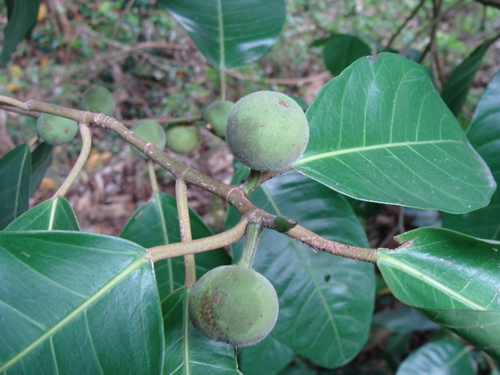
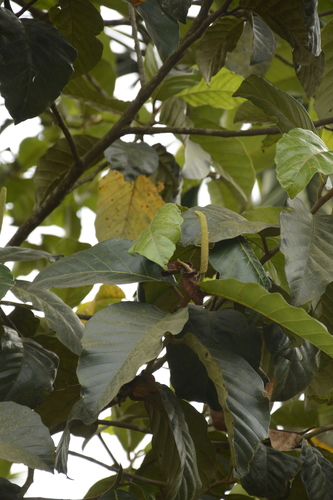
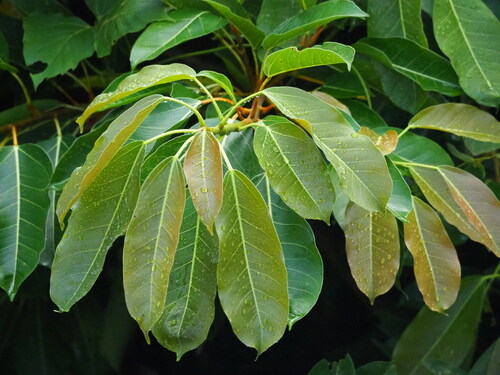
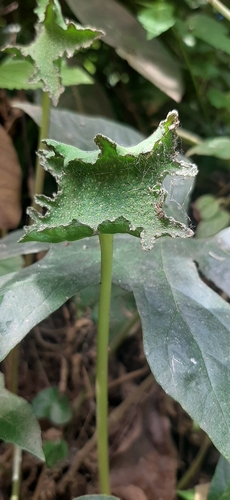
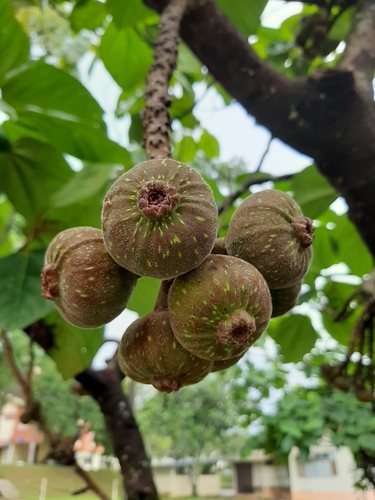
Ficus auriculata Lour. is a small tree that reaches 5–10 m (16–33 ft) in height, with many branches covered in bristles. Its leaves are alternate, large and rounded, growing up to 44 cm (17 in) long and 45 cm (18 in) wide. Leaves have a cordate or rounded base, an acute apex, and 5–7 main veins that originate from the leaf base. The plant's petioles reach up to 15 cm (6 in) in length, and its stipules measure approximately 2.5 cm (1 in) long. This species produces oblate syconium up to 4 cm (1.6 in) wide, covered with yellow pubescence, that emerge from the plant's trunk or older branches. Ficus auriculata is dioecious, meaning male and female flowers develop on separate individual plants. The fleshy receptacle fruits form in large clusters on the trunk, branches, and roots. As the fruits ripen, they change color from light yellow to purple. Fruit extracts of Ficus auriculata contain a wide variety of phenolic compounds (Gaire et al. 2011). The native range of this species extends from northeastern Pakistan to southern China and the Malaysian peninsula. It occurs within the following regions and countries: Assam, Uttarakhand, Himachal Pradesh, Bangladesh, Cambodia, southern China, Bhutan, Sikkim, Hainan, Laos, Malaya, Myanmar, Nepal, Pakistan, Thailand, and Vietnam. This plant grows in forests located in moist valleys, and is often found growing along stream banks. The insect species Ceratosolen emarginatus acts as a pollinator for Ficus auriculata. The fresh fruits of Ficus auriculata are eaten as food, and have documented diuretic, laxative, and digestive-regulating properties. In Nepal, this species is used as livestock fodder, and its large leaves, which can reach up to 21 in (533.4 mm) long and 12 in (304.8 mm) wide, are used as plates. Ficus auriculata has very low fire resistance, and prefers full sunlight.