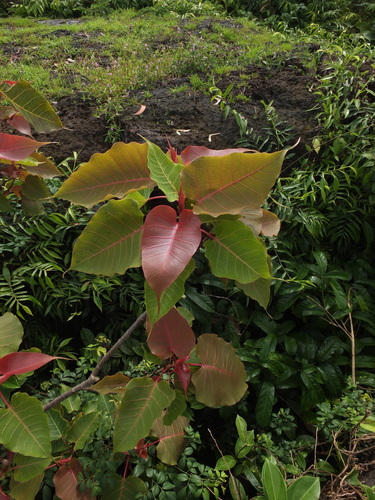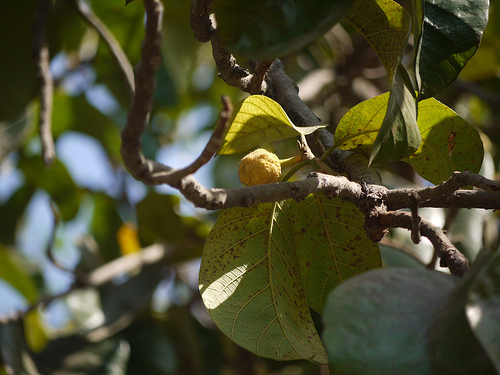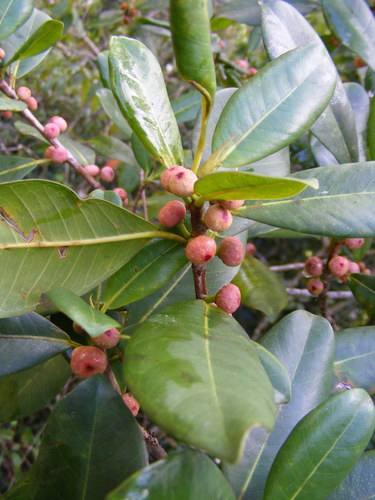
About Ficus americana Aubl.
Ficus americana Aubl. is a shrub or tree that can grow up to 30 meters (100 feet) tall. It is naturally distributed across the Caribbean, ranging from the Bahamas south to Trinidad and Tobago. It also grows naturally in Mexico, Guatemala, Belize, Honduras, Nicaragua, El Salvador, Costa Rica, Panama, Colombia, Venezuela, Guyana, Suriname, Ecuador, Peru, Bolivia, and Brazil. It has been introduced to Florida in the United States, and has escaped from cultivation in Miami-Dade County. Ficus (figs) share an obligate mutualism with fig wasps from the family Agaonidae: figs are only pollinated by these fig wasps, and fig wasps can only reproduce inside fig flowers. Typically, each individual fig species relies on a single wasp species for pollination, and the wasps in turn rely on that same fig species to reproduce. Figs that belong to section Americana of subgenus Urostigma are pollinated by wasps from the genus Pegoscapus. Pegoscapus clusiifolidis was first described from Ficus clusiifolia, which is a synonym of Ficus americana. Another study names P. insularis as the pollinator of Ficus perforata, which is another synonym of Ficus americana, and this study also found that P. insularis forms a cryptic species complex. Figs are sometimes considered potential keystone species in communities of fruit-eating animals, because their asynchronous fruiting patterns mean they can act as an important source of fruit when other food sources are scarce. At Tinigua National Park in Colombia, Ficus americana was an important fruit producer during periods of fruit scarcity in two out of three years of study. This led Colombian ecologist Pablo Stevens to classify it as a potential keystone species at this site. Along with their pollinating wasps, Ficus species are used by a group of non-pollinating chalcidoid wasps whose larvae develop inside the figs. Both pollinating and non-pollinating fig wasps act as hosts for parasitoid wasps. In addition to Pegoscapus pollinators, non-pollinating wasps from the genera Heterandrium, Aepocerus and Idarnes have been found living in Ficus americana figs in Brazil.