About Ficus altissima Blume
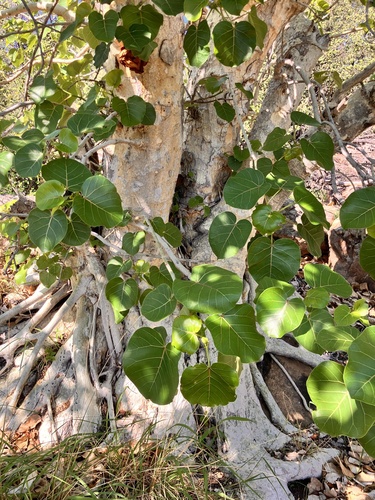
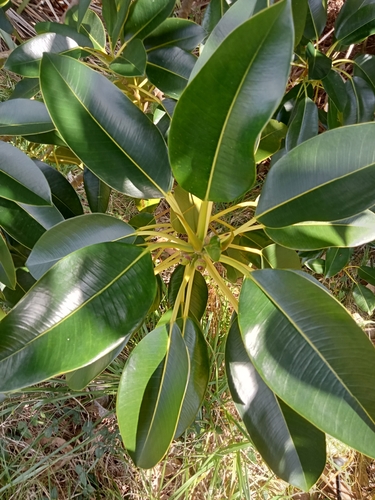
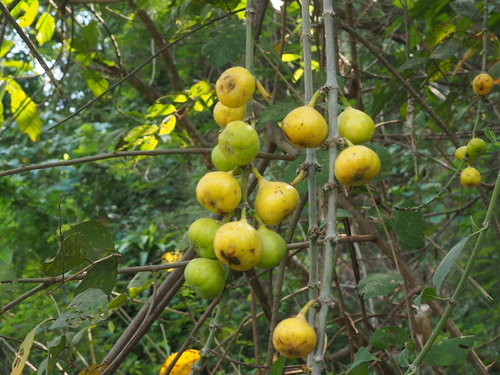
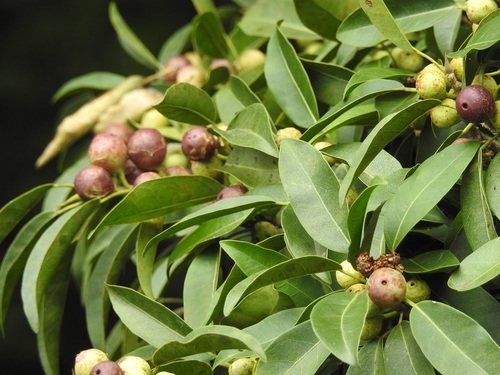
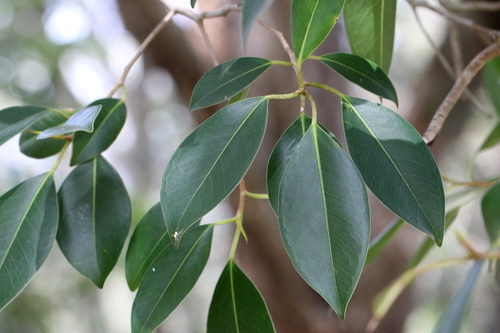
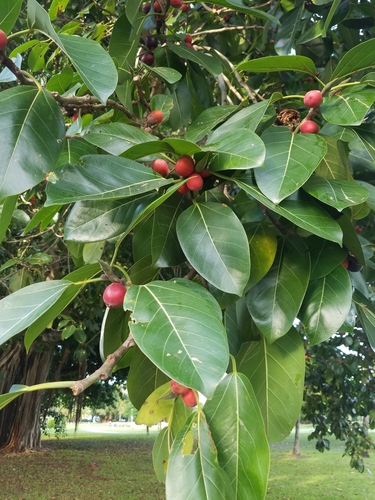
Ficus altissima Blume is a large evergreen forest tree that grows up to 30 m (98 ft) tall. It has a spreading crown, often multiple buttressed trunks, and is characteristic of the subgenus Urostigma. Its bark is smooth, grey, and marked with small pale brown pustules. Branches are spreading, and young twigs are hairy and often green. Leaves are alternate, elliptic to ovate, with entire margins, reaching up to 100 by 40 mm (3.9 by 1.6 in). They grow on short stalks and have sheathing stipules. Flowers grow solitary or in pairs in the leaf axils, and are concealed inside hollow receptacles. After pollination, these receptacles develop into orangish-red, many-seeded figs that measure 25 mm (1 in) across. Ficus altissima is native to southeastern Asia and many Pacific islands. Its native range includes the Andaman Islands, Myanmar, Thailand, Vietnam, Laos, South China, and the Malesia region. It was first described by Dutch botanist Carl Ludwig Blume in 1826 from specimens collected in Java, and has since become naturalized in some southern counties of Florida. It grows in both mountain and plain habitats. Ficus altissima is a strangler fig, and often begins life as an epiphyte growing on host trees such as Lagerstroemia or palms. It sends roots down to the ground, which over time grow thick enough to support the tree independently; by this stage, the host tree has been overwhelmed and killed. It can also grow as a lithophyte in crevices in rocks or manmade structures. It is sometimes planted as a shade tree, but its wide root system and large size make it unsuitable for most urban areas. Ficus altissima is one of many tree species that host lac insects, scale insects in the superfamily Coccoidea that are used to produce the dye lac. After being planted in southern Florida, the tree initially did not produce seed because no native pollinating insects were present. However, non-native wasps of the genus Eupristina have become established in the area, and are capable of pollinating Ficus altissima. As a result, the tree is now proliferating and becoming invasive. One variegated cultivar, 'Yellow Gem', has yellow-tinted leaves.