About Ficedula semitorquata (Homeyer, 1885)
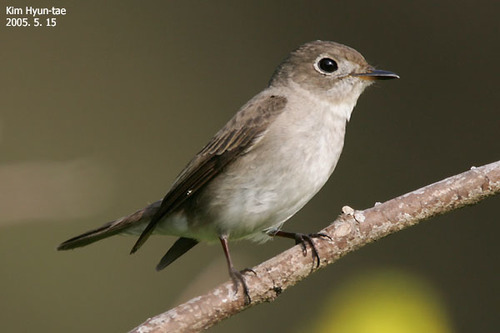
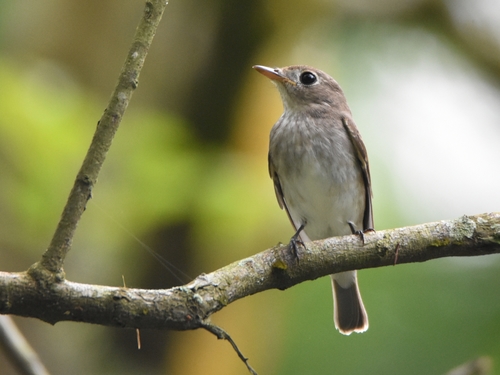
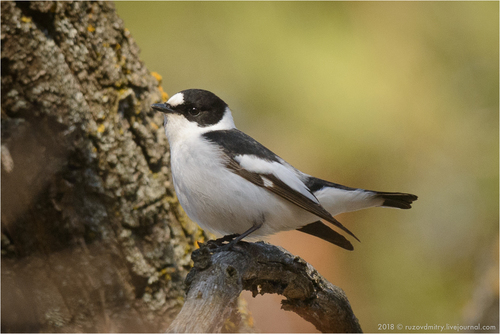
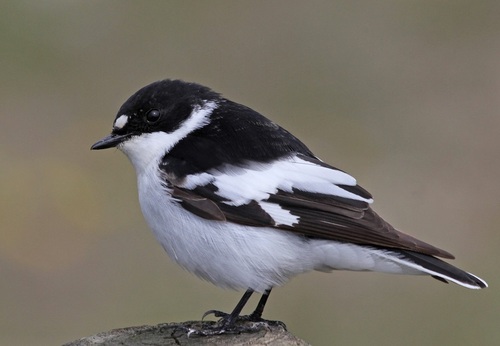
The semicollared flycatcher, Ficedula semitorquata, is a small passerine bird belonging to the Old World flycatcher family. It is one of four species of black-and-white flycatchers found in the Western Palearctic. This species breeds in montane forests ranging from the Balkan Peninsula in southeastern Europe to northwestern Iran. It is a migratory bird, spending the winter in Central and Eastern Africa, and is a rare vagrant in western Europe. Tracking studies using geolocators have found that weather conditions during spring migration strongly impact the timing of this species' migration and the survival rate of adult birds. Semicollared flycatchers measure 12 to 13.5 cm in length, and are intermediate in appearance between the collared flycatcher and the European pied flycatcher. They have often been classified as a subspecies of the collared flycatcher. Breeding males are primarily black on their upper bodies and white on their lower bodies. They have a white half-collar that usually extends further back than the half-collar of the European pied flycatcher, along with a large white wing patch, a white bar on the median coverts (a feature absent in both European pied flycatchers and collared flycatchers), extensively white tail sides, and a large white forehead patch. They often have a pale grey rump. Their bill is black, with the broad but pointed shape that is typical of aerial insectivores. They mainly catch insects while in flight, and rarely hunt caterpillars among tree foliage the way that pied flycatchers do. In non-breeding males, females, and juvenile semicollared flycatchers, the black plumage is replaced by pale brown. These plumage morphs can be very difficult to distinguish from other Ficedula flycatchers, especially the collared flycatcher. One distinguishing feature is that semicollared flycatchers in these plumages often have narrower white edges on their tertials. The white bar on the median coverts is also typical of female-type plumages of this species, though first-winter European pied flycatchers and collared flycatchers may also show this feature. Semicollared flycatchers inhabit belts of deciduous woodland in mountainous areas, with a preference for oak and hornbeam woodlands. They build open nests in natural tree hollows and abandoned woodpecker nests, and will also use nest boxes. Their clutch size ranges from 4 to 7 eggs. Their song is also intermediate between the songs of collared and pied flycatchers, consisting of slow strained whistles with some rhythmic elements.