About Ficedula narcissina (Temminck, 1836)
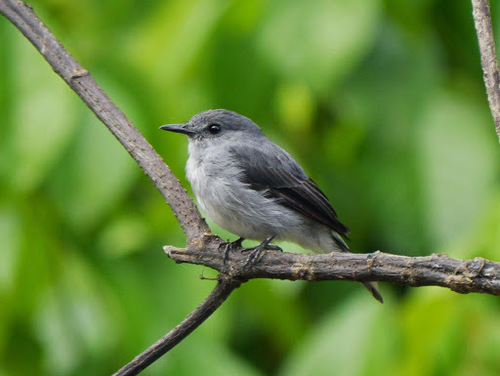
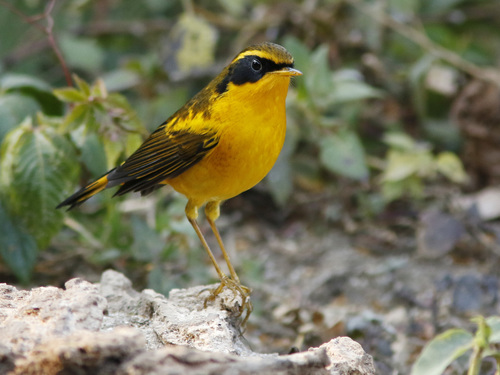
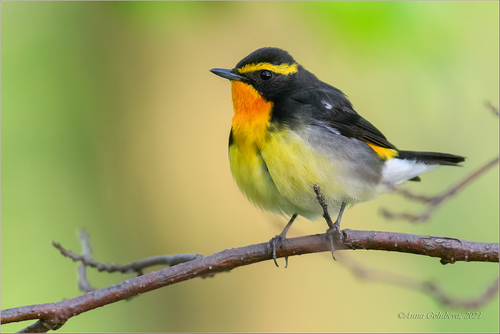
The narcissus flycatcher, scientifically named Ficedula narcissina (Temminck, 1836), is a passerine bird belonging to the Old World flycatcher family. It is native to the East Palearctic, ranging from northern Sakhalin, through Japan, Korea, mainland China, and Taiwan. It is a highly migratory species that winters in southeast Asia, including the Philippines, Vietnam, and Borneo, and has been recorded as a vagrant ranging from southern Australia to northern Alaska. Males in full breeding plumage are very distinctive, with a black crown and mantle, a bright orange throat with paler chest and underparts, an orange-yellow eyebrow, black wings with a white wing patch, an orange-yellow rump, and a black tail. Non-breeding males show varying levels of yellow in their plumage. Females look entirely different, typically with buff-brown overall coloration, rusty-colored wings, and a two-toned eyering. This species primarily eats insects and inhabits deciduous woodlands. Breeding males sing repeated melodious whistles. The green-backed flycatcher (F. elisae) of northern China and the Ryukyu flycatcher (F. owstoni) of the Ryukyu Islands were previously classified as subspecies of the narcissus flycatcher. There are several subspecies defined mostly by differences in plumage and range, and at least two of these former subspecies have since been split off as separate species. The nominate race F. n. narcissina occurs from Sakhalin south to the Philippines. The narcissus flycatcher arrives in its breeding range in early May to begin mating behavior. Males arrive before females to prepare a nest, which is used in mate selection and provides shelter. Due to their familiarity with this breeding ritual, older males typically arrive in the area earlier than younger males. The species' common name refers to the yellow color that matches many varieties of the narcissus flower.