About Festuca ovina L.
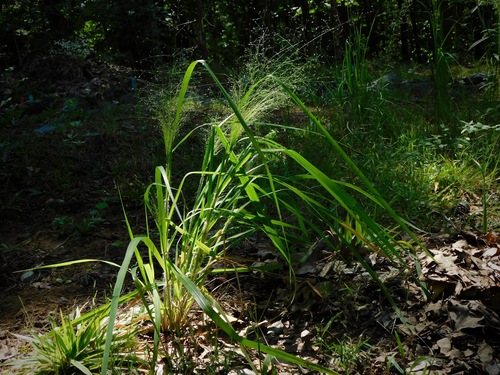
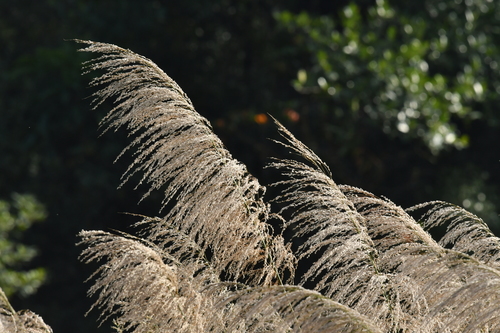
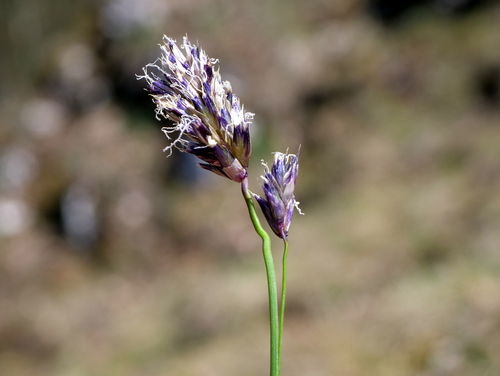
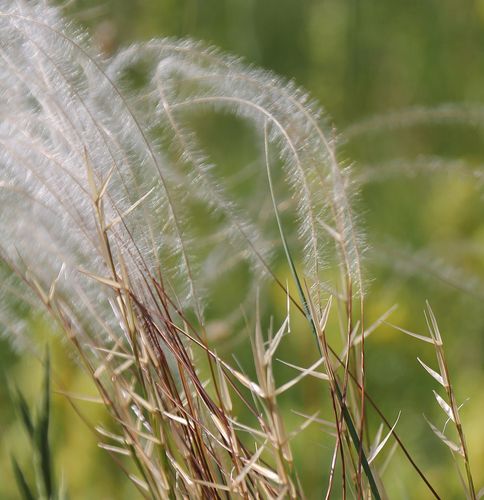
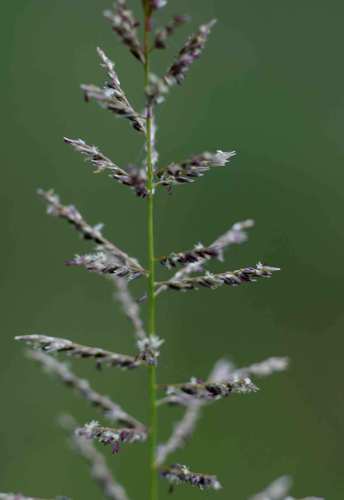
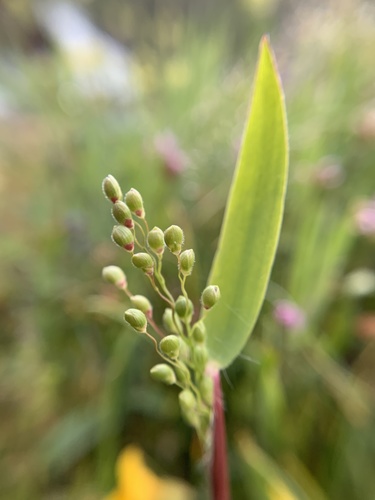
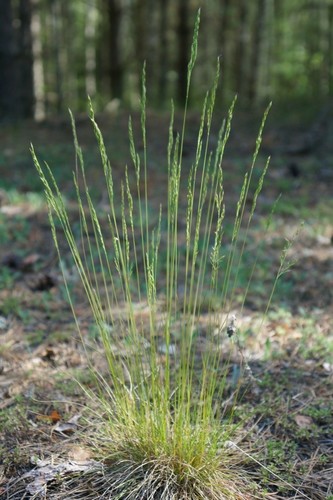
Sheep's fescue, scientifically known as Festuca ovina L., is a densely tufted perennial grass. It does not produce rhizomes. Its leaves are greyish-green, short and bristle-like, and its panicles are slightly feathery and somewhat one-sided. It flowers from May to June and is pollinated by wind. This species is native across most of Europe, excluding some Mediterranean areas, and extends eastward through much of Asia; it has also been introduced to North America. It is commonly found on poor, well-drained mineral soil, and can sometimes grow in acidic ground and mountain pasture. Sheep's fescue is drought-resistant, and is sometimes used as a drought-tolerant lawn grass. More colourful garden varieties with blue-grey foliage are available for cultivation. It is a defining species of British NVC community CG2, the Festuca ovina – Avenula pratensis alkaline grassland community. In the United Kingdom, the species has wide ecological tolerance, growing on both basic and acid soils, as well as on old mining sites and heavy metal-contaminated spoil heaps. Its great ability to adapt to poor soils comes from its symbiosis with mycorrhizal fungi. Fungal hyphae grow deeply into soil and surround the plant's roots, increasing the total surface area available for exchange. This symbiosis improves the plant's absorption of water, minerals, nitrogen, and phosphate. The connected hyphal network also links all nearby plants together, enabling nutrient exchange between plants that are far apart. Mycorrhizal fungi also act as potential determinants of plant community structure.