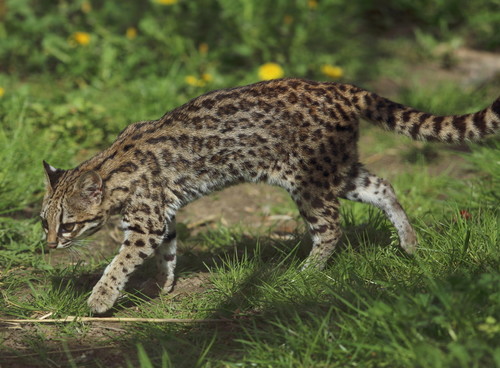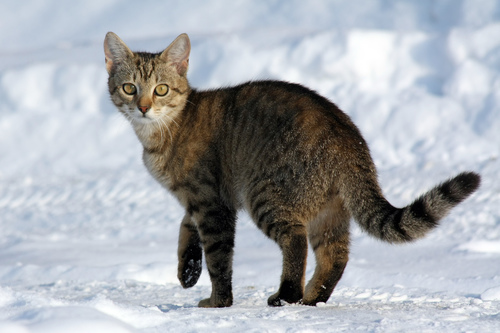
About Felis catus Linnaeus, 1758
Taxonomic Classification
The cat (Felis catus), also known as the domestic cat or house cat, is a small carnivorous mammal.
Diet Type
It is an obligate carnivore, meaning it requires a predominantly meat-based diet.
Claw Adaptations
Its retractable claws are adapted for killing small prey such as mice and rats.
Body and Sensory Features
It has a strong, flexible body, quick reflexes, and sharp teeth, with well-developed night vision and sense of smell.
Hunting Behavior
It is a social species, but acts as a solitary hunter and is classified as a crepuscular predator.
Communication Methods
Cat communication takes the form of meowing, purring, trilling, hissing, growling, grunting, and body language.
Auditory Capabilities
Cats can hear sounds that are too faint or too high in frequency for human ears, including sounds produced by small mammals.
Pheromone Use
They both secrete and perceive pheromones.
Intelligence Traits
Cat intelligence is visible in its ability to adapt, learn through observation, and solve problems.
Domesticated Status
The domestic cat is the only domesticated species in the family Felidae.
Domestication Origins
Advances in archaeology and genetics have shown that cat domestication began in the Near East around 7500 BCE.
Human Value
Today, domestic cats are found across the globe, and are valued by humans for companionship and their ability to kill vermin.
Common Domestic Roles
They are commonly kept as pets, working cats, and pedigreed cats that are shown at cat fancy events.
Global Population Distribution
Out of an estimated 600 million domestic cats worldwide, 400 million live in Asia, including 58 million in China.
National Ownership Rates
The United States has the highest rate of cat ownership with 73.8 million cats, followed by the United Kingdom with approximately 10.9 million cats.
Feral Cat Behavior
Domestic cats also range freely as feral cats, and avoid contact with humans.
Feral Population Impacts
Pet abandonment contributes to the growth of the global feral cat population, which has driven the decline of bird, mammal, and reptile species.
Population Control Methods
Spaying and neutering are common methods used to control cat populations.
Female Reproductive Cycle
Regarding reproduction, female cats are called queens, and they are polyestrous, with several estrus cycles each year that usually last 21 days.
Regional Mating Seasons
In northern temperate zones, queens are usually ready to mate between early February and August, while they can mate throughout the year in equatorial regions.
Mating Competition
Multiple male cats, called tomcats, are attracted to a female in heat. They fight over her, and the winning tomcat gains the right to mate.
Initial Mating Interaction
At first, the female rejects the male, but eventually allows him to mate.
Mating Physiology
The female utters a loud yowl as the male pulls out of her, because a male cat's penis has a band of 120–150 backward-pointing penile spines, which are about 1 mm (0.04 in) long; when the penis is withdrawn, these spines may provide the female with increased sexual stimulation that triggers ovulation.
Post-Mating Female Behavior
After mating, the female cleans her vulva thoroughly. If a male attempts to mate with her at this point, the female will attack him.
Mating Cycle Repetition
Once the female finishes grooming, after about 20 to 30 minutes, the cycle repeats.
Variable Impregnation Timing
Because ovulation is not always triggered by a single mating, females may not become impregnated by the first male they mate with.
Superfecundity Trait
Furthermore, cats are superfecund; that is, a female may mate with more than one male when she is in heat, which means different kittens in the same litter can have different fathers.
Early Embryonic Development
The morula forms 124 hours after conception. Early blastocysts form at 148 hours, and implantation occurs at 10–12 days after conception.
Gestation Period
Gestation for queens lasts between 64 and 67 days, with an average of 65 days.
Litter Size Statistics
A study of 2,300 free-ranging queens conducted between May 1998 and October 2000 found they had one to six kittens per litter, with an average of three kittens.
Annual Litter Frequency
They produced a mean of 1.4 litters per year, with a maximum of three litters in a single year.
Kitten Mortality Causes
Of 169 kittens observed in the study, 127 died before they reached six months old due to trauma, most commonly caused by dog attacks and road accidents.
Litter Size Variation
A cat's first litter is usually smaller than later litters.
Weaning Age
Kittens are weaned between six and seven weeks of age.
Sexual Maturity Timing
Queens normally reach sexual maturity at 5–10 months, while males reach it at 5–7 months. This timeline varies depending on the cat's breed.
Puberty Age
Kittens reach puberty at 9–10 months of age.
Kitten Rehoming Age
Kittens are ready to go to new homes at about 12 weeks of age, when they are ready to leave their mother.
Early Sterilization Age
Cats can be surgically sterilized (spayed for females or castrated for males) as early as seven weeks of age to prevent unwanted reproduction.
Sterilization Behavioral Benefits
This surgery also prevents undesirable sex-related behaviors, such as aggression, territory marking via urine spraying in males, and yowling for mates in females.
Changing Sterilization Timing
Traditionally, this surgery was performed when cats were around six to nine months old, but it is increasingly performed before puberty, at about three to six months of age.
US Neutering Rate
In the United States, about 80% of household cats are neutered.