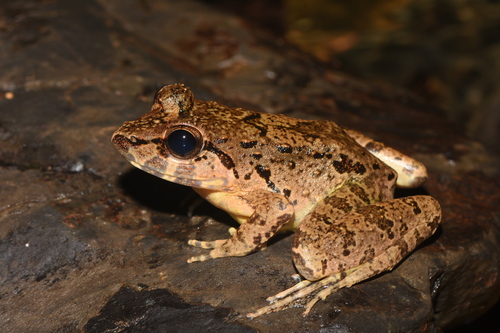
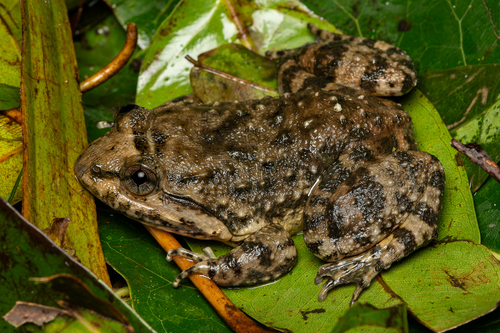
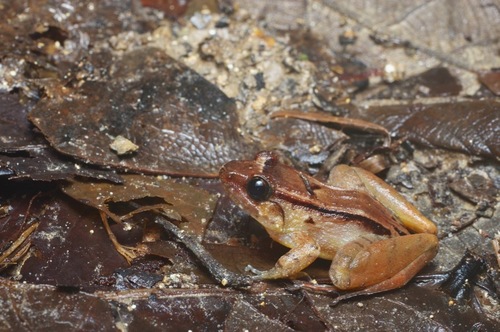
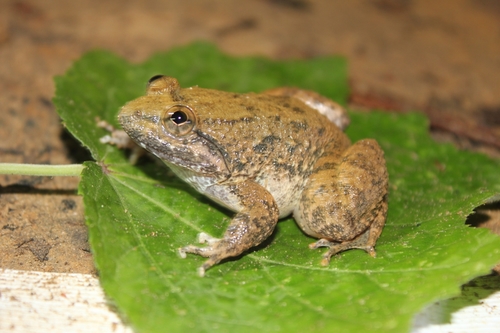
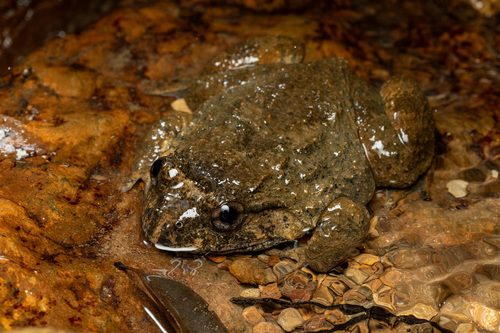
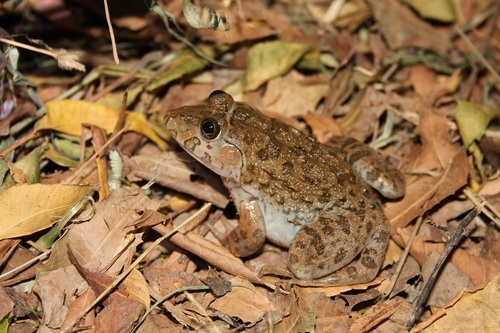
About Fejervarya kawamurai Djong, Matsui, Kuramoto, Nishioka & Sumida, 2011
Fejervarya kawamurai is a relatively small species of paddy frog. Males have a snout-vent length between 36 and 41 mm, while females are slightly larger, ranging from 40 to 47 mm.
Geographic Range
This is a widespread species, with a range covering central and eastern China, western Taiwan, most of South Korea, and Japan. In Japan, it occurs across western Honshu, Shikoku, Kyushu, and the Ryukyu Islands (excluding the Sakishima Islands).
Invasion History
It has also recently invaded the Kanto region of Japan; its presence there was first recorded in 1997, and it may have been accidentally introduced via imported soil or crop seeds. There is also speculation that global warming may help it spread to areas that were previously uninhabitable.
Habitat Preference
This species is most commonly found in paddy fields, and rarely enters other habitats.
Reproductive Traits
For reproduction and development, this frog lays multiple clutches of eggs during the breeding season, and its tadpoles complete metamorphosis quickly after hatching.
Breeding Season Range
According to surveys conducted in Kanagawa Prefecture, central Japan, F. kawamurai’s breeding season runs from the first half of May to the first half of August. However, the species has a broad distribution across multiple climates, including the subtropical Ryukyu Islands, so populations in different regions may have very different life histories.
Growth and Maturation
In central Japan, individuals of both sexes finish metamorphosis and begin emerging in the first half of July, and reach adult body size by August. Males reach sexual maturity immediately after overwintering, while females mature slightly later, in the first half of May.
Population Age Structure
Surveyed populations of F. kawamurai are mostly made up of young individuals that underwent metamorphosis less than one year prior.