About Feijoa sellowiana (O.Berg) O.Berg
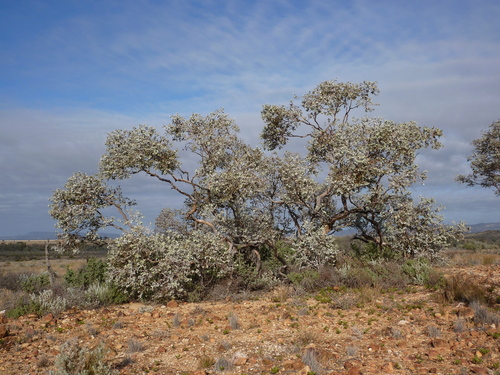
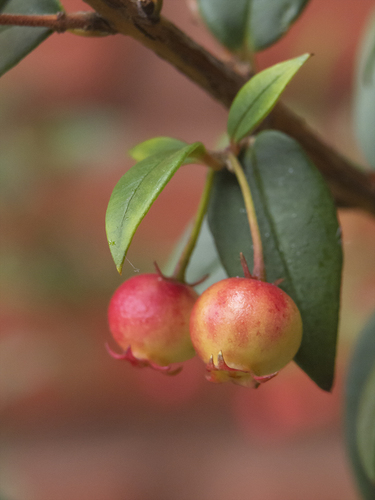
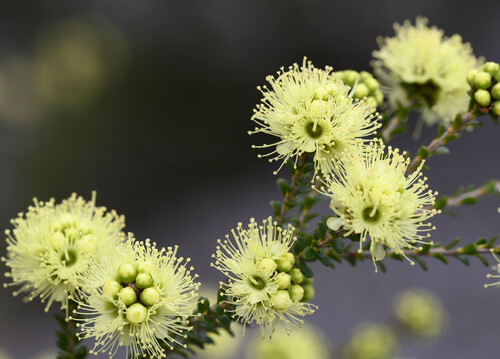
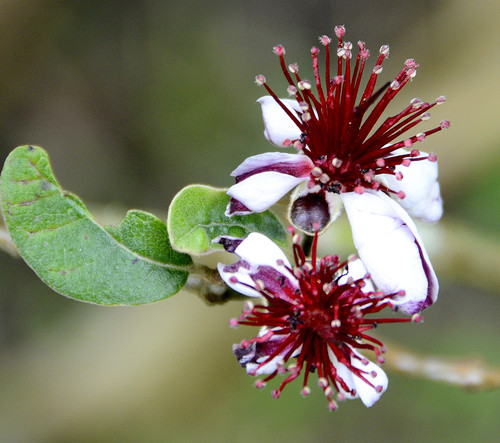
Feijoa sellowiana, commonly called pineapple guava and also scientifically known as Acca sellowiana (O.Berg) Burret, is a flowering plant species belonging to the myrtle family, Myrtaceae. It is the only species classified in the genus Feijoa. It is native primarily to the highlands of Colombia, southern Brazil, and the hills of northeast Uruguay, and also occurs naturally in eastern Paraguay and northern Argentina. Among southern Brazil’s indigenous Kaingang people it is called quirina, a term adapted from the original kanê kriyne; it is most widely known as feijoa, pronounced fay-ho-uh in Spanish-speaking South American countries and fee-jo-uh in the United States and New Zealand. It grows as an evergreen shrub or small tree, reaching between 1 and 7 metres (3.3 to 23.0 ft) tall. Its oblong leaves are roughly 5 cm (2.0 in) long, dark green on their upper surface and white on the underside. Its flowers have five puffy whitish petals, which may contain pockets of gas. Around 25 dark red stamens extend outward from the center of each flower. Most major cultivation regions for this species lie outside its native range, with the main growing areas located in New Zealand, California in the United States, and Colombia, along with other countries. Most widely distributed international cultivars of F. sellowiana originate from a small set of introductions of so-called "Uruguayan type" plants. In 1890, Professor Edouard André brought one or a few specimens of the species from Uruguay to France; seedlings grown from these plants were later introduced to California, and eventually reached New Zealand. After this initial introduction, Colombia brought in new planting material from many different regions around the world. Some grafted feijoa cultivars are self-fertile, but most are not and require a pollinator to produce fruit. Seed-grown feijoa plants vary: they may or may not produce usable quality fruit, and may or may not be self-fertile. Left unmanaged, feijoas grow into large, sprawly shrubs, but they can be grown successfully as large container plants, though growers must account for the plants’ wide spread and prune to encourage new growth needed for consistent fruit production. Feijoas are occasionally planted as landscape plants in Texas, Florida, California, and the maritime Pacific Northwest of the United States. They can be grown successfully in greenhouses in temperate regions of the U.S., and have been grown in-ground as fruiting trees on the U.S. east coast in coastal Georgia and South Carolina, as well as in California. More research is needed to test successful cultivation in other U.S. regions, including the southernmost Appalachian Mountains and the immediate coastal area spanning from North Carolina to Delaware. Feijoa fruit has been widely grown in New Zealand since the 1920s, and the species has become a popular garden tree there. Its fruit is commonly available commercially in season from March to June. In New Zealand, the plant’s pollinators are bees, bumblebees, and medium-sized birds. In cooler parts of New Zealand’s South Island, the silvereye acts as a pollinator; in northern areas of the country, pollination is done by blackbirds and Indian mynas, which feed on the plant’s sweet, fleshy flower petals. In some introduced regions, however, feijoa trees do not produce fruit well due to a lack of suitable pollinators. The shrub has very few insect pests overall, but the guava moth is a damaging pest in Northland, New Zealand. In the South Caucasus, feijoa has been cultivated in the southern coastal region of Azerbaijan since 1928; by 1986, cultivation of the species in neighboring Georgia had gradually increased to cover approximately 988 hectares (2,440 acres). For food use, although the fruit’s skin is edible, the fruit is typically eaten by cutting it in half and scooping out the inner pulp with a spoon. The fruit contains juicy, sweet pulp around its seeds, with slightly gritty-textured flesh closer to the skin. The flower petals of feijoa are also edible. The most common uses for feijoa are eating it raw, or incorporating it into desserts like sorbet, sweet pies, and crumbles, or adding it to salads. Feijoa fruit is regularly consumed by wild birds.