Tortricidae
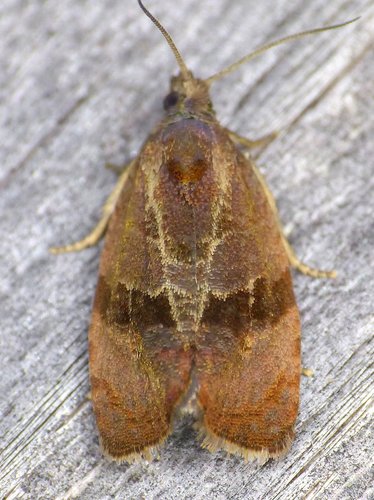
Evora hemidesma (Zeller, 1875)
Evora hemidesma (Zeller, 1875)
Evora hemidesma is a moth in the Tortricidae family, the only species in the monotypic genus Evora.

Orthotaenia undulana (Denis & Schiffermüller), 1775
Orthotaenia undulana (Denis & Schiffermüller), 1775
Orthotaenia undulana is a Tortricidae moth found in the Palearctic realm, with larvae feeding on several trees and shrubs.
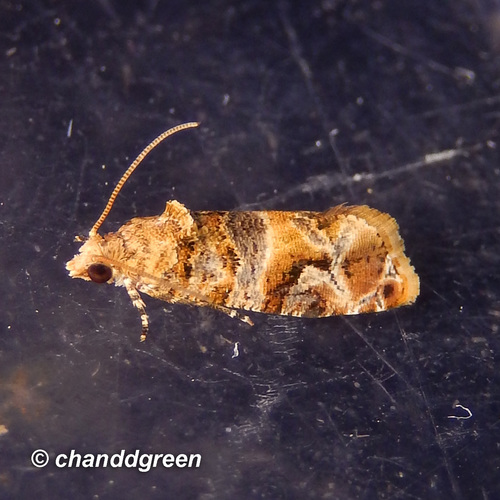
Lobesia aeolopa Meyrick, 1907
Lobesia aeolopa Meyrick, 1907
Lobesia aeolopa is a Tortricidae moth described by Edward Meyrick in 1907, found across multiple regions of the world.
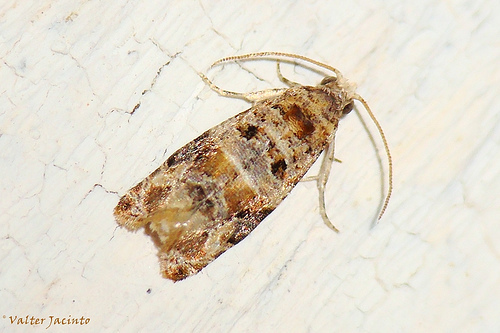
Lobesia botrana (Denis & Schiffermüller), 1775
Lobesia botrana (Denis & Schiffermüller), 1775
Lobesia botrana is a moth species native to Southern Italy, with described physical traits and specific recorded distribution and eradication.
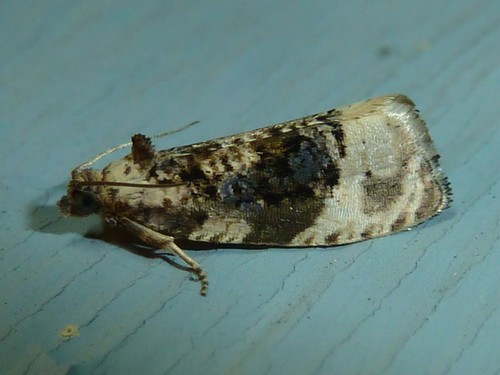
Hedya ochroleucana (Frölich, 1828)
Hedya ochroleucana (Frölich, 1828)
Hedya ochroleucana is a tortricid moth found across the Palearctic and most of North America, whose larvae feed on rose and apple plants.
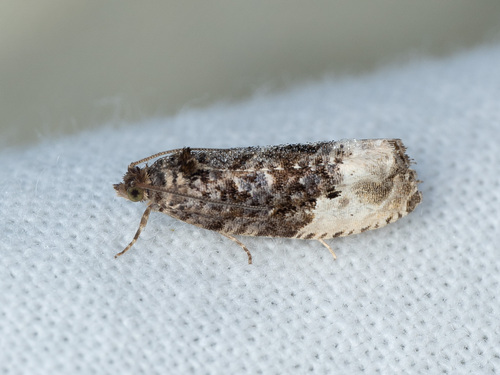
Hedya nubiferana (Haworth, 1811)
Hedya nubiferana (Haworth, 1811)
Hedya nubiferana (the marbled orchard tortrix) is a Tortricidae moth found in the Palearctic and Nearctic realms.
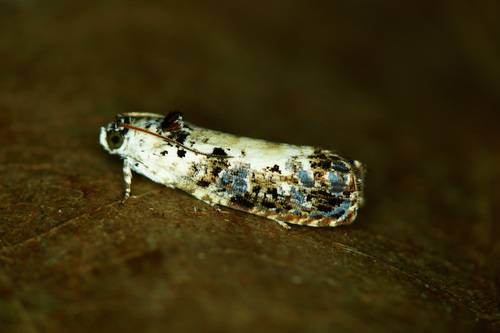
Hedya salicella (Linnaeus, 1758)
Hedya salicella (Linnaeus, 1758)
Hedya salicella is a Tortricidae moth found in Europe with a 19–24 mm wingspan, active June to October, whose larvae feed on willow and poplar.
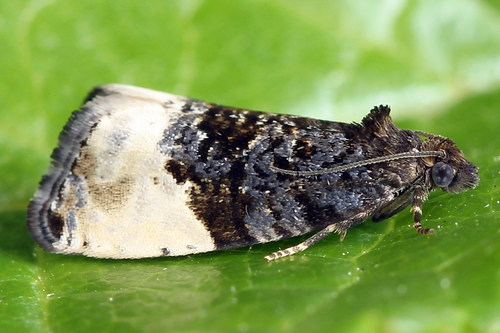
Hedya pruniana (Hübner, 1796-1799)
Hedya pruniana (Hübner, 1796-1799)
Hedya pruniana, the plum tortrix, is a common Palearctic Tortricidae moth whose larvae feed on a range of woody plants.
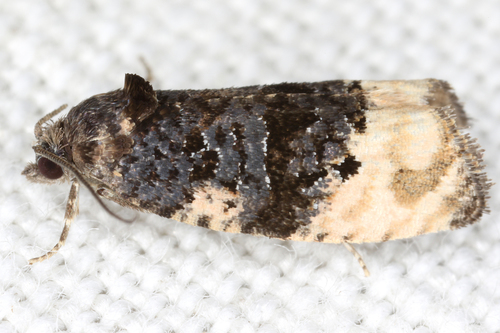
Metendothenia atropunctana (Zetterstedt, 1839)
Metendothenia atropunctana (Zetterstedt, 1839)
Metendothenia atropunctana is a Palearctic and North American tortricid moth that resembles a bird dropping at rest.
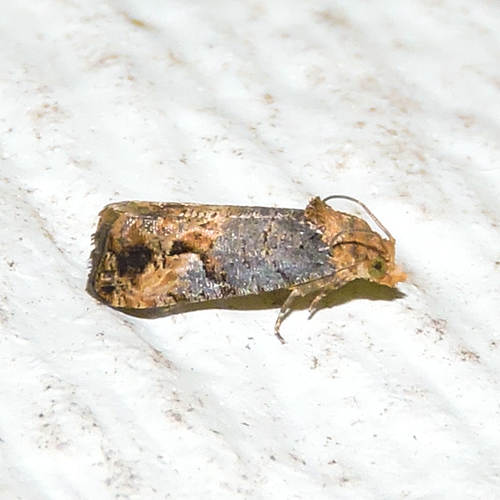
Paralobesia viteana (Clemens, 1860)
Paralobesia viteana (Clemens, 1860)
Paralobesia viteana, the grape berry moth, is a tortricid moth and major grape pest found in parts of North America.
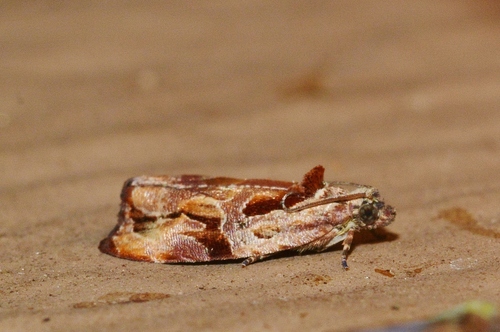
Zomaria interruptolineana (Fernald, 1882)
Zomaria interruptolineana (Fernald, 1882)
Zomaria interruptolineana, the broken-lined zomarium, is a Nearctic tortricid moth with MONA/Hodges number 2750.
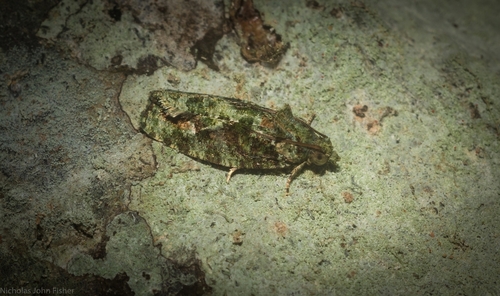
Sorolopha delochlora (Turner, 1916)
Sorolopha delochlora (Turner, 1916)
Sorolopha delochlora is a Tortricidae moth found in Queensland, Australia, with a ~18 mm wingspan and distinct scaled wing markings.
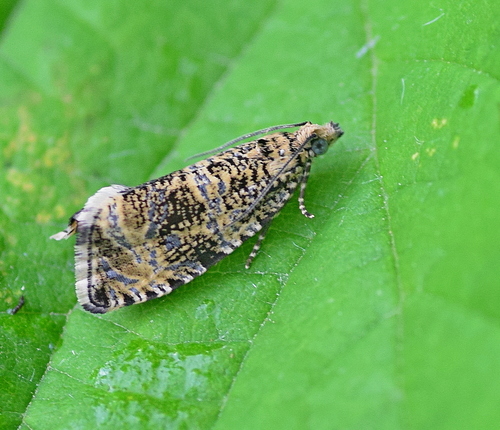
Syricoris lacunana (Denis & Schiffermüller), 1775
Syricoris lacunana (Denis & Schiffermüller), 1775
Syricoris lacunana is a variable small moth species found across much of Eurasia that lives in hedgerows, fields, and woodland edges.
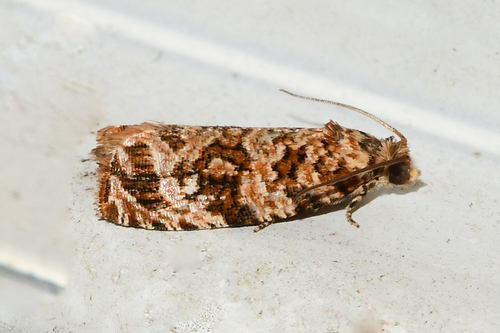
Phaecasiophora niveiguttana Grote, 1873
Phaecasiophora niveiguttana Grote, 1873
Phaecasiophora niveiguttana, the labyrinth moth, is a Tortricidae moth species with MONA/Hodges number 2772.
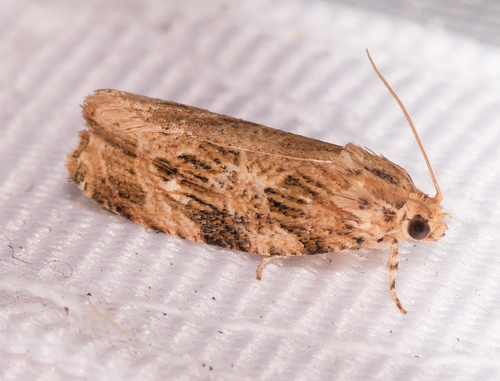
Phaecasiophora confixana (Walker, 1863)
Phaecasiophora confixana (Walker, 1863)
Phaecasiophora confixana, the macramé moth, is a tortricid moth in Tortricidae with Hodges number 2771.
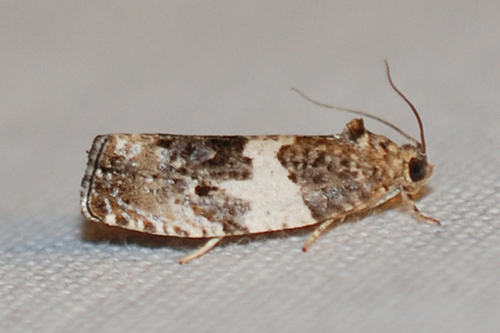
Pseudosciaphila duplex (Walsingham, 1895)
Pseudosciaphila duplex (Walsingham, 1895)
Pseudosciaphila duplex is a North American tortricid moth whose larvae feed on poplar, birch, and willow leaves.
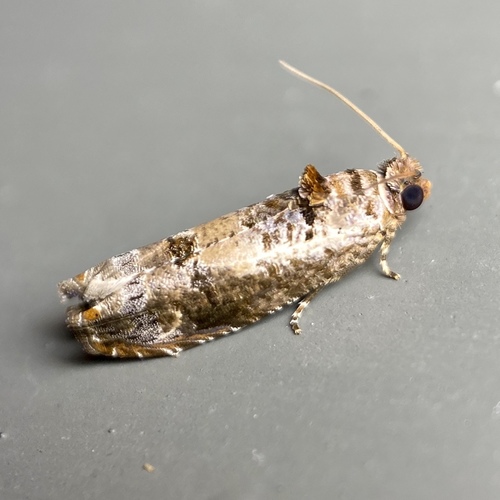
Dudua aprobola (Meyrick, 1886)
Dudua aprobola (Meyrick, 1886)
Dudua aprobola is a moth with ~19 mm adult wingspan, found across many tropical regions, with a wide range of recorded larval host plants.
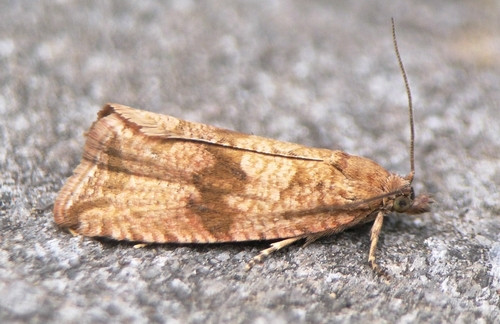
Celypha striana (Denis & Schiffermüller), 1775
Celypha striana (Denis & Schiffermüller), 1775
Celypha striana is a variable moth found across most of Europe and the eastern Palearctic that favors open grassy habitats.
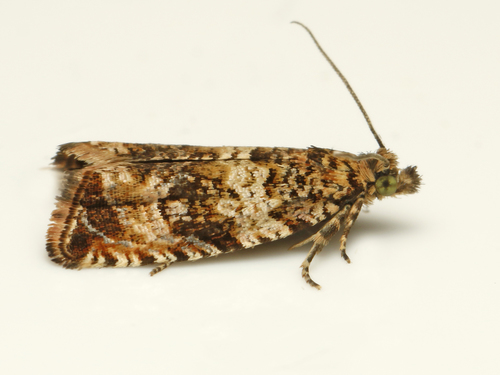
Celypha cespitana (Hübner, 1814-1817)
Celypha cespitana (Hübner, 1814-1817)
Celypha cespitana is a Tortricidae moth found across the Palearctic and Nearctic, with ~15mm wingspan and larvae feeding on herbaceous plants.
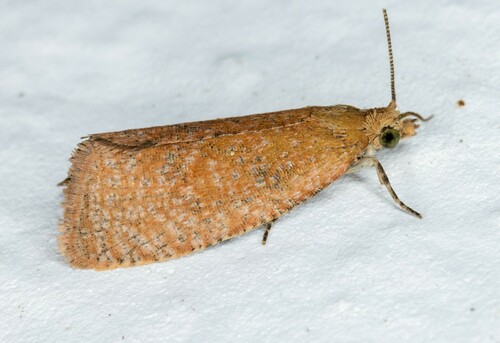
Celypha rufana (Scopoli, 1763)
Celypha rufana (Scopoli, 1763)
Celypha rufana is a bivoltine moth found across most of Europe, with caterpillars feeding on various plant rootstocks.
Phiaris siderana (Treitschke, 1835)
Phiaris siderana (Treitschke, 1835)
Phiaris siderana is a Tortricidae moth described in 1835, found across parts of Europe and western Russia, whose larvae feed on three plant genera.
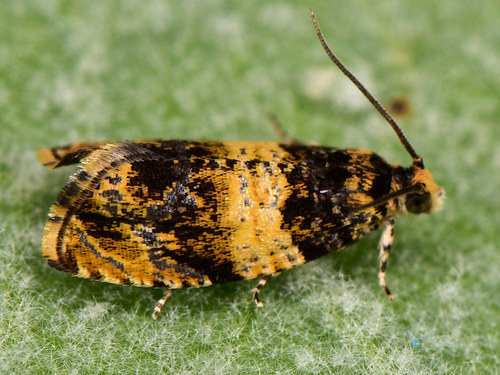
Celypha aurofasciana (Haworth, 1811)
Celypha aurofasciana (Haworth, 1811)
Celypha aurofasciana is a small Tortricidae moth native to Europe and the Palearctic, with larvae feeding on rotting wood.
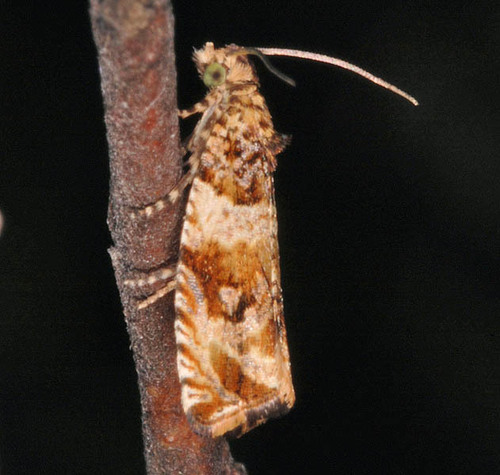
Celypha flavipalpana (Herrich-Schäffer, 1851)
Celypha flavipalpana (Herrich-Schäffer, 1851)
Celypha flavipalpana is a polyphagous tortricid moth found in most of Europe, with a 13–17 mm wingspan.
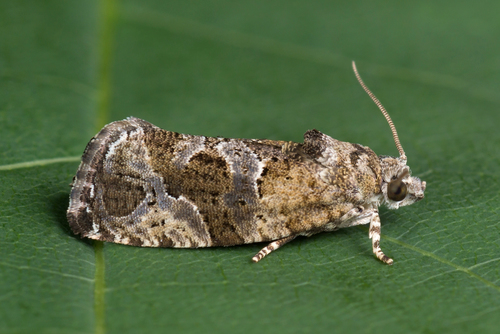
Eudemis porphyrana (Hübner, 1796-1799)
Eudemis porphyrana (Hübner, 1796-1799)
Eudemis porphyrana is a Tortricidae moth found from Europe to the eastern Palearctic, whose larvae feed on and roll host plant leaves.
Related Families
Start Exploring Nature Today
Download iNature for free. 10 identifications on us. No account needed. No credit card required.
Download Free on App Store
