Orchidaceae — Orchid Family
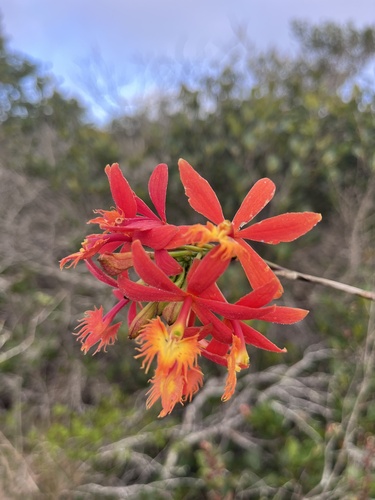
Epidendrum cinnabarinum Salzm. ex Lindl.
Epidendrum cinnabarinum Salzm. ex Lindl.
Epidendrum cinnabarinum is a sympodial reed-stemmed orchid native to eastern Brazil and Venezuela.
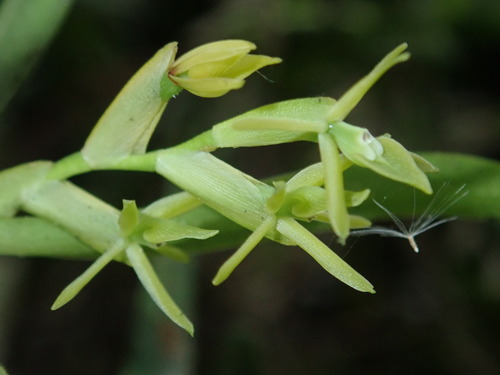
Epidendrum ramosum Jacq.
Epidendrum ramosum Jacq.
Epidendrum ramosum is an orchid species with branched stems and small green-yellow flowers.
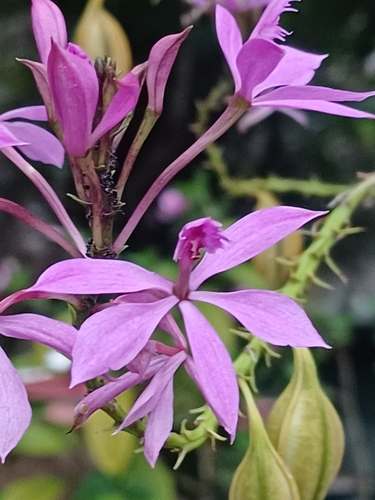
Epidendrum flexuosum G.Mey.
Epidendrum flexuosum G.Mey.
Epidendrum flexuosum G.Mey. is a sympodial orchid with lilac non-resupinate flowers, classified within Epidendrum subgenus Amphiglottium.
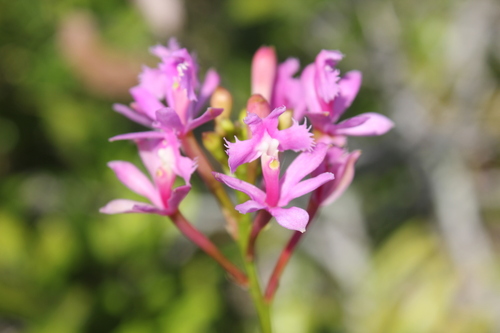
Epidendrum denticulatum Barb.Rodr.
Epidendrum denticulatum Barb.Rodr.
Epidendrum denticulatum is a sympodial orchid native to Brazilian coastal and inland forests, with variable flower colors.
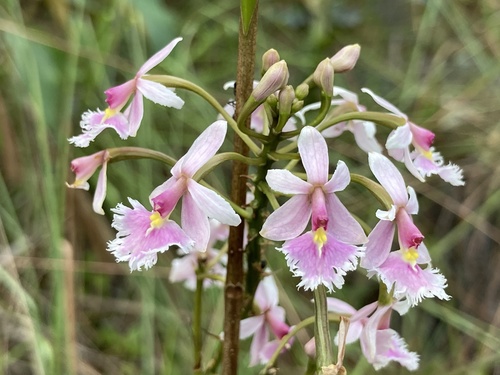
Epidendrum calanthum Rchb.f. & Warsz.
Epidendrum calanthum Rchb.f. & Warsz.
Epidendrum calanthum is an orchid species with defined morphological traits, a known chromosome count, and can hybridize with other species.
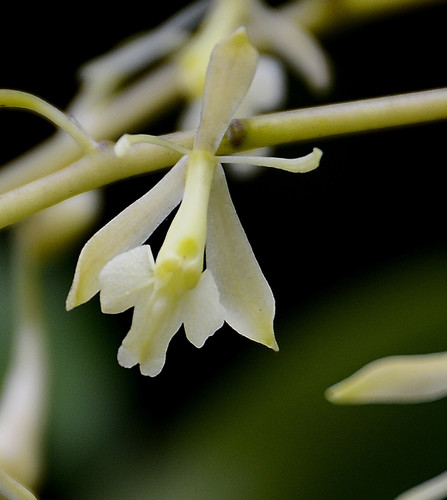
Epidendrum excisum Lindl.
Epidendrum excisum Lindl.
Epidendrum excisum Lindl. is an orchid with yellow trilobed flowers, flattened stems, and broad leathery leaves.
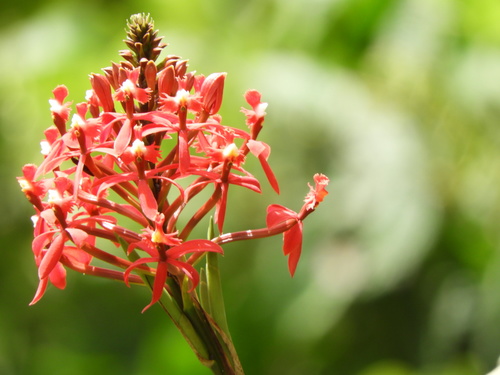
Epidendrum cochlidium Lindl.
Epidendrum cochlidium Lindl.
Epidendrum cochlidium Lindl. is an orchid species in subgenus Amphiglottium with distinctive lobed lips and a diploid chromosome number of 2n=28.
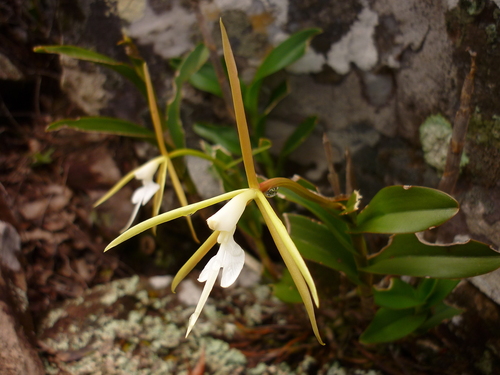
Epidendrum nocturnum Jacq.
Epidendrum nocturnum Jacq.
Epidendrum nocturnum is a common orchid species native to the tropical Americas with variable chromosome counts.
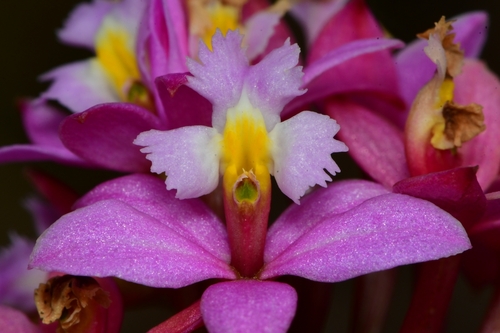
Epidendrum secundum Jacq.
Epidendrum secundum Jacq.
Epidendrum secundum Jacq. is a sympodial orchid in E. subg. Amphiglottium with varied non-resupinate flowers and good cold tolerance.
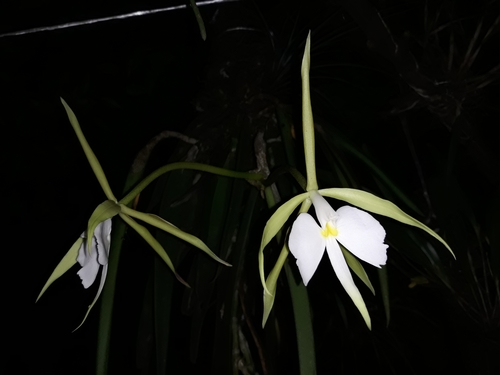
Epidendrum parkinsonianum Hook.
Epidendrum parkinsonianum Hook.
Epidendrum parkinsonianum is an epiphytic orchid species native to Mexico and Central America.
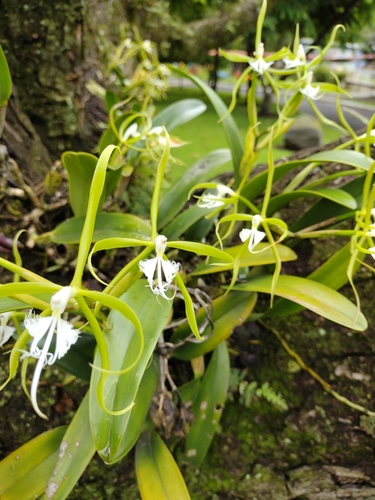
Epidendrum ciliare L.
Epidendrum ciliare L.
Epidendrum ciliare, the fringed star orchid, is a widely distributed orchid species first described in 1759 by Carl Linnaeus.
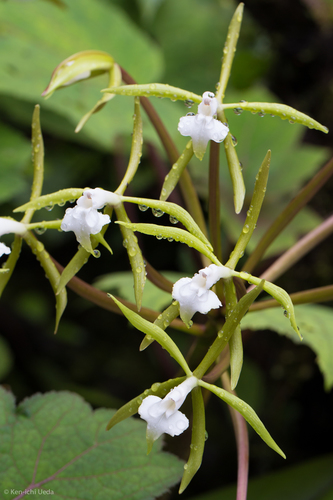
Epidendrum lacustre Lindl.
Epidendrum lacustre Lindl.
Epidendrum lacustre is an orchid species in subgenus E. subg. Spathium with distinctive stems, leaves, and flowers as described.
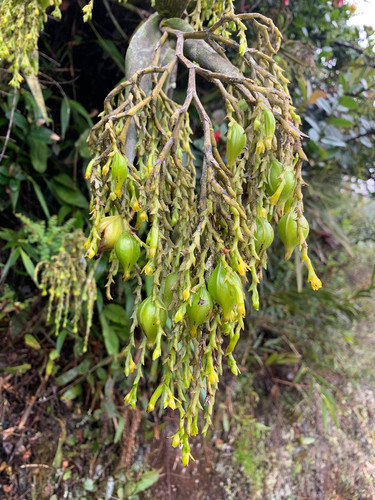
Epidendrum frutex Rchb.f.
Epidendrum frutex Rchb.f.
Epidendrum frutex is a tall terrestrial orchid related to E. frigidum, notable for its much larger seed capsules than flowers.
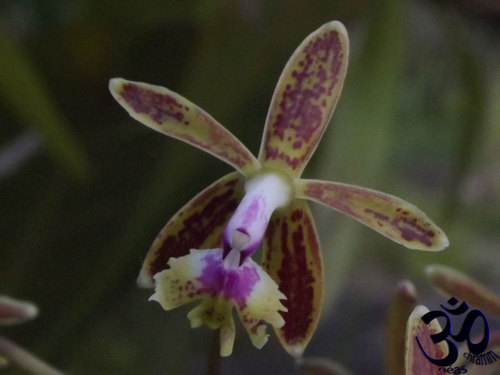
Epidendrum cristatum Ruiz & Pav.
Epidendrum cristatum Ruiz & Pav.
Epidendrum cristatum Ruiz & Pav. is a large, reed-stemmed orchid with characteristic flowers and a known chromosome count of 2n=40.
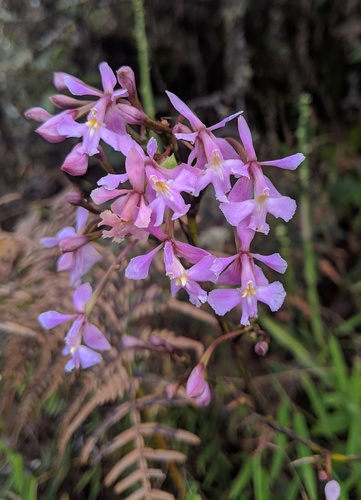
Epidendrum blepharistes Barker ex Lindl.
Epidendrum blepharistes Barker ex Lindl.
Epidendrum blepharistes is a Neotropical orchid that grows terrestrially or epiphytically, with characteristic stem swelling and rose-colored flowers.
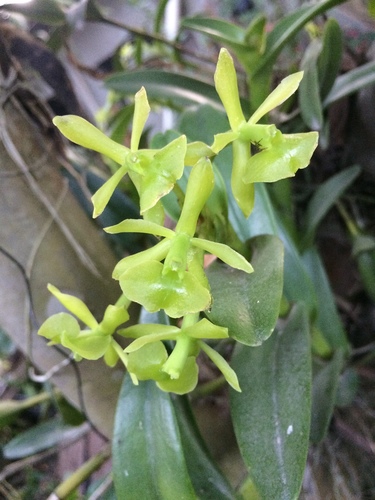
Epidendrum difforme Jacq.
Epidendrum difforme Jacq.
Epidendrum difforme is an orchid species in the genus Epidendrum with recorded diploid chromosome numbers of 2n = 39 and 2n = 40.
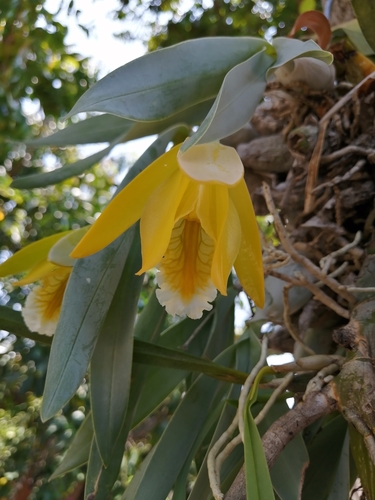
Prosthechea citrina (Lex.) W.E.Higgins
Prosthechea citrina (Lex.) W.E.Higgins
Prosthechea citrina is an epiphytic orchid native to cool, dry mixed oak-pine forests in central and southern Mexico, with a unique hanging upside-down growth habit.
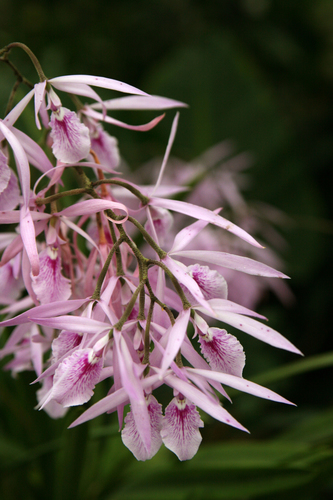
Encyclia adenocaula (Lex.) Schltr.
Encyclia adenocaula (Lex.) Schltr.
Encyclia adenocaula is a small to medium epiphytic orchid native to seasonally dry upland forests of western Mexico that produces fragrant pink summer flowers.
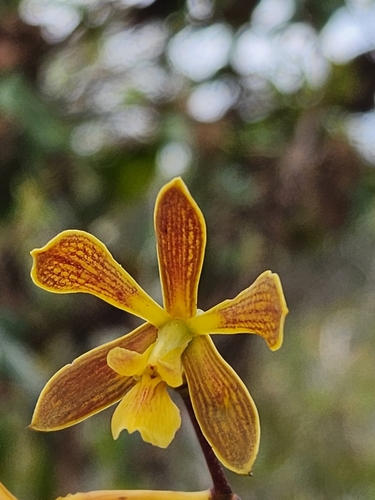
Encyclia patens Hook.
Encyclia patens Hook.
Encyclia patens is a Brazilian orchid species with two accepted varieties and a documented diploid chromosome count of 40.
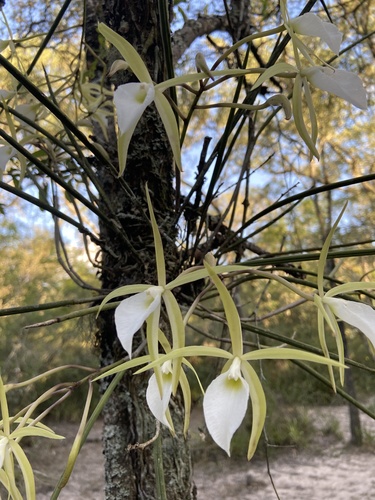
Brassavola tuberculata Hook.
Brassavola tuberculata Hook.
Brassavola tuberculata Hook. is a native orchid of South America with a recorded diploid count of 2n = 40 and haploid count of n = 20.
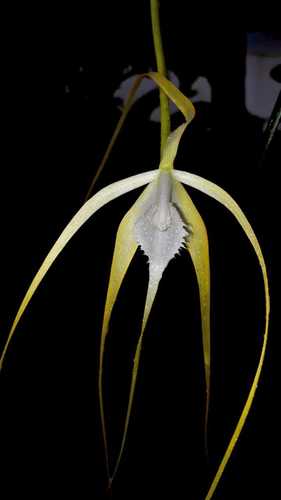
Brassavola appendiculata A.Rich. & Galeotti
Brassavola appendiculata A.Rich. & Galeotti
Brassavola cucullata, the daddy long-legs orchid, is an orchid species native to the Americas from Mexico to northern South America.
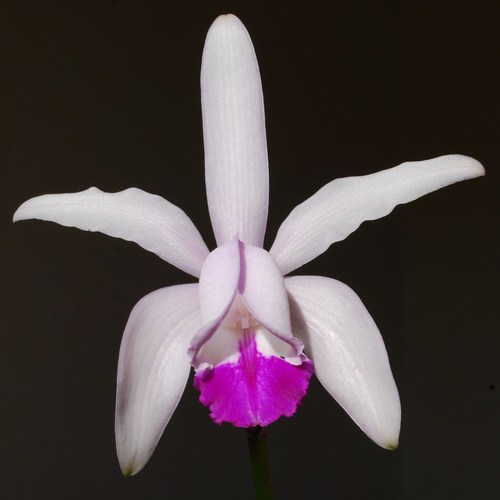
Cattleya intermedia Graham ex Hook.
Cattleya intermedia Graham ex Hook.
Cattleya intermedia is a bifoliate Cattleya orchid species with a determined diploid chromosome number of 2n = 40.
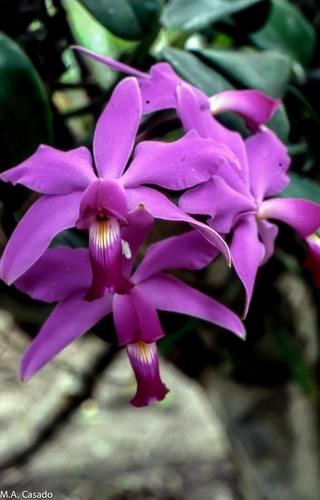
Cattleya violacea (Kunth) Lindl.
Cattleya violacea (Kunth) Lindl.
Cattleya violacea seeds have a reticulate network-patterned seed coat, with an open micropylar end and closed chalazal end.
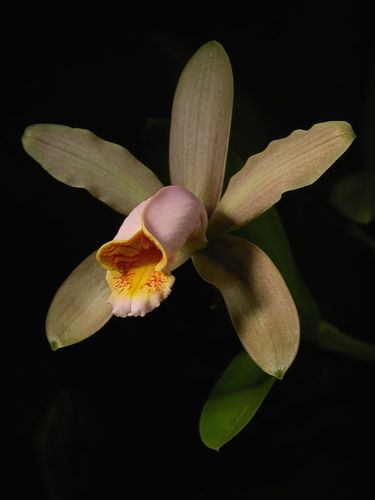
Cattleya forbesii Lindl.
Cattleya forbesii Lindl.
Forbes' cattleya (Cattleya forbesii Lindl.) is an orchid species with a recorded diploid chromosome number of 2n = 54–60.
Related Families
Start Exploring Nature Today
Download iNature for free. 10 identifications on us. No account needed. No credit card required.
Download Free on App Store
