Geometridae
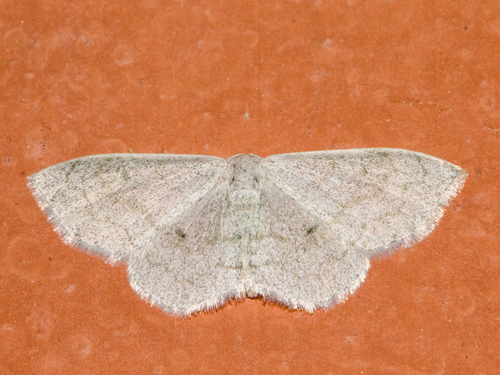
Acratodes suavata Hulst, 1900
Acratodes suavata Hulst, 1900
Acratodes suavata is a geometrid moth found in the Caribbean and North America, with Hodges number 7148.
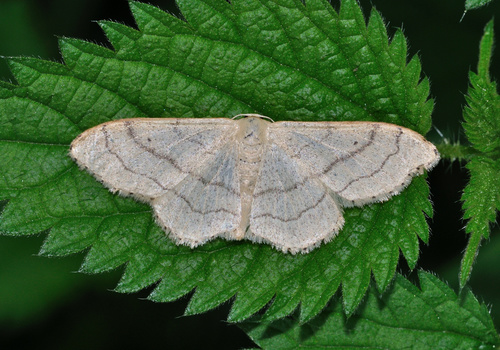
Idaea aversata (Linnaeus, 1758)
Idaea aversata (Linnaeus, 1758)
Idaea aversata is a Palearctic moth species with distinct wing patterns, two main forms, and described larvae and pupae.
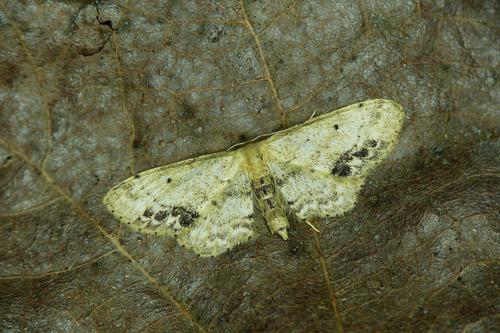
Idaea dimidiata (Hufnagel, 1767)
Idaea dimidiata (Hufnagel, 1767)
This is a description of the moth species Idaea dimidiata, covering physical traits and geographic distribution across the Palearctic and Nearctic.
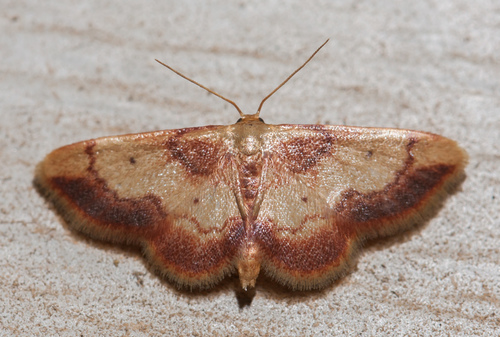
Idaea demissaria (Hübner)
Idaea demissaria (Hübner)
Idaea demissaria, the red-bordered wave moth, is a North American geometrid moth with MONA/Hodges number 7114.
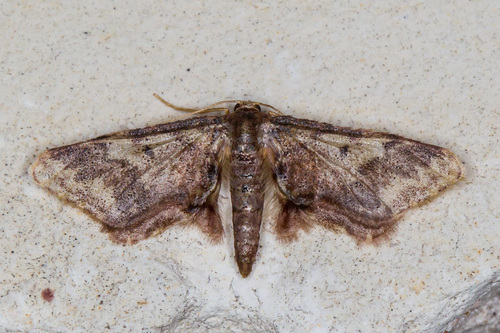
Idaea furciferata (Packard, 1873)
Idaea furciferata (Packard, 1873)
Notch-winged wave moth (Idaea furciferata) is a North American geometrid moth that feeds on Trifolium and Taraxacum as larvae.
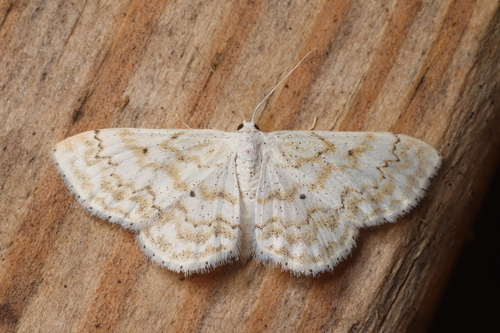
Idaea obfusaria (Walker, 1861)
Idaea obfusaria (Walker, 1861)
The rippled wave (Idaea obfusaria) is a geometrid moth species with the MONA/Hodges number 7123.
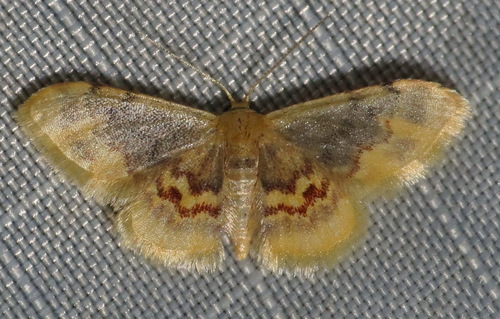
Idaea scintillularia Hulst, 1888
Idaea scintillularia Hulst, 1888
Idaea scintillularia, the diminutive wave, is a North American geometrid moth with MONA/Hodges number 7105.
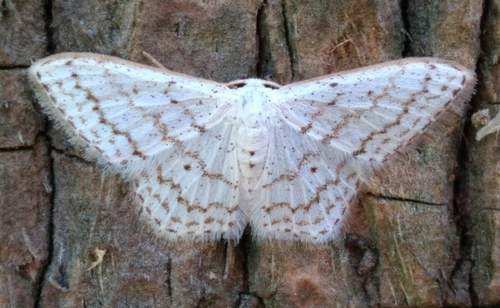
Idaea tacturata (Walker, 1861)
Idaea tacturata (Walker, 1861)
Idaea tacturata, the dot-lined wave moth, is a US geometrid moth whose larvae feed on Trifolium species.
Idaea violacearia (Walker, 1861)
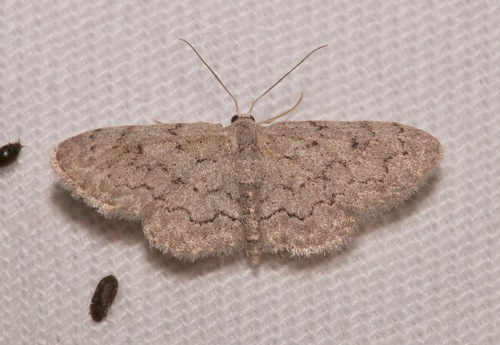
Idaea violacearia (Walker, 1861)
Idaea violacearia is a geometrid moth species found in North America, with MONA/Hodges number 7120.
Idaea degeneraria (Hübner)
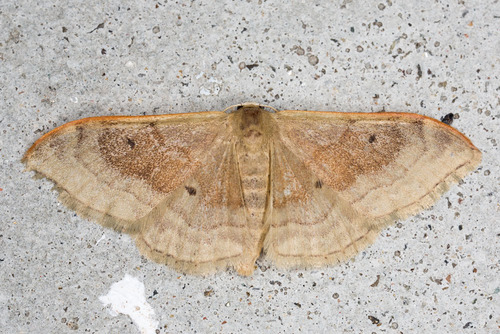
Idaea degeneraria (Hübner)
Idaea degeneraria (Hübner) is a small pale brown geometer moth found across Europe, the Near East, and North Africa.
Idaea eugeniata (Dardoin & Millière, 1872)
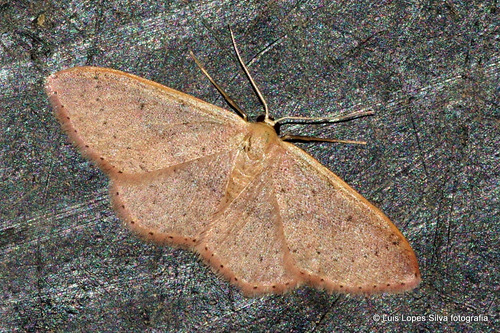
Idaea eugeniata (Dardoin & Millière, 1872)
Idaea eugeniata is a Geometridae moth found in southwest Europe and North Africa, with polyphagous larvae.
Idaea straminata (Borkhausen, 1794)
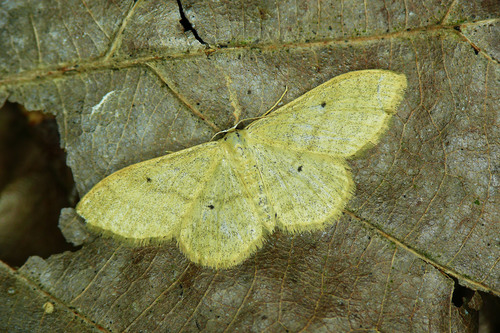
Idaea straminata (Borkhausen, 1794)
Idaea straminata, the plain wave, is a Geometridae moth found in Europe, with 28–33 mm wingspan.
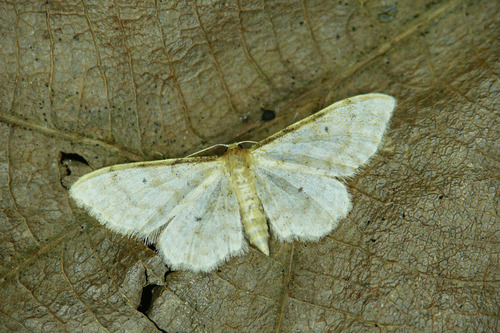
Idaea fuscovenosa (Goeze, 1781)
Idaea fuscovenosa (Goeze, 1781)
This is a detailed description and distribution information for the geometer moth species Idaea fuscovenosa.
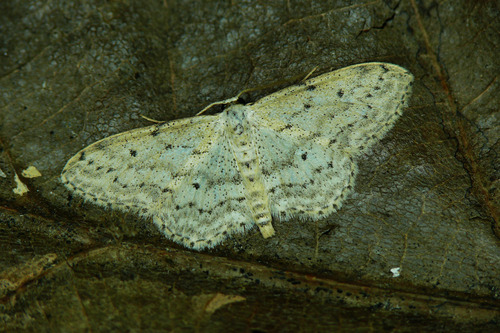
Idaea seriata (Schrank, 1802)
Idaea seriata (Schrank, 1802)
Idaea seriata is a highly variable geometer moth with a description of wing markings and life history.
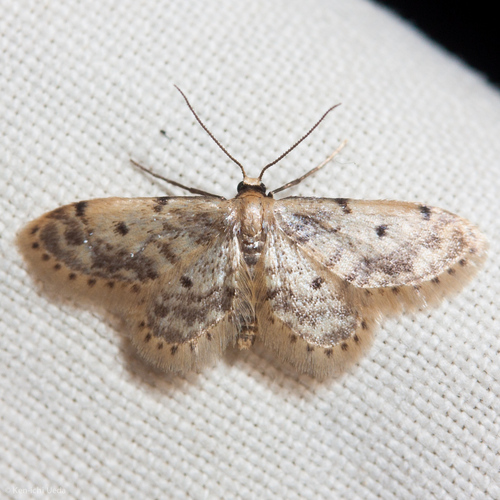
Idaea bonifata (Hulst, 1887)
Idaea bonifata (Hulst, 1887)
Idaea bonifata is a North American geometrid moth with 6–7 mm forewings, active March to October, larvae eat decaying leaves and stored grains.
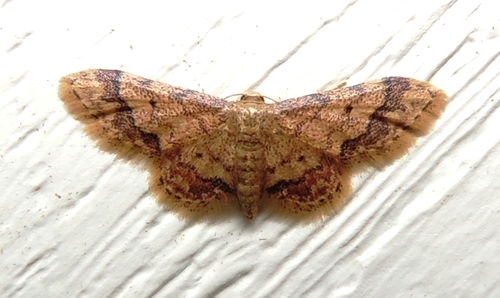
Idaea celtima (Schaus, 1901)
Idaea celtima (Schaus, 1901)
Idaea celtima is a North American geometrid moth with the MONA/Hodges number 7109.
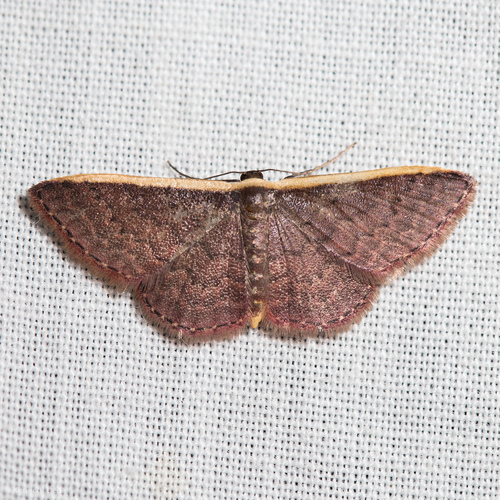
Idaea inversata (Guenée)
Idaea inversata (Guenée)
Idaea inversata, the purple wave, is a geometrid moth found along Australia's east coast, first described in 1857.
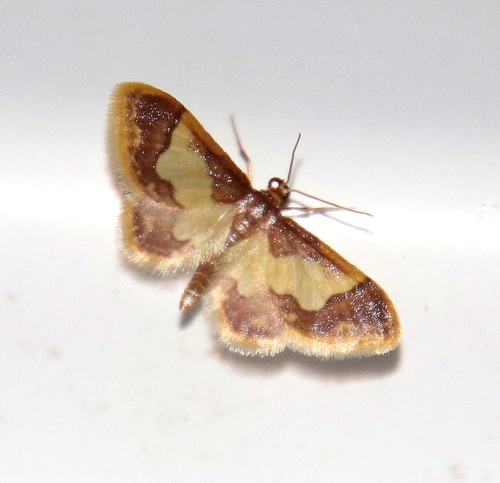
Idaea basinta (Schaus, 1901)
Idaea basinta (Schaus, 1901)
The red-and-white wave, Idaea basinta, is a geometrid moth found in Central and North America, described in 1901.
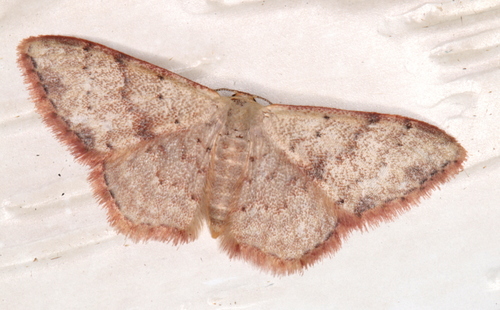
Idaea halmaea (Meyrick, 1888)
Idaea halmaea (Meyrick, 1888)
Idaea halmaea, the two-spotted wave, is a geometrid moth found in Australia, first described by Edward Meyrick in 1888.
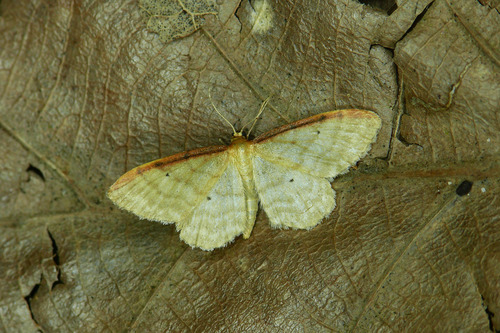
Idaea humiliata (Hufnagel, 1767)
Idaea humiliata (Hufnagel, 1767)
Idaea humiliata is a moth currently extirpated from the UK, last recorded there in a 1954 Portsmouth sighting.
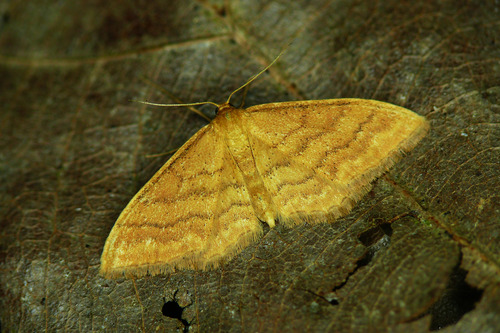
Idaea ochrata (Scopoli, 1763)
Idaea ochrata (Scopoli, 1763)
Idaea ochrata (the bright wave) is a European Geometridae moth with a 21–24 mm wingspan.
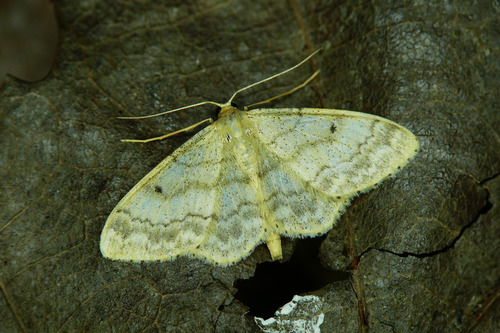
Idaea biselata (Hufnagel, 1767)
Idaea biselata (Hufnagel, 1767)
Idaea biselata (Hufnagel, 1767) is a small geometer moth species that ranges widely across Eurasia.
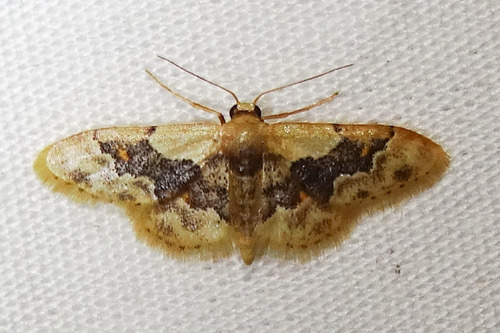
Idaea gemmata (Packard, 1876)
Idaea gemmata (Packard, 1876)
Idaea gemmata is a North American geometrid moth with the MONA Hodges number 7116.
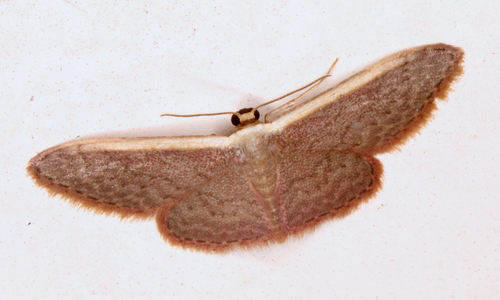
Idaea costaria (Walker)
Idaea costaria (Walker)
Idaea costaria is a Geometridae moth from southeast Australia, distinguished from similar I. inversata by its two-toned head pattern.
Related Families
Start Exploring Nature Today
Download iNature for free. 10 identifications on us. No account needed. No credit card required.
Download Free on App Store
