Geometridae
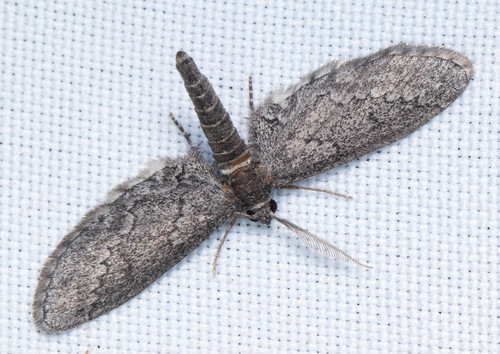
Glaucina erroraria Dyar, 1907
Glaucina erroraria Dyar, 1907
Glaucina erroraria is a North American geometrid moth with the MONA or Hodges number 6488.
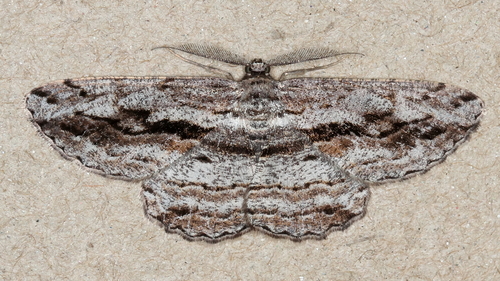
Scioglyptis chionomera (Lower, 1893)
Scioglyptis chionomera (Lower, 1893)
The grey-patch bark moth (Scioglyptis chionomera) is a Geometridae moth found across multiple Australian states and territories.
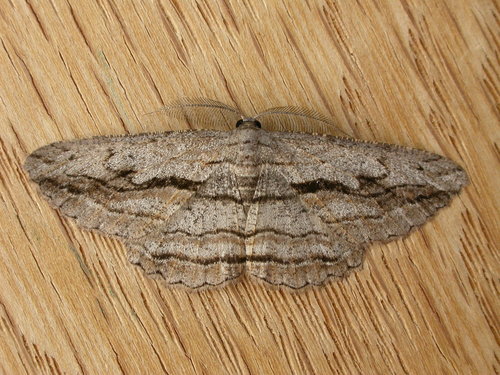
Scioglyptis loxographa (Turner, 1917)
Scioglyptis loxographa (Turner, 1917)
Scioglyptis loxographa is a Geometridae moth species found in Australia, including Tasmania.
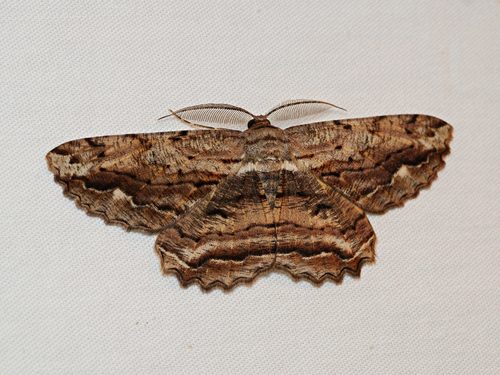
Scioglyptis lyciaria (Guenée, 1857)
Scioglyptis lyciaria (Guenée, 1857)
Scioglyptis lyciaria, the white-patch bark moth, is an Australian geometrid moth first described in 1857.
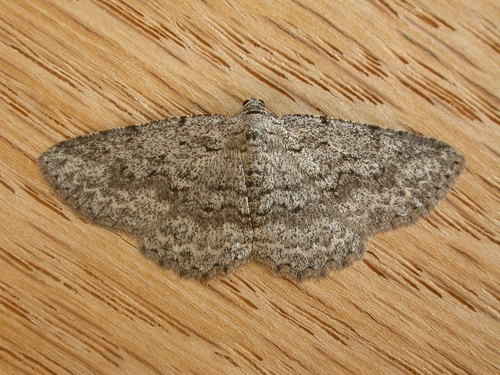
Psilosticha absorpta (Walker, 1860)
Psilosticha absorpta (Walker, 1860)
Psilosticha absorpta is an Australian moth in the Geometridae family, first described by Francis Walker in 1860.
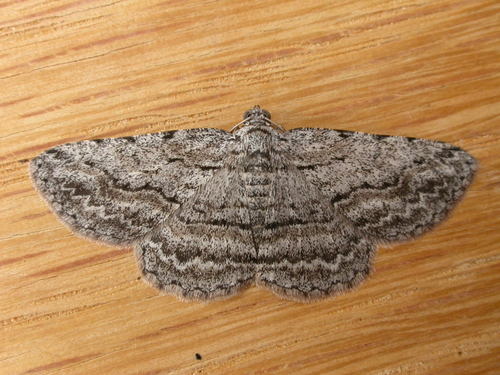
Psilosticha attacta (Walker, 1860)
Psilosticha attacta (Walker, 1860)
Psilosticha attacta is a Geometridae moth described in 1860 that is found in Australia.
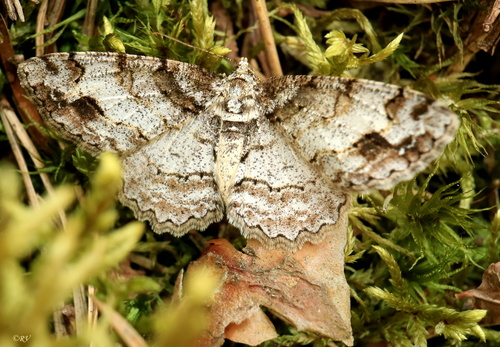
Paradarisa consonaria (Hübner)
Paradarisa consonaria (Hübner)
Paradarisa consonaria, the brindled square spot, is a variable geometrid moth found across Eurasia.
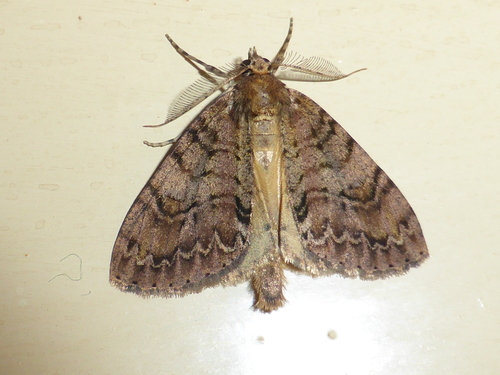
Pseudocoremia suavis Butler, 1879
Pseudocoremia suavis Butler, 1879
Pseudocoremia suavis, the common forest looper, is a geometrid moth originally endemic to New Zealand, first recorded outside the country in 2007 Cornwall.
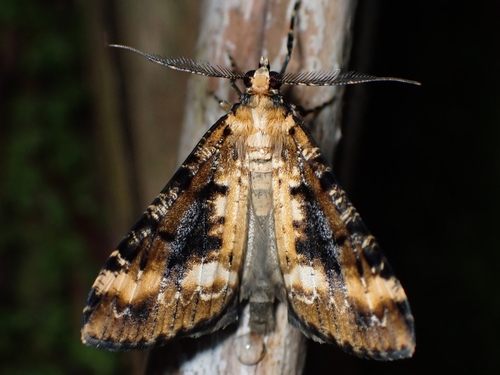
Pseudocoremia leucelaea (Meyrick, 1909)
Pseudocoremia leucelaea (Meyrick, 1909)
Pseudocoremia leucelaea is an endemic New Zealand moth species in Geometridae, first described in 1909.
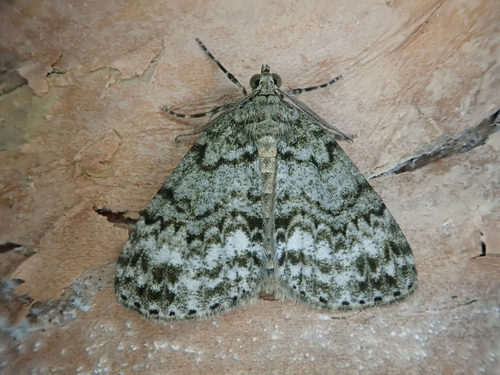
Pseudocoremia indistincta Butler, 1877
Pseudocoremia indistincta Butler, 1877
Pseudocoremia indistincta is an endemic New Zealand moth species in the family Geometridae.
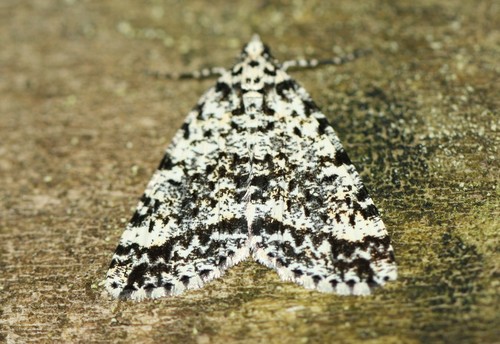
Pseudocoremia monacha (Hudson, 1903)
Pseudocoremia monacha (Hudson, 1903)
Pseudocoremia monacha is a New Zealand-endemic moth species whose adults pollinate Veronica salicifolia.
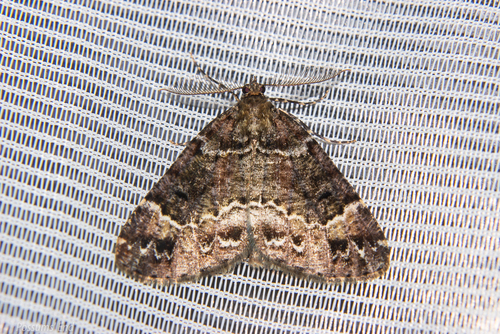
Pseudocoremia productata (Walker, 1862)
Pseudocoremia productata (Walker, 1862)
Pseudocoremia productata, the Brown Forest Flash, is an endemic New Zealand moth with protective camouflage.
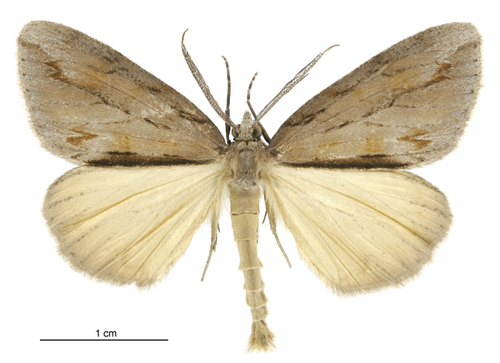
Pseudocoremia lupinata (Felder & Rogenhofer, 1875)
Pseudocoremia lupinata (Felder & Rogenhofer, 1875)
Pseudocoremia lupinata is an endemic New Zealand moth found across the North and South Islands in native forest and Kānuka scrub.
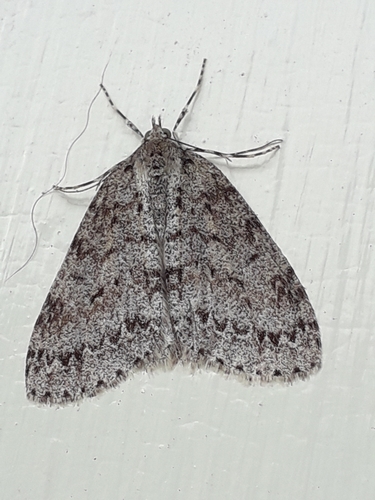
Pseudocoremia fenerata Felder & Rogenhofer, 1875
Pseudocoremia fenerata Felder & Rogenhofer, 1875
Pseudocoremia fenerata is an endemic New Zealand geometrid moth with recorded native and exotic larval host plants.

Syneora hemeropa (Meyrick, 1892)
Syneora hemeropa (Meyrick, 1892)
Syneora hemeropa is a moth species with 3 cm wingspan, brown adults that have dark wing markings.
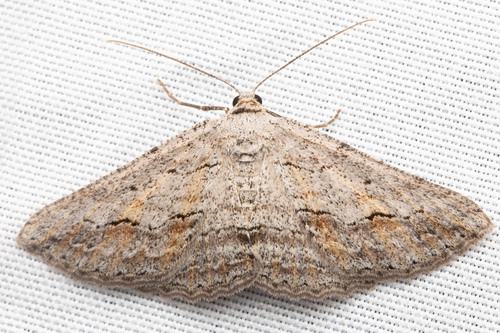
Syneora mundifera (Walker, 1860)
Syneora mundifera (Walker, 1860)
Syneora mundifera, the forest bark moth, is a 40 mm wingspan geometrid moth found in Australia, first described in 1860.

Gastrinodes bitaeniaria (Le Guillou, 1841)
Gastrinodes bitaeniaria (Le Guillou, 1841)
Gastrinodes bitaeniaria is a geometrid moth found in southeastern Australia, whose larvae feed on Eucalyptus.
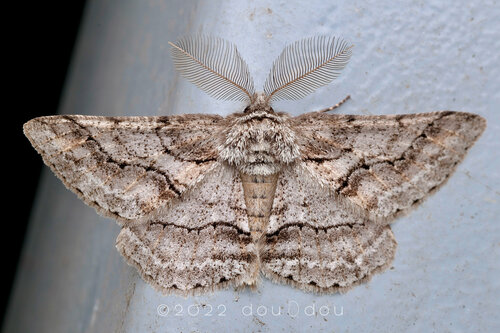
Megabiston plumosaria (Leech, 1891)
Megabiston plumosaria (Leech, 1891)
Megabiston is a monotypic moth genus of Geometridae, whose only species Megabiston plumosaria is found in Japan.
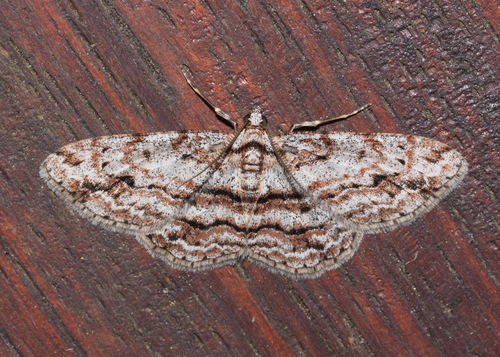
Didymoctenia exsuperata (Walker, 1860)
Didymoctenia exsuperata (Walker, 1860)
Didymoctenia exsuperata (thick-lined bark moth) is the only species in the Didymoctenia moth genus, found in Australia.
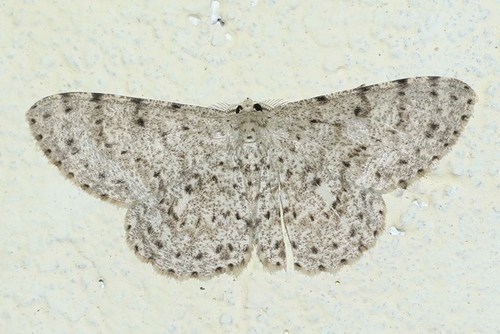
Catoria sublavaria (Guenée, 1857)
Catoria sublavaria (Guenée, 1857)
Catoria sublavaria is a moth species with 40–45 mm wingspan, larvae feeding on Alseodaphne and Excoecaria.
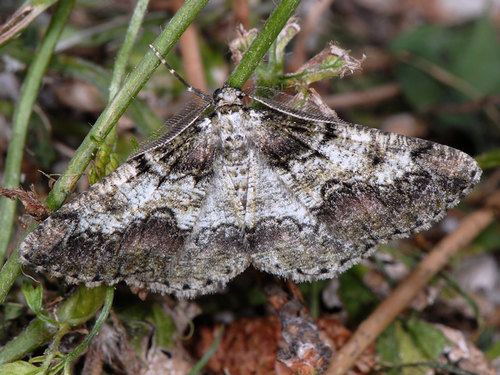
Cleorodes lichenaria (Hufnagel, 1767)
Cleorodes lichenaria (Hufnagel, 1767)
Cleorodes lichenaria, the Brussels lace, is a single species in the monotypic geometrid moth genus Cleorodes found across parts of Eurasia.
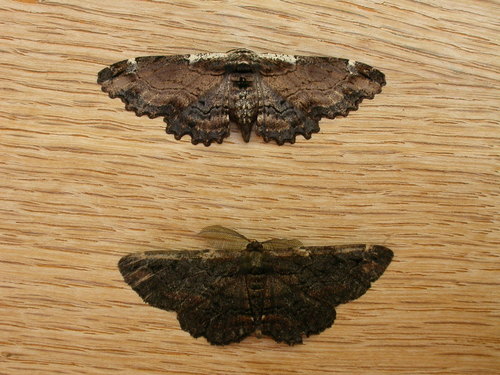
Pholodes sinistraria (Guenée, 1857)
Pholodes sinistraria (Guenée, 1857)
Pholodes sinistraria, the sinister/frilled bark moth, is an Australian geometrid moth whose larvae feed on many plants and are a macadamia pest.
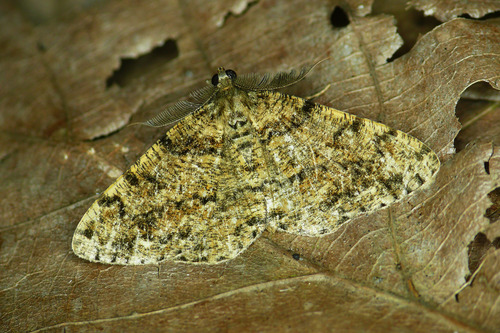
Deileptenia ribeata (Clerck, 1759)
Deileptenia ribeata (Clerck, 1759)
The satin beauty Deileptenia ribeata is a geometrid moth found across much of Eurasia, with larvae feeding on many trees.
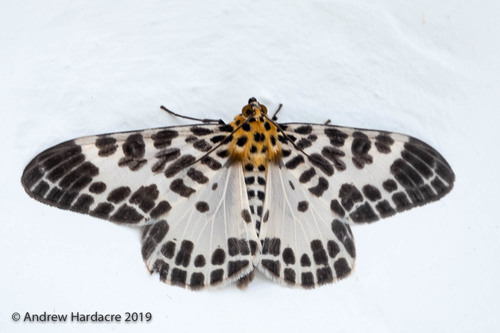
Pogonopygia nigralbata Warren, 1894
Pogonopygia nigralbata Warren, 1894
Pogonopygia nigralbata is a Geometridae moth found across parts of Asia, with a 46–53 mm wingspan and larvae that feed on Illicium in Japan.
Related Families
Start Exploring Nature Today
Download iNature for free. 10 identifications on us. No account needed. No credit card required.
Download Free on App Store
