Fabaceae — Legume Family
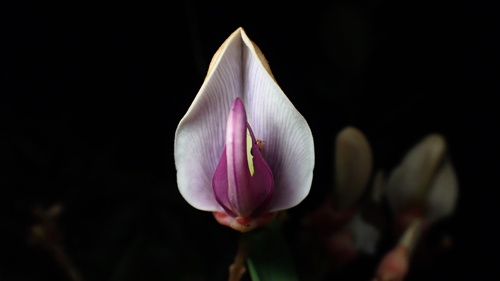
Callerya nitida (Benth.) R.Geesink
Callerya nitida (Benth.) R.Geesink
Callerya nitida is a Fabaceae flowering plant native to parts of China that produces compounds that do and do not interact with thrombin.
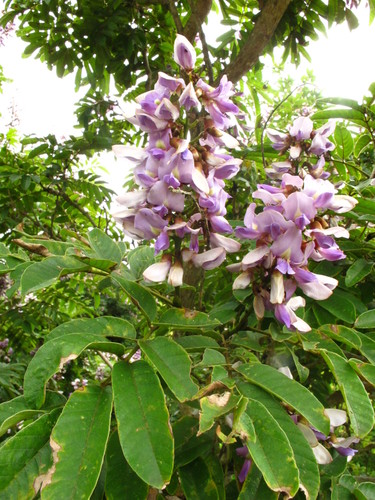
Millettia grandis (E.Mey.) Skeels
Millettia grandis (E.Mey.) Skeels
Millettia grandis is a medium to large semi-deciduous tree native to coastal South African forests.
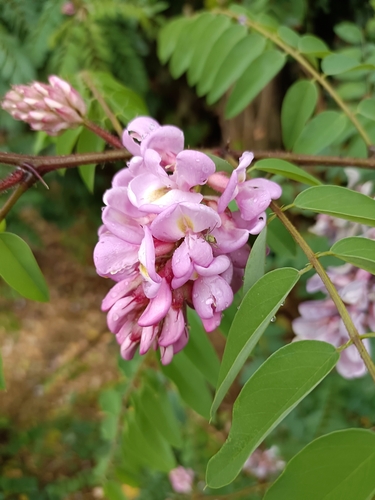
Robinia viscosa Michx. ex Vent.
Robinia viscosa Michx. ex Vent.
Robinia viscosa (clammy locust) is a medium-sized deciduous tree native to the southeastern United States.
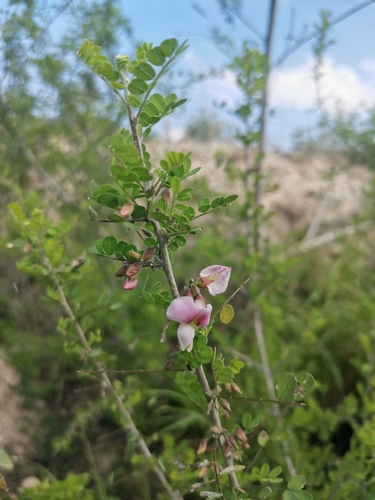
Coursetia axillaris J.M.Coult. & Rose
Coursetia axillaris J.M.Coult. & Rose
Texas babybonnets (Coursetia axillaris) is a thornless Fabaceae shrub native to dry areas of Texas and eastern Mexico.
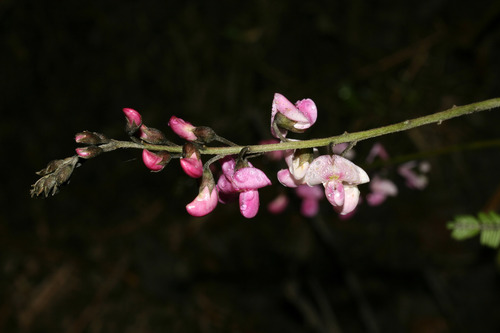
Coursetia dubia (Kunth) DC.
Coursetia dubia (Kunth) DC.
Coursetia dubia is a Fabaceae flowering plant species found only in Ecuador, with two specific natural habitat types.
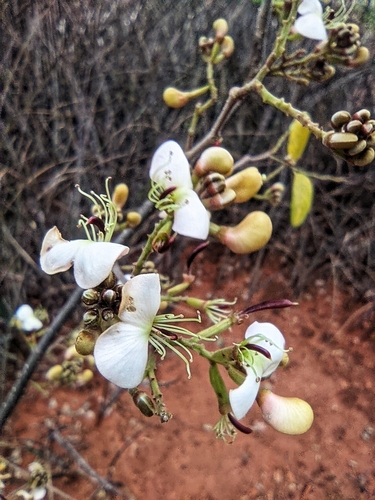
Amburana cearensis (Allemão) A.C.Sm.
Amburana cearensis (Allemão) A.C.Sm.
Amburana cearensis is a threatened South American native timber tree in the Fabaceae plant family.
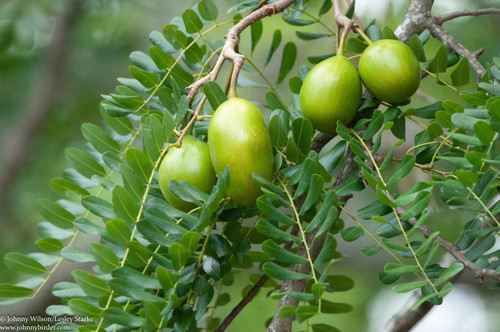
Cordyla africana Lour.
Cordyla africana Lour.
Cordyla africana, commonly called wild mango, is a deciduous legume tree native to eastern central and southern Africa.
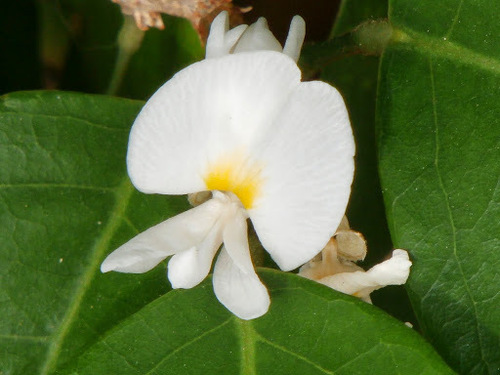
Baphia nitida G.Lodd.
Baphia nitida G.Lodd.
Baphia nitida is a small West African legume tree valued for its red dye and skin-beneficial extract.
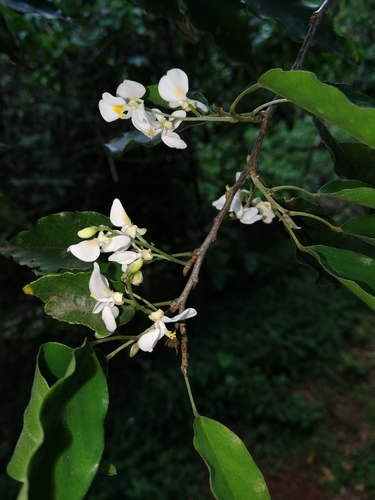
Bracteolaria racemosa Hochst.
Bracteolaria racemosa Hochst.
Bracteolaria racemosa is the only species in the Bracteolaria genus, a native South African shrub or tree in the pea family.
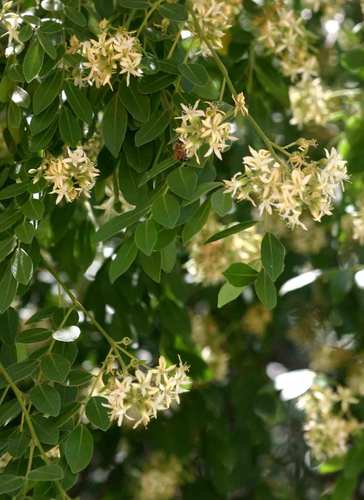
Xanthocercis zambesiaca (Baker) Dumaz-le-Grand
Xanthocercis zambesiaca (Baker) Dumaz-le-Grand
Xanthocercis zambesiaca is an African legume species, commonly called nyala tree or mshatu, that indicates groundwater.
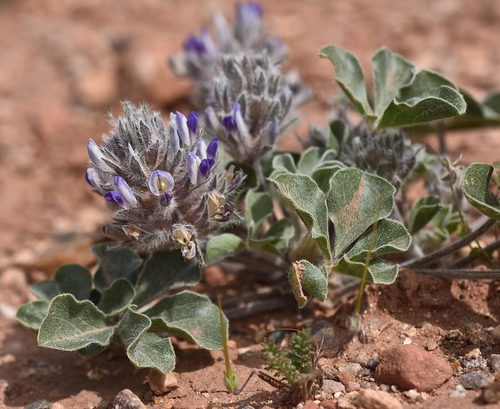
Pediomelum castoreum (S.Watson) Rydb.
Pediomelum castoreum (S.Watson) Rydb.
Pediomelum castoreum is a perennial legume native to deserts at the intersection of California, Nevada, and Arizona.
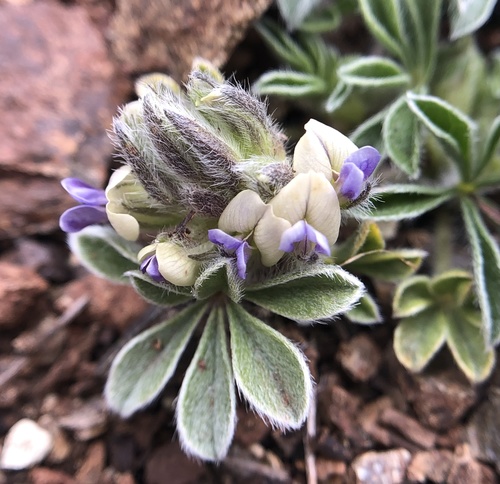
Pediomelum californicum (S.Watson) Rydb.
Pediomelum californicum (S.Watson) Rydb.
Pediomelum californicum, California Indian breadroot, is a leguminous perennial herb endemic to California's coastal mountain chaparral and woodlands.
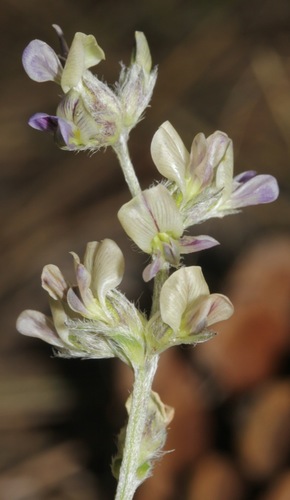
Pediomelum digitatum (Nutt.) Isely
Pediomelum digitatum (Nutt.) Isely
Palmleaf Indian breadroot (Pediomelum digitatum) is a legume flowering plant found in the central United States.
Rupertia rigida (Parish) J.W.Grimes
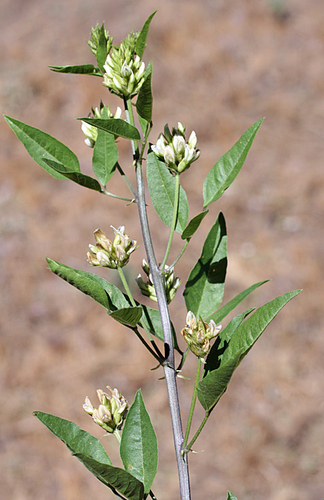
Rupertia rigida (Parish) J.W.Grimes
Rupertia rigida is a bushy perennial herb with pealike flowers and small hairy brownish legume fruits.
Hoita orbicularis (Lindl.) Rydb.
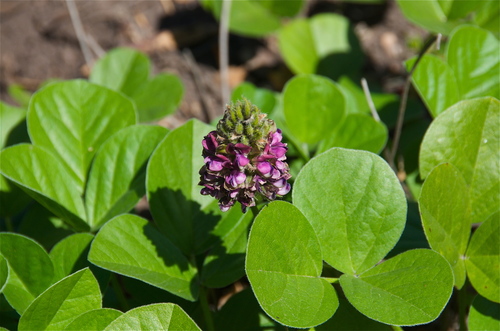
Hoita orbicularis (Lindl.) Rydb.
Hoita orbicularis, or roundleaf leather-root, is an endemic California perennial purple-flowered legume that grows in moist mountain habitats.
Hoita strobilina (Hook. & Arn.) Rydb.
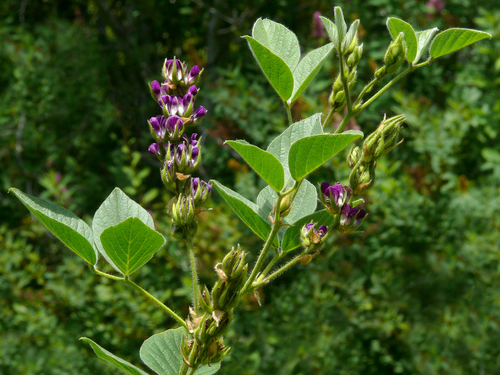
Hoita strobilina (Hook. & Arn.) Rydb.
Hoita strobilina, or Loma Prieta leatherroot, is a rare legume endemic to California's San Francisco Bay Area.

Psoralea L.
Psoralea L.
Psoralea L. is a perennial glandular herb, and Zuni people eat its fresh flowers to treat stomachaches.
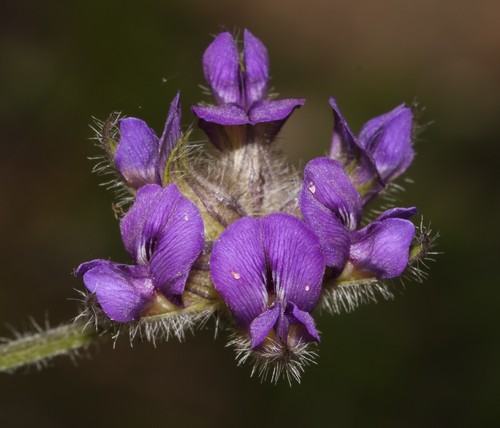
Psoralea swartbergensis (C.H.Stirt.) C.H.Stirt.
Psoralea swartbergensis (C.H.Stirt.) C.H.Stirt.
Psoralea swartbergensis is a near-threatened small shrublet from South Africa’s Sandstone Fynbos.
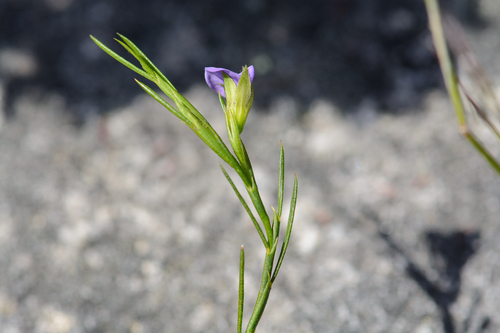
Psoralea fascicularis DC.
Psoralea fascicularis DC.
Psoralea fascicularis is a small South African endemic sub-shrub that is toxic to horses and cattle.
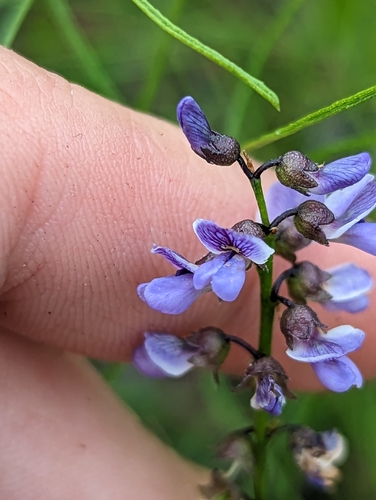
Orbexilum lupinellus (Michx.) Isely
Orbexilum lupinellus (Michx.) Isely
Orbexilum lupinellus is a small perennial herb found in the southeastern US and Mexico, growing in longleaf pine sandhills.
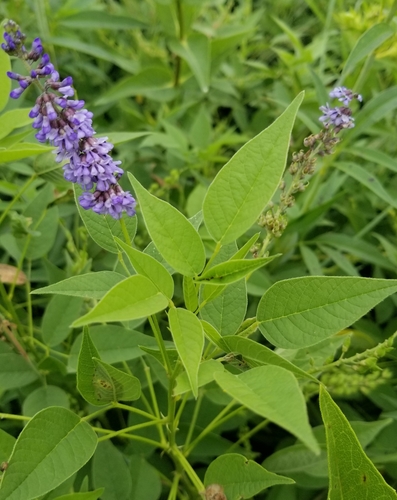
Orbexilum onobrychis (Nutt.) Rydb.
Orbexilum onobrychis (Nutt.) Rydb.
Orbexilum onobrychis is an uncommon rhizomatous perennial legume native to the eastern United States that hosts a rare moth's caterpillars.
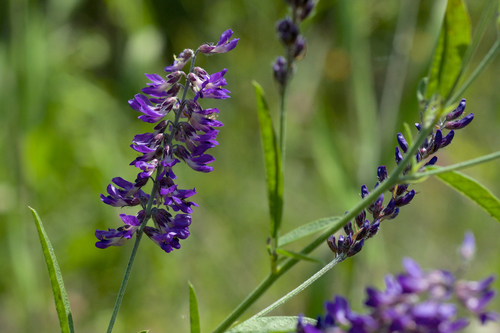
Orbexilum simplex (Nutt.) Rydb.
Orbexilum simplex (Nutt.) Rydb.
Orbexilum simplex is a legume flowering plant found in the south-central United States, commonly called singlestem leather-root.

Cullen australasicum (Schltdl.) J.W.Grimes
Cullen australasicum (Schltdl.) J.W.Grimes
Cullen australasicum is an Australian arid-zone shrub that acts as a larval food plant for several moth and butterfly species, and is sold for home gardens in South Australia.
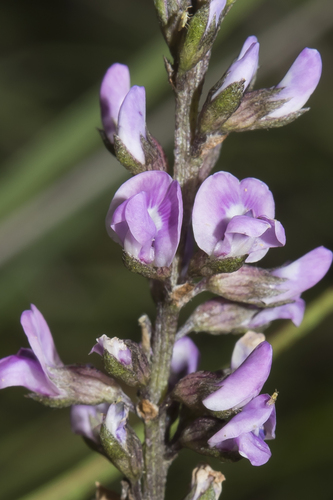
Cullen tenax (Lindl.) J.W.Grimes
Cullen tenax (Lindl.) J.W.Grimes
Cullen tenax, or emu foot, is a herbaceous perennial shrub native to south-eastern Australia.
Related Families
Start Exploring Nature Today
Download iNature for free. 10 identifications on us. No account needed. No credit card required.
Download Free on App Store
