Erebidae
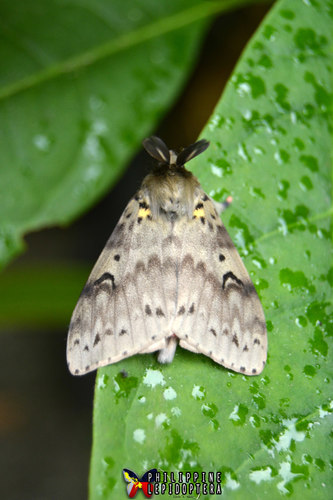
Lymantria lunata Stoll, 1782
Lymantria lunata Stoll, 1782
Lymantria lunata, the luna gypsy moth, is an Erebidae moth found from Southeast Asia to northeast Australia, with 60 mm wingspan.
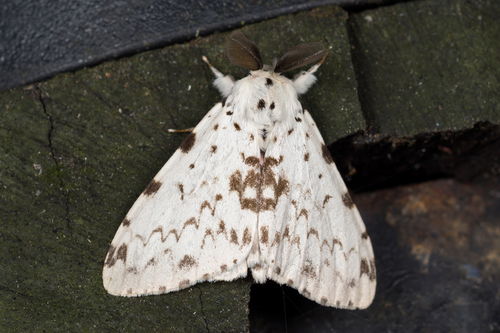
Lymantria brunneiplaga Swinhoe, 1903
Lymantria brunneiplaga Swinhoe, 1903
Lymantria brunneiplaga is a moth species found in Sundaland and the Philippines, whose larvae feed on multiple plant genera.
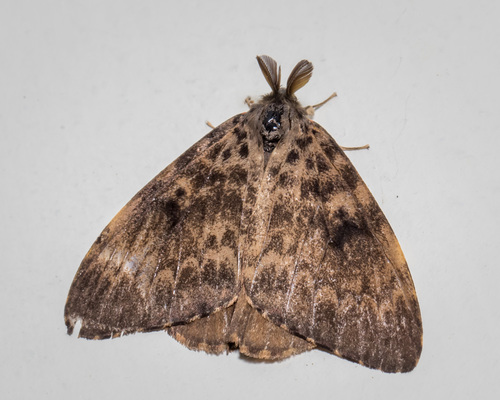
Lymantria ampla Walker, 1855
Lymantria ampla Walker, 1855
Lymantria ampla is an Erebidae moth found in India and Sri Lanka, described in 1855 by Francis Walker.
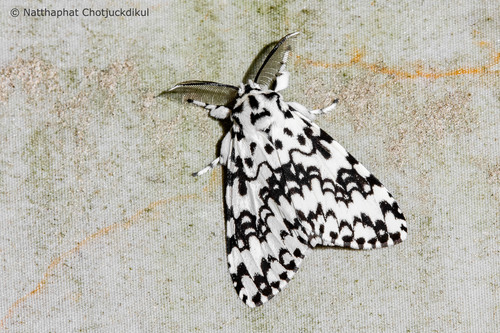
Lymantria concolor Walker, 1855
Lymantria concolor Walker, 1855
Lymantria concolor is a defoliating Erebidae moth found in South and East Asia whose caterpillars use age-changing chemical secretions against predators.
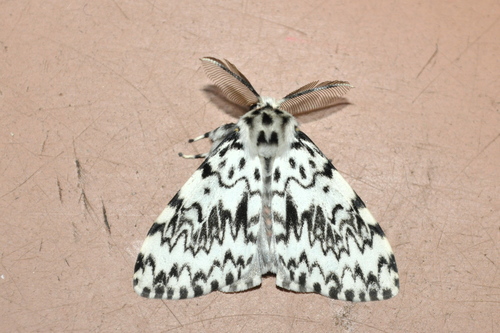
Lymantria monacha Linnaeus, 1758
Lymantria monacha Linnaeus, 1758
Lymantria monacha is a Palearctic moth whose larvae can cause major forestry damage when outbreaks occur.
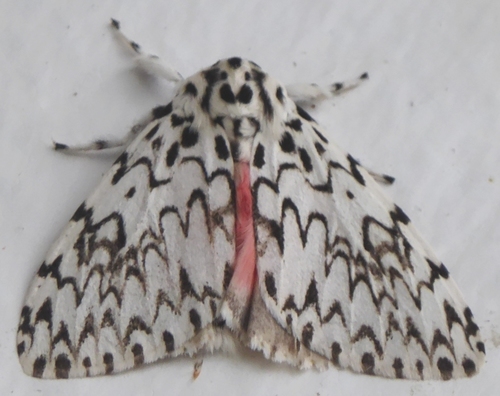
Lymantria subrosea
Lymantria subrosea
Lymantria subrosea is an Erebidae moth first described in 1855, found across South and East Asia, and its caterpillars are tree pests.
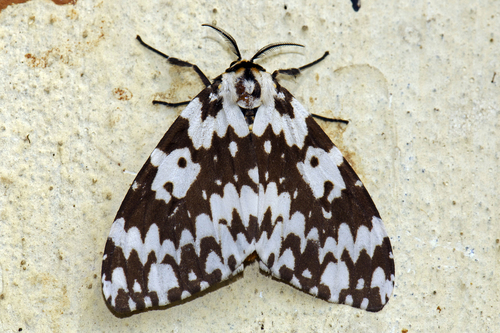
Lymantria marginata Walker, 1855
Lymantria marginata Walker, 1855
Lymantria marginata is a sexually dimorphic erebid moth found across South and Southeast Asia, whose caterpillars are crop pests.
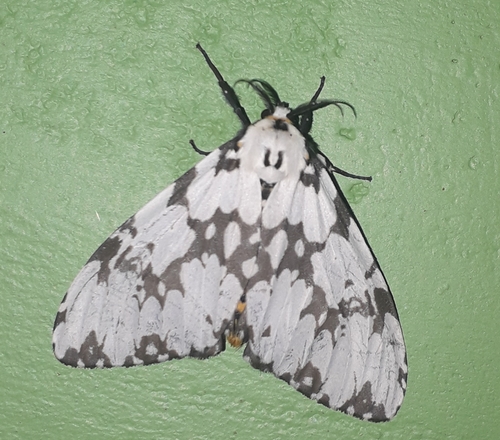
Lymantria fuliginosa Moore, 1883
Lymantria fuliginosa Moore, 1883
Lymantria fuliginosa is an 1883-described Erebidae moth found in India and Sri Lanka.
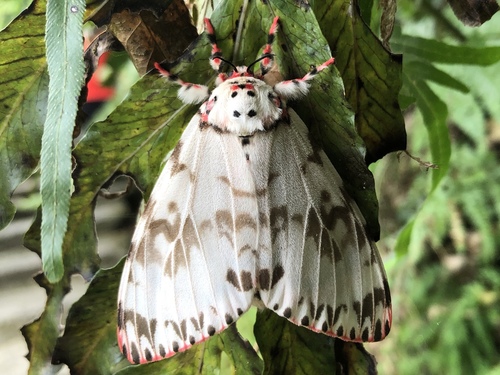
Lymantria mathura Moore, 1865
Lymantria mathura Moore, 1865
The rosy gypsy moth (Lymantria mathura) is a defoliating pest moth found across East and South Asia that feeds on multiple broadleaf tree genera.
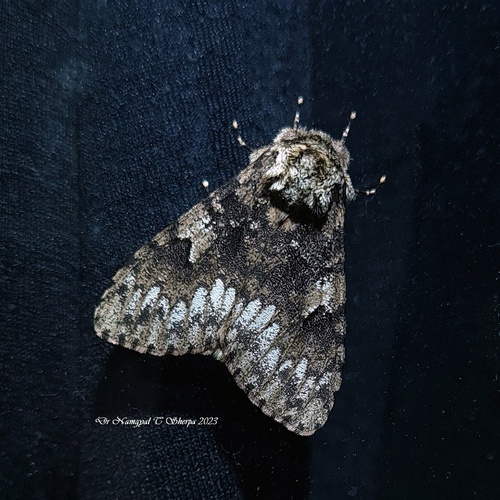
Lymantria serva Fabricius, 1793
Lymantria serva Fabricius, 1793
Lymantria serva is a moth species with sexually dimorphic traits, larvae feeding on specific trees and long development.
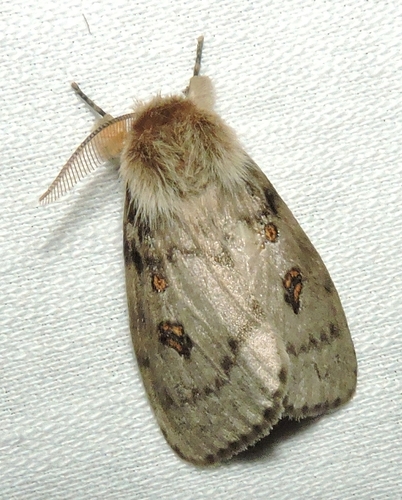
Leptocneria reducta Walker, 1855
Leptocneria reducta Walker, 1855
Leptocneria reducta, the white cedar moth, is a Lymantriinae moth found across most of Australia.
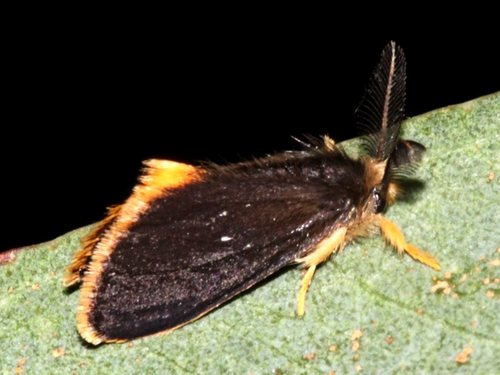
Oligeria hemicalla Lower, 1905
Oligeria hemicalla Lower, 1905
Oligeria hemicalla, the tiny tussock moth, is the only species in the Oligeria moth genus, found in southeastern Australia.
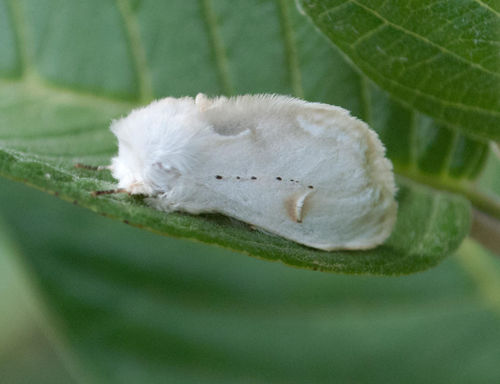
Naroma varipes Walker, 1865
Naroma varipes Walker, 1865
Naroma varipes (fig tree moth) is a Lymantriinae moth native to tropical and southern Africa that feeds on fig species as larvae.
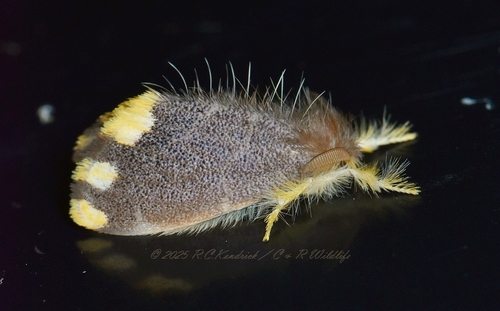
Orvasca subnotata Walker, 1865
Orvasca subnotata Walker, 1865
Orvasca subnotata is a millet-feeding pest tussock moth found in Indomalaya and East Asia, first described in 1865.
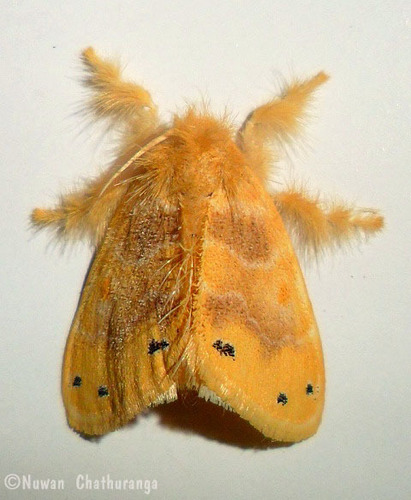
Artaxa guttata Walker, 1855
Artaxa guttata Walker, 1855
Artaxa guttata is an erebid moth found in South Asia, whose caterpillars are minor pests of many plant species.
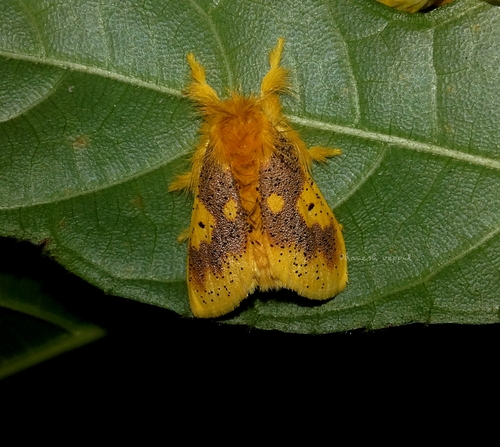
Nygmia icilia Stoll, 1790
Nygmia icilia Stoll, 1790
Nygmia icilia is a moth species with distinct orange-yellow wing markings and caterpillars that feed on specific host plants.
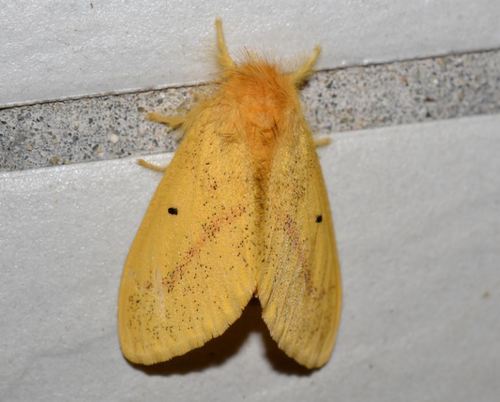
Nygmia plana Walker, 1856
Nygmia plana Walker, 1856
Nygmia plana is a mostly orange moth species with unspiked or spiked, colored caterpillars.
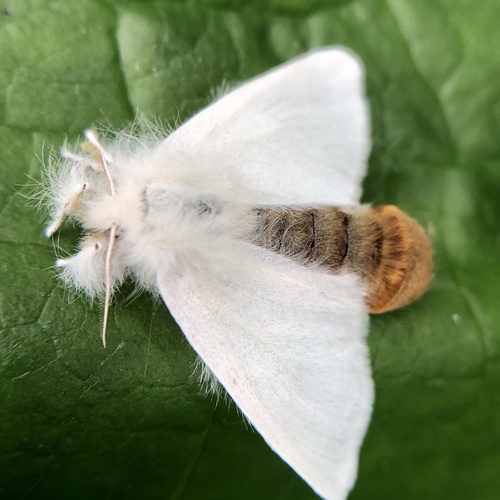
Euproctis chrysorrhoea Linnaeus, 1758
Euproctis chrysorrhoea Linnaeus, 1758
Euproctis chrysorrhoea, the brown-tail moth, is a single-generation moth with distinct seasonal life stages and characteristic hairy bodies.
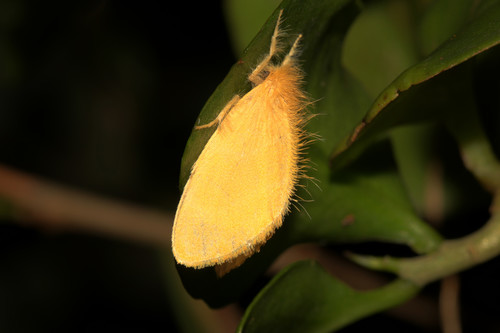
Euproctis taiwana Shiraki, 1913
Euproctis taiwana Shiraki, 1913
Euproctis taiwana (Taiwan yellow tussock moth) is an erebid tussock moth distributed across Asia.
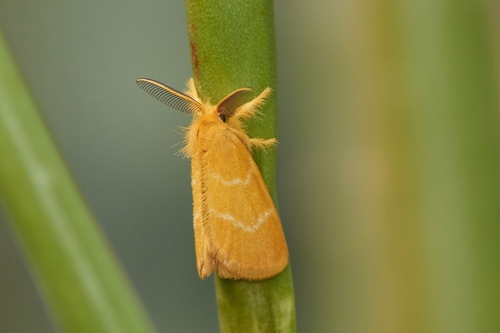
Euproctis lutea Fabricius, 1775
Euproctis lutea Fabricius, 1775
Euproctis lutea is an erebid moth whose larval hairs cause intense itching on contact with human skin.
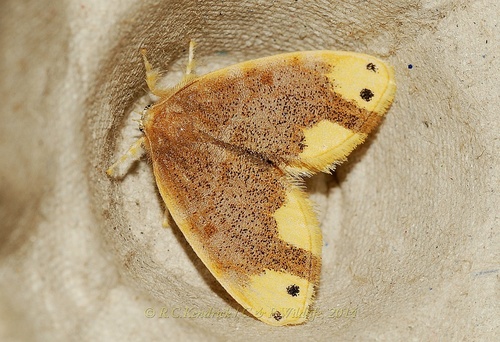
Arna bipunctapex (Hampson, 1891)
Arna bipunctapex (Hampson, 1891)
Arna bipunctapex is a Erebidae moth found across South and Southeast Asia, whose larvae feed on several plant genera.
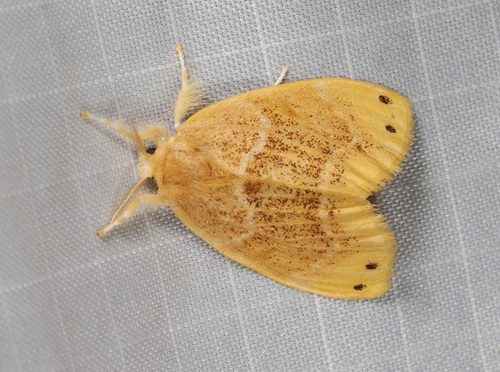
Euproctis pseudoconspersa Strand, 1923
Euproctis pseudoconspersa Strand, 1923
Arna pseudoconspersa (tea tussock moth/Japanese browntail moth) is a toxic, harmful erebid moth found in East and South Asia.
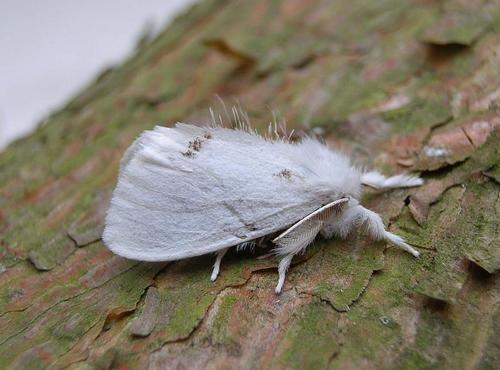
Sphrageidus similis Füssly, 1775
Sphrageidus similis Füssly, 1775
Sphrageidus similis is a silky white moth similar to Euproctis chrysorrhoea, with several named dark-spotted forewing color forms.
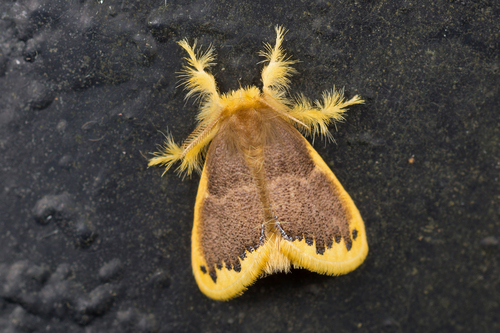
Somena similis (Moore)
Somena similis (Moore)
Somena similis is an Erebidae moth described in 1860, found from India to Sundaland.
Related Families
Start Exploring Nature Today
Download iNature for free. 10 identifications on us. No account needed. No credit card required.
Download Free on App Store
