Cerambycidae
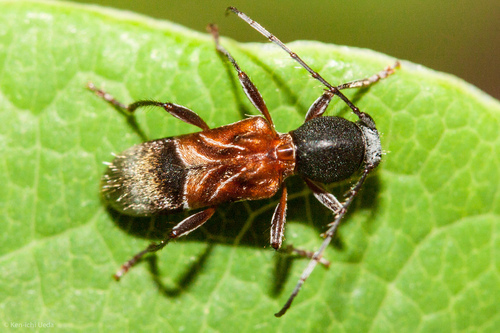
Cyrtophorus verrucosus (Olivier, 1795)
Cyrtophorus verrucosus (Olivier, 1795)
Cyrtophorus verrucosus is an ant-mimicking North American beetle that inhabits forests, acts as a decomposer and pollinator, and has declined in Ontario.
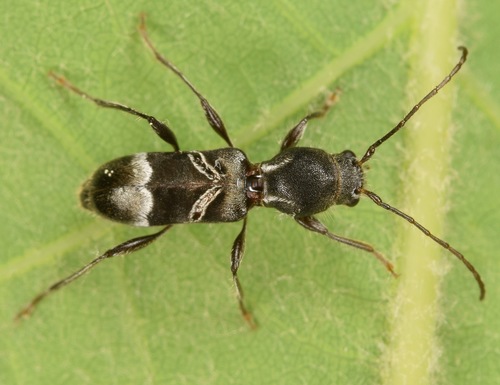
Tilloclytus geminatus (Haldeman, 1847)
Tilloclytus geminatus (Haldeman, 1847)
Tilloclytus geminatus is a longhorn beetle species from northeastern North America, described in 1847.
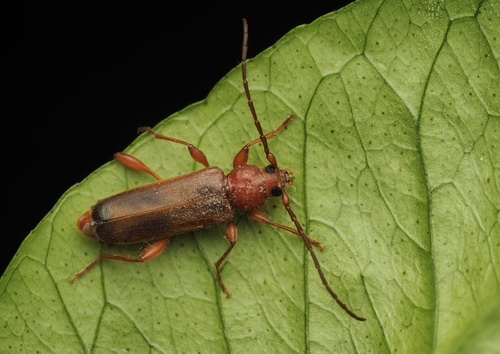
Phymatodes testaceus (Linnaeus, 1758)
Phymatodes testaceus (Linnaeus, 1758)
Phymatodes testaceus, the violet tanbark beetle, is a transpalearctic longhorn beetle species whose larvae live in deciduous tree bark.
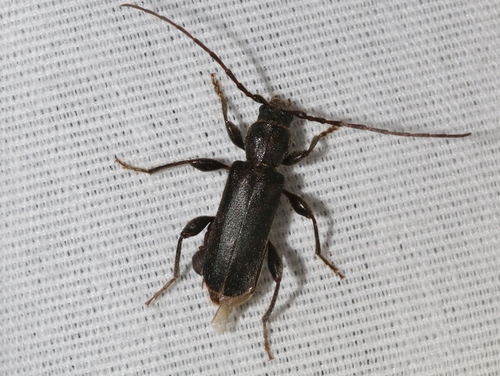
Phymatodes grandis Casey, 1912
Phymatodes grandis Casey, 1912
Phymatodes grandis is a longhorn beetle in Cerambycidae whose males produce aggregation-sex pheromones, described in 1912.
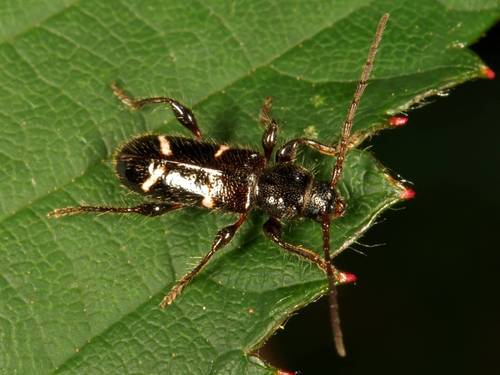
Phymatodes nitidus LeConte, 1874
Phymatodes nitidus LeConte, 1874
Phymatodes nitidus is a longhorn beetle species found on North America's west coast that breeds in giant sequoia and coast redwood cones.
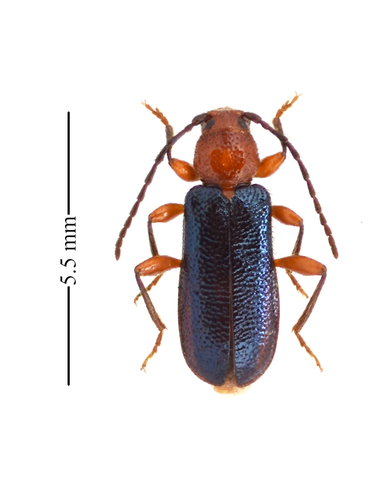
Phymatodes amoenus (Say, 1824)
Phymatodes amoenus (Say, 1824)
Phymatodes amoenus, the grapevine phymatodes, is a longhorn beetle species found in North America.
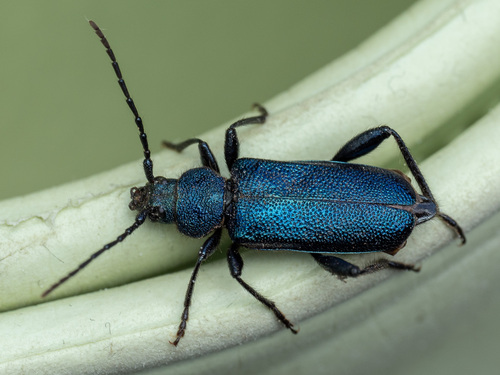
Callidium violaceum (Linnaeus, 1758)
Callidium violaceum (Linnaeus, 1758)
Violet tanbark beetle, Callidium violaceum, is a cerambycid beetle described by Carl Linnaeus in 1758.
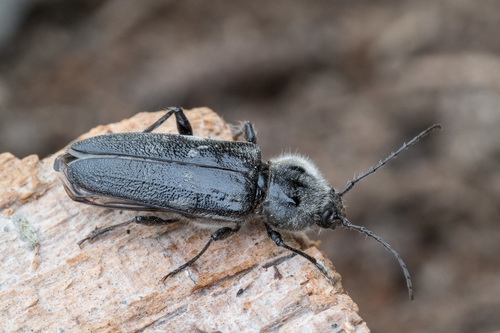
Hylotrupes bajulus (Linnaeus, 1758)
Hylotrupes bajulus (Linnaeus, 1758)
This is a description of the widely distributed polymorphic beetle Hylotrupes bajulus, originating from Europe
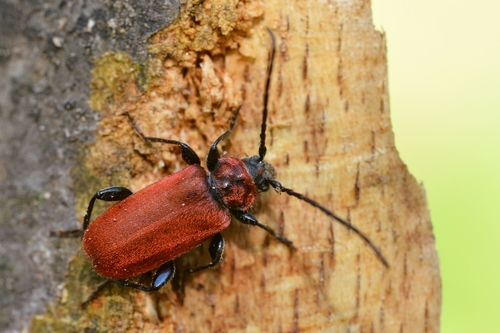
Pyrrhidium sanguineum (Linnaeus, 1758)
Pyrrhidium sanguineum (Linnaeus, 1758)
Pyrrhidium sanguineum is a common European longhorn beetle that prefers oak, and the only species in its genus.
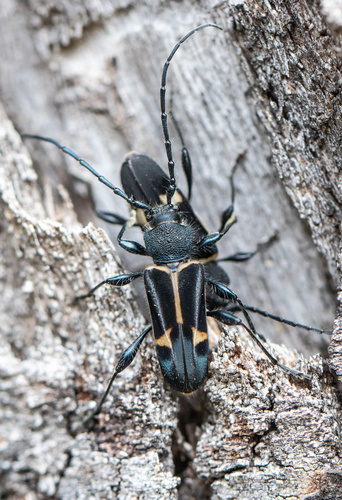
Calydon submetallicum (Blanchard, 1851)
Calydon submetallicum (Blanchard, 1851)
Calydon submetallicum is a long-horned beetle species in the Cerambycidae family, native to Argentina and Chile.
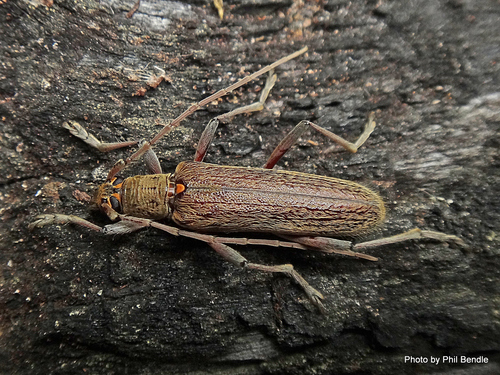
Oemona hirta (Fabricius, 1775)
Oemona hirta (Fabricius, 1775)
Oemona hirta, the lemon tree borer, is an endemic New Zealand longhorn beetle that develops in tree wood.
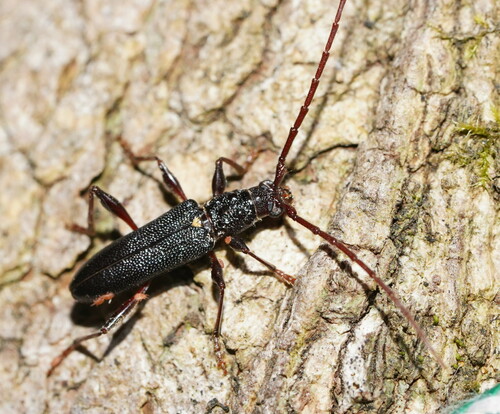
Callidiopis scutellaris (Fabricius, 1801)
Callidiopis scutellaris (Fabricius, 1801)
Callidiopis scutellaris, the round-headed wood borer, is an Australian native beetle that also occurs in New Zealand.
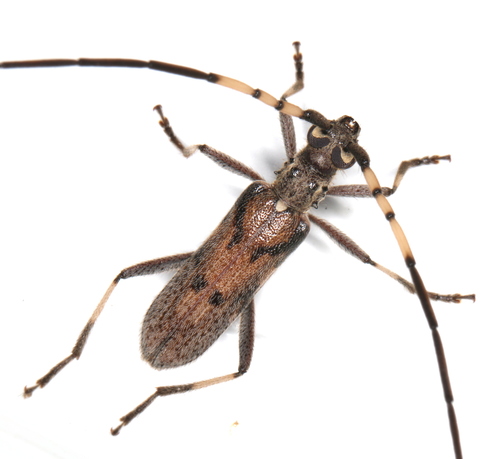
Didymocantha obliqua Newman, 1840
Didymocantha obliqua Newman, 1840
Didymocantha obliqua is a longhorn beetle native to Australia and an established exotic in New Zealand.
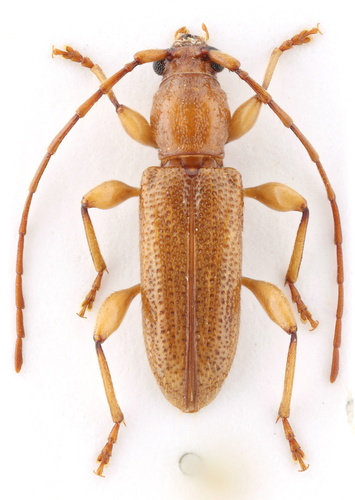
Curtomerus flavus (Fabricius, 1775)
Curtomerus flavus (Fabricius, 1775)
Curtomerus flavus is a longhorn beetle species described in 1775, found across the Americas and Pacific/Caribbean islands.
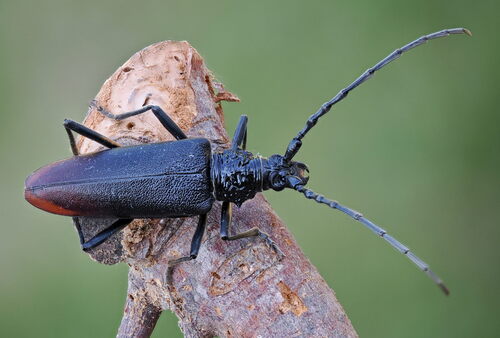
Cerambyx cerdo Linnaeus, 1758
Cerambyx cerdo Linnaeus, 1758
Cerambyx cerdo is a large European longhorn beetle with body-length-dependent antennae differences between sexes.

Cerambyx scopolii Fuesslins, 1775
Cerambyx scopolii Fuesslins, 1775
Cerambyx scopolii is a European longhorn beetle whose wood-boring larvae can kill oak, willow, and chestnut trees.
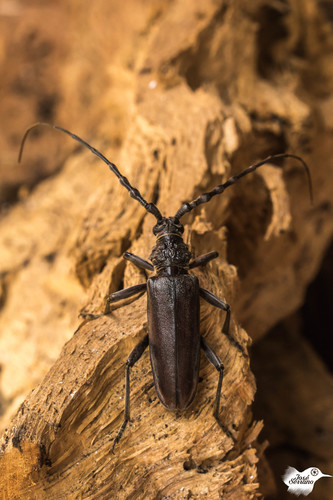
Cerambyx welensii (Küster, 1845)
Cerambyx welensii (Küster, 1845)
Cerambyx welensii is a longhorn beetle species widespread across Southern Europe, North Africa, and the Near East.
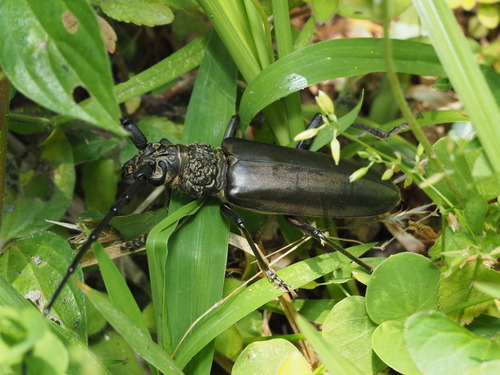
Nadezhdiella cantori (Hope, 1843)
Nadezhdiella cantori (Hope, 1843)
Nadezhdiella cantori is a long-horned beetle from the Cerambycidae family found in temperate Asia.
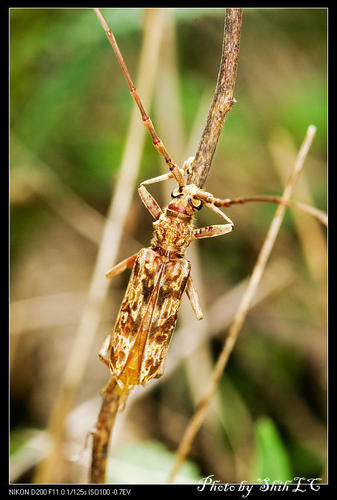
Aeolesthes chrysothrix (Bates, 1873)
Aeolesthes chrysothrix (Bates, 1873)
Aeolesthes chrysothrix is a longhorn beetle species found in Japan, Taiwan, and China.
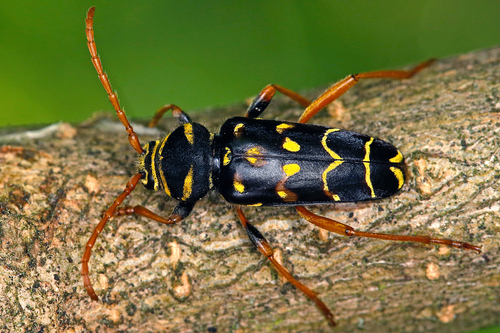
Plagionotus arcuatus (Linnaeus, 1758)
Plagionotus arcuatus (Linnaeus, 1758)
Plagionotus arcuatus is a cerambycid beetle that does Batesian mimicry, resembling Vespula wasps.
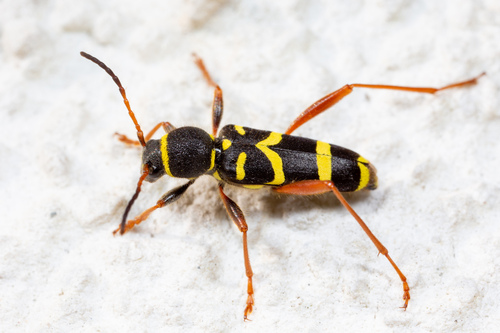
Clytus arietis (Linnaeus, 1758)
Clytus arietis (Linnaeus, 1758)
Clytus arietis, the wasp-mimicking wasp beetle, is widespread across Europe, with documented courtship behaviour.
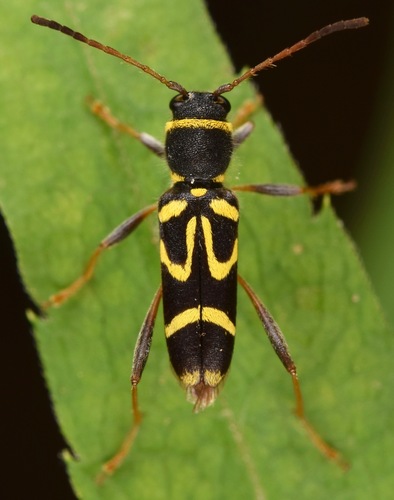
Clytus ruricola (Olivier, 1795)
Clytus ruricola (Olivier, 1795)
Clytus ruricola is a species of longhorn beetle (Cerambycidae) described by Olivier in 1795.
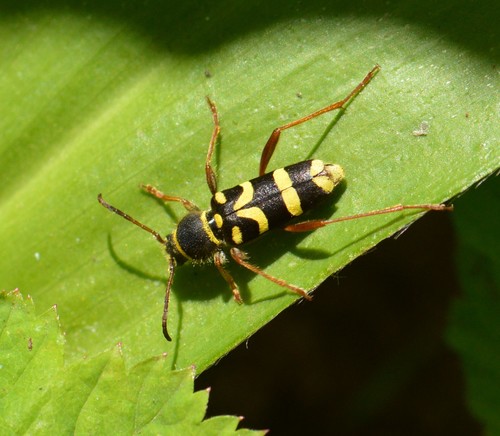
Clytus planifrons (LeConte, 1874)
Clytus planifrons (LeConte, 1874)
Clytus planifrons is a long-horned beetle from North America's Pacific coast, first described in 1874.
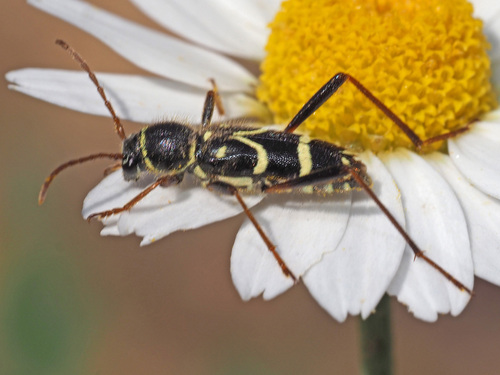
Clytus rhamni Germar, 1817
Clytus rhamni Germar, 1817
Clytus rhamni is a common wasp-mimicking longhorn beetle widespread across Europe and western Asia.
Related Families
Start Exploring Nature Today
Download iNature for free. 10 identifications on us. No account needed. No credit card required.
Download Free on App Store
