Asteraceae — Daisy Family
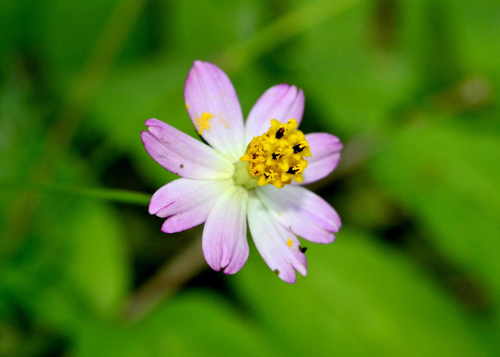
Cosmos caudatus Kunth
Cosmos caudatus Kunth
Cosmos caudatus Kunth is a Central American plant that reaches 2 m tall and closes its terminal buds at night.
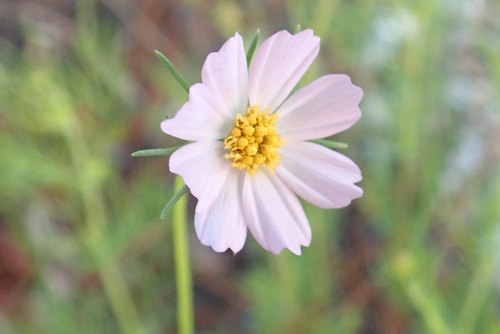
Cosmos parviflorus (Jacq.) Pers.
Cosmos parviflorus (Jacq.) Pers.
Cosmos parviflorus is an annual herbaceous flowering plant native to Mexico and southwestern US, often found as an agricultural weed.
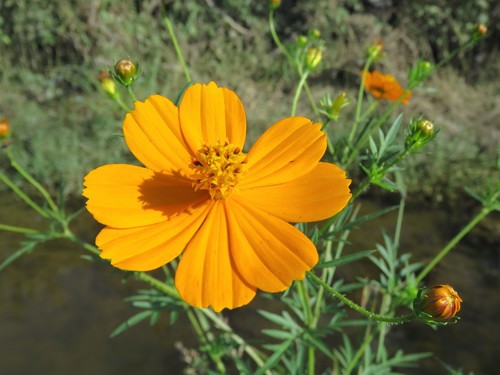
Cosmos sulphureus Cav.
Cosmos sulphureus Cav.
Cosmos sulphureus Cav. is a half-hardy annual flowering plant with multiple documented cultivation traits and uses across the world.
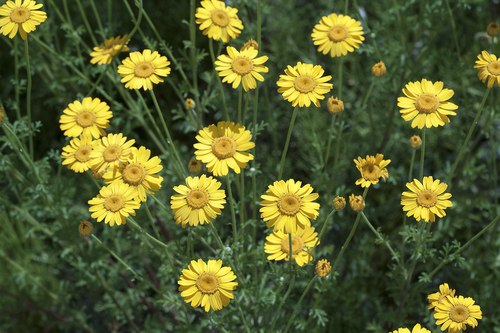
Cota tinctoria (L.) J.Gay
Cota tinctoria (L.) J.Gay
Cota tinctoria, golden marguerite, is a perennial flowering plant grown in gardens for its foliage and bright flowers, and it was historically used to make yellow dye.
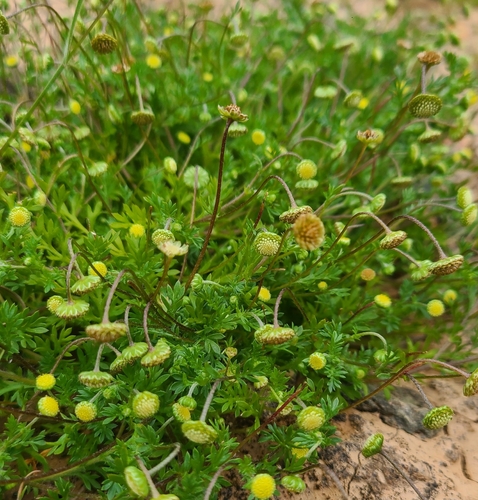
Cotula australis (Sieber ex Spreng.) Hook.fil.
Cotula australis (Sieber ex Spreng.) Hook.fil.
Cotula australis is a small daisy-family plant, native to Australia and New Zealand, that grows as a common weed elsewhere.
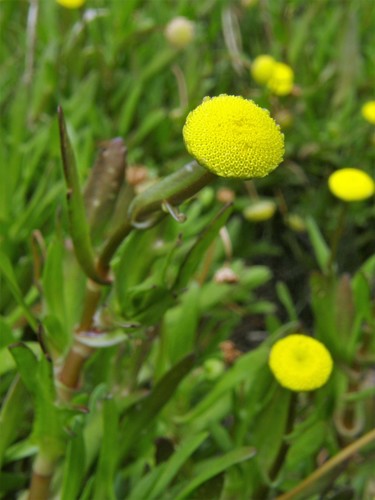
Cotula coronopifolia L.
Cotula coronopifolia L.
Cotula coronopifolia, brass buttons, is a salt-tolerant wetland plant native to southern Africa and New Zealand, invasive in some introduced regions with limited impact.
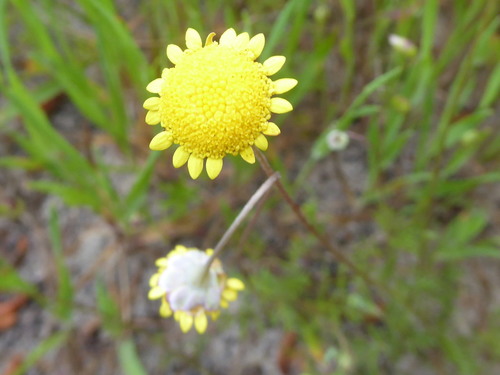
Cotula pruinosa (DC.) Jakoet & Magee
Cotula pruinosa (DC.) Jakoet & Magee
Cotula pruinosa is an annual herb with heterogamous capitula, heteromorphic cypselae, and yellow pseudo - ray florets. It ranges from Clanwilliam to Struisbaai, favors coastal sands, and flowers from late winter to mid - spring, sometimes into summer.
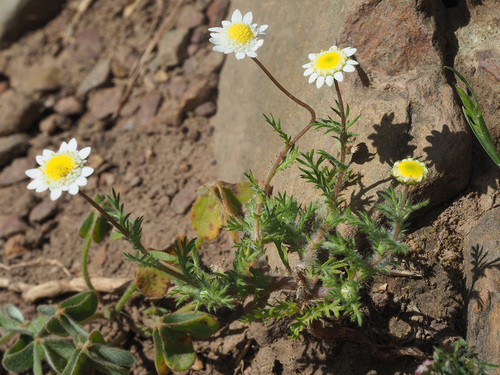
Cotula turbinata L.
Cotula turbinata L.
Cotula turbinata is an annual Asteraceae herb native to South Africa's Cape Province, now found in India and Australia.
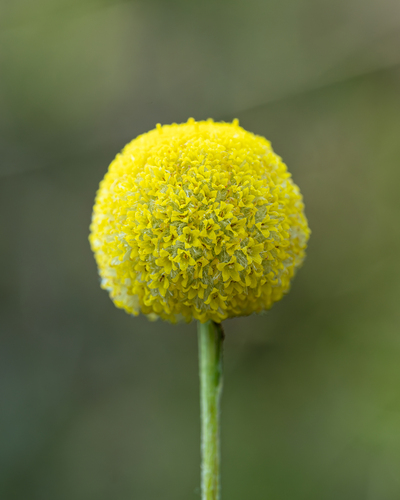
Craspedia variabilis J.Everett & Doust
Craspedia variabilis J.Everett & Doust
Craspedia variabilis, commonly billy buttons, is a low-growing hairy flowering plant grown in horticulture, found across parts of Australia.
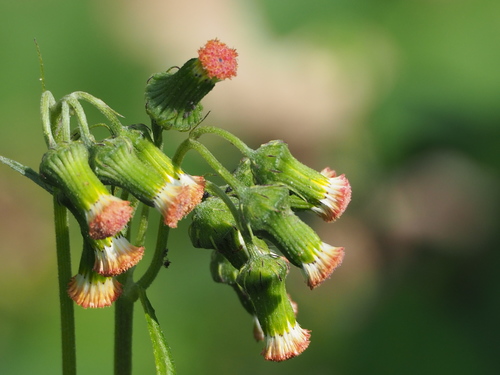
Crassocephalum crepidioides (Benth.) S.Moore
Crassocephalum crepidioides (Benth.) S.Moore
Crassocephalum crepidioides is an edible annual herb, used as vegetable and medicine, contains toxic alkaloid and is invasive in New Caledonia.
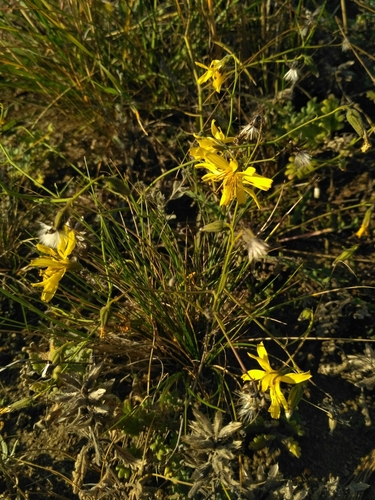
Crepidiastrum tenuifolium (Willd.) Sennikov
Crepidiastrum tenuifolium (Willd.) Sennikov
Crepidiastrum tenuifolium is a perennial herb 10 - 70 cm tall with a woody taproot, rosette leaves, corymbiform or paniculiform - corymbiform synflorescence, yellow florets, black fusiform achenes, and a white pappus, flowering and fruiting from Jul - Sep (2n = 10).
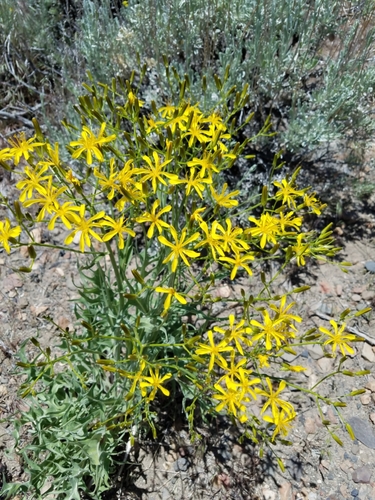
Crepis acuminata Nutt.
Crepis acuminata Nutt.
Crepis acuminata Nutt. is a perennial herb native to western North America that grows in dry open habitats.
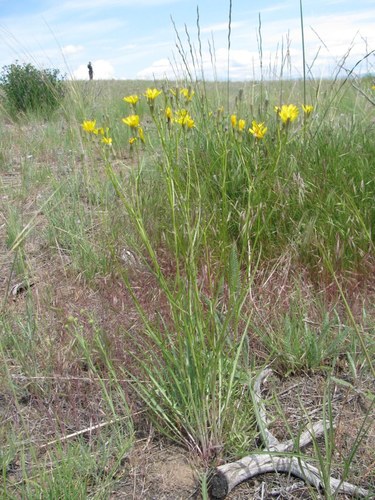
Crepis atribarba A.Heller
Crepis atribarba A.Heller
Crepis atribarba is a North American perennial flowering plant in the daisy family native to western Canada and the western U.S.
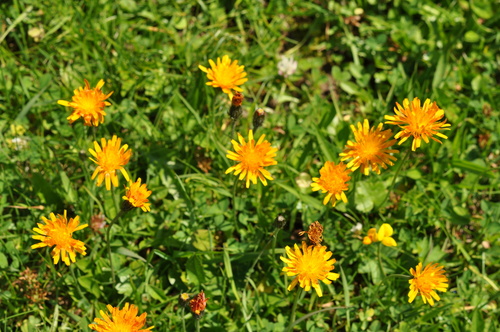
Crepis aurea (L.) Cass.
Crepis aurea (L.) Cass.
Crepis aurea (L.) Cass. is a perennial herb 2 - 30 cm high, with swollen caudex, specific leaf, head, flower, achene and pappus characteristics, described based on works by Babcock, Kamari and Lamond.
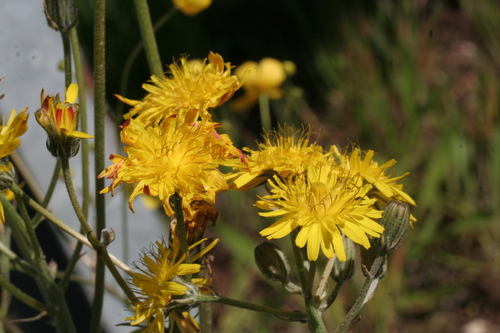
Crepis biennis L.
Crepis biennis L.
Crepis biennis L. is a tall perennial herb that produces yellow-flowered small heads without disc florets.
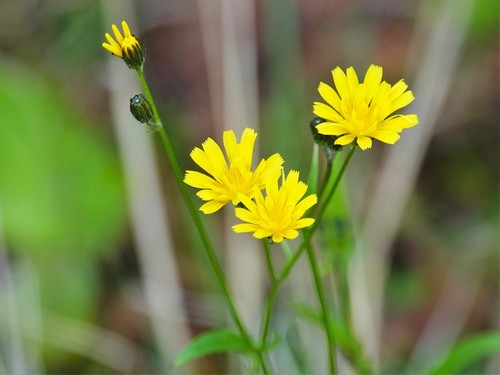
Crepis capillaris (L.) Wallr.
Crepis capillaris (L.) Wallr.
Crepis capillaris, or smooth hawksbeard, is a weedy annual flowering plant native to Europe that grows in open disturbed habitats.

Crepis foetida L.
Crepis foetida L.
Crepis foetida, stinking hawksbeard, is a European flowering herb in the Asteraceae family with three recognized subspecies.
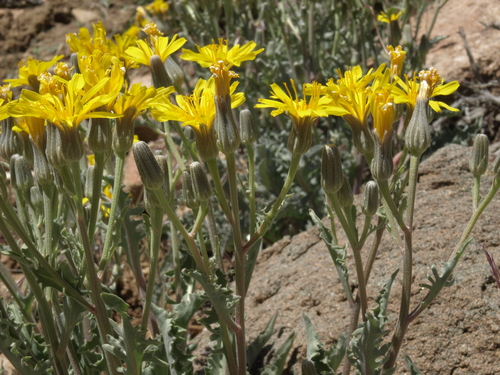
Crepis occidentalis Nutt.
Crepis occidentalis Nutt.
Crepis occidentalis, or western hawksbeard, is a North American perennial flowering herb sometimes grown in wildflower gardens.
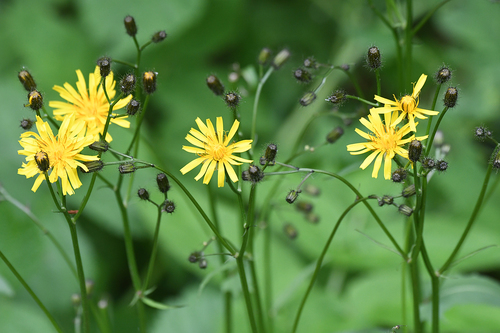
Crepis paludosa (L.) Moench
Crepis paludosa (L.) Moench
Crepis paludosa (marsh hawk's-beard) is a herbaceous perennial flowering plant widespread across much of Europe.
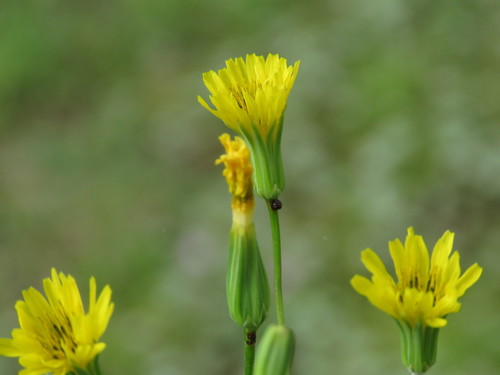
Crepis pulchra L.
Crepis pulchra L.
Crepis pulchra, smallflower hawksbeard, is an annual European herb in the Asteraceae family naturalized in parts of North America.
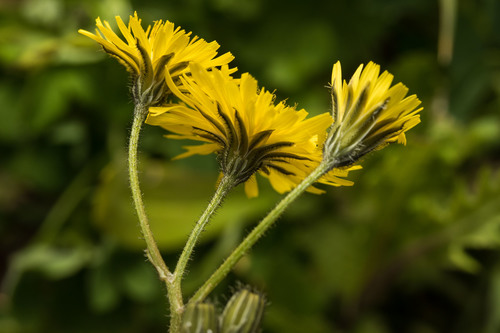
Crepis sancta (L.) Bornm.
Crepis sancta (L.) Bornm.
Crepis sancta is an annual rosette herb 3 - 55 (up to 85) cm high, with scapelike flowering stems, variable rosette leaves, synflorescence of 1 - 5 heads, ligulate yellow corollas, and dimorphic (or other) achenes.
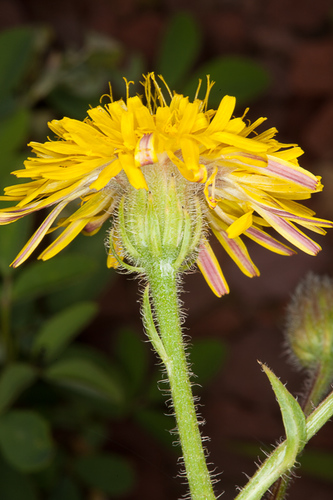
Crepis setosa Haller fil.
Crepis setosa Haller fil.
Crepis setosa, bristly hawksbeard, is a European Asteraceae flowering plant naturalized in North America, growing in forests and disturbed areas.
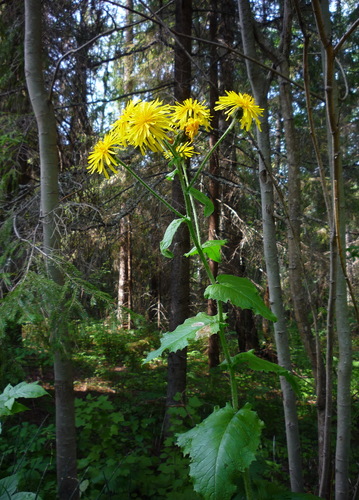
Crepis sibirica L.
Crepis sibirica L.
Crepis sibirica is a perennial herb in Asteraceae, found across parts of Asia and Eastern Europe, growing in forests, grasslands, and mountain slopes.
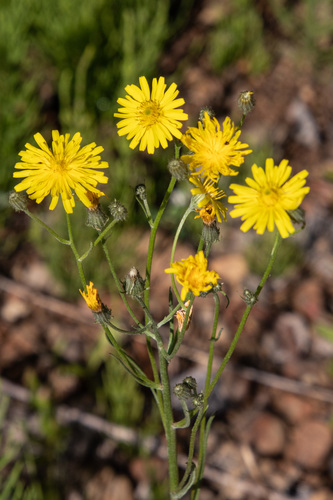
Crepis tectorum L.
Crepis tectorum L.
Crepis tectorum L. (narrowleaf hawksbeard) is an invasive annual yellow-flowered weed native to Eurasia.
Related Families
Start Exploring Nature Today
Download iNature for free. 10 identifications on us. No account needed. No credit card required.
Download Free on App Store
