Apidae
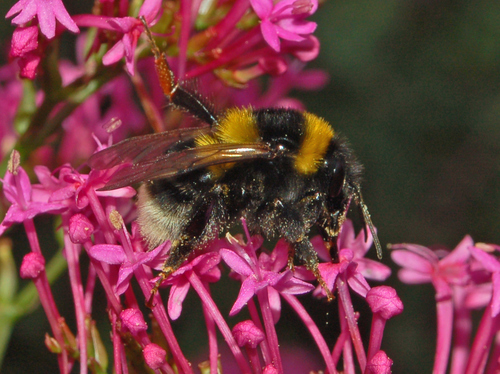
Bombus ruderatus (Fabricius, 1775)
Bombus ruderatus (Fabricius, 1775)
Bombus ruderatus is a large bumblebee native to Europe and North Africa, introduced globally for crop pollination, now rare in Britain.
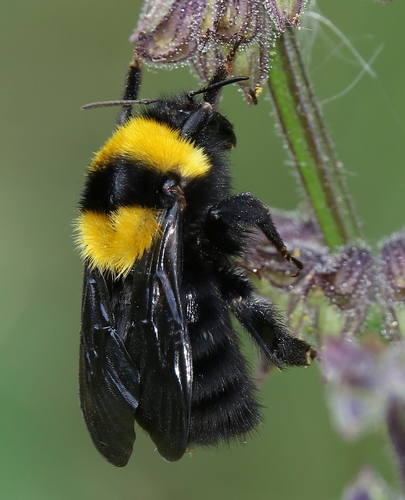
Bombus argillaceus (Scopoli, 1763)
Bombus argillaceus (Scopoli, 1763)
Bombus argillaceus is a large bumblebee found from southern Europe to central Asia that feeds on flowering plants from four common plant families.
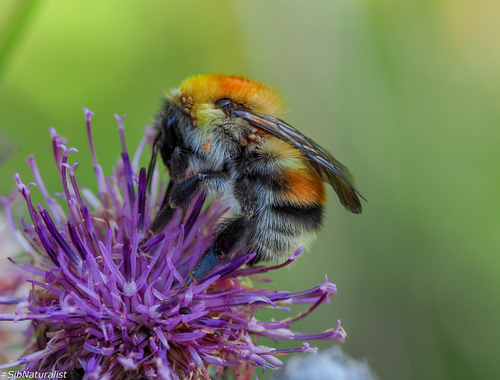
Bombus consobrinus Dahlbom, 1832
Bombus consobrinus Dahlbom, 1832
Bombus consobrinus Dahlbom, 1832 is a large bumblebee with distinct orange, black, and grey coloration on its body.
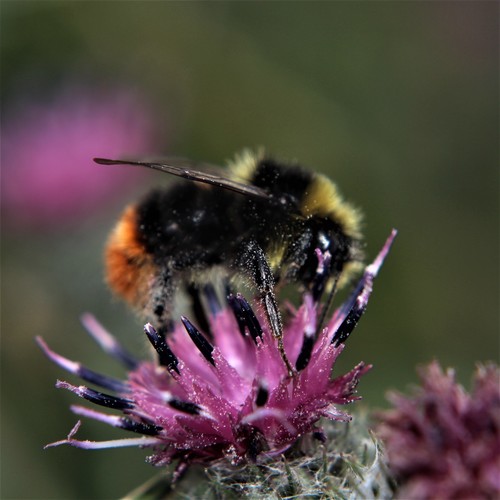
Bombus lapidarius (Linnaeus, 1758)
Bombus lapidarius (Linnaeus, 1758)
Bombus lapidarius, the red-tailed bumblebee, is a distinctive European pollinating bee that forms small colonies in open temperate habitats.
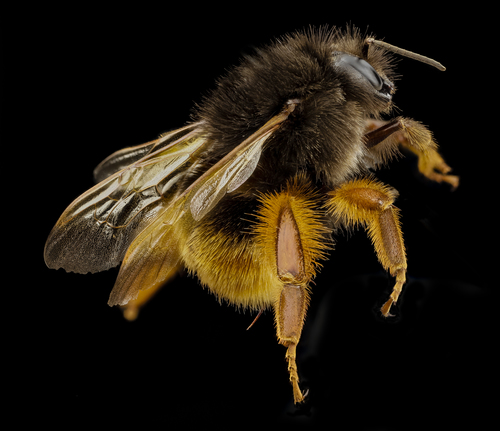
Bombus eximius Smith, 1852
Bombus eximius Smith, 1852
Bombus eximius is a large, distinctive bumblebee species found across parts of East and Southeast Asia.
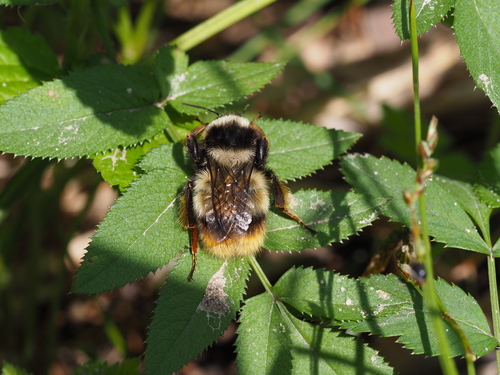
Bombus sichelii Radoszkowski, 1860
Bombus sichelii Radoszkowski, 1860
Sichel's bumblebee (Bombus sichelii) is a univoltine, polylectic Eurasian bumblebee that lives in mountain habitats.
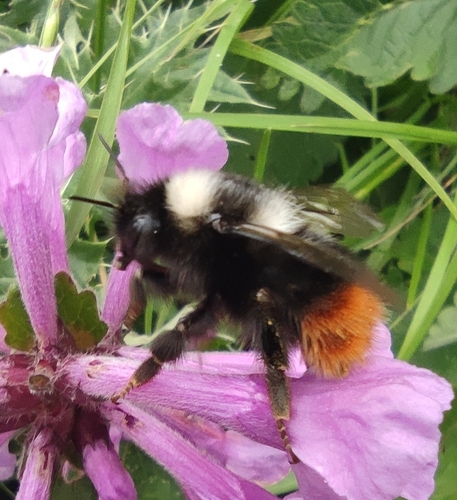
Bombus wurflenii Radoszkowski, 1860
Bombus wurflenii Radoszkowski, 1860
Bombus wurflenii is a variable, mostly mountain-dwelling bumblebee found in West Asia and parts of Russia that acts as an opportunistic nectar robber.
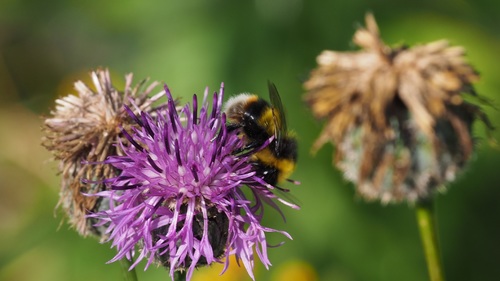
Bombus soroeensis (Fabricius, 1776)
Bombus soroeensis (Fabricius, 1776)
Bombus soroeensis is a small Eurasian bumblebee with yellow body bands, distributed from northern Scandinavia to Anatolia and northern Iran.
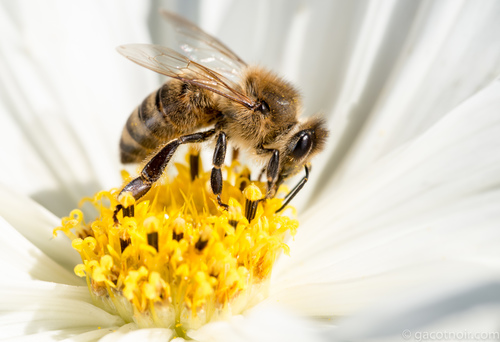
Apis mellifera Linnaeus, 1758
Apis mellifera Linnaeus, 1758
Apis mellifera, the western honey bee, is a widely domesticated eusocial honey bee important for honey production and pollination.
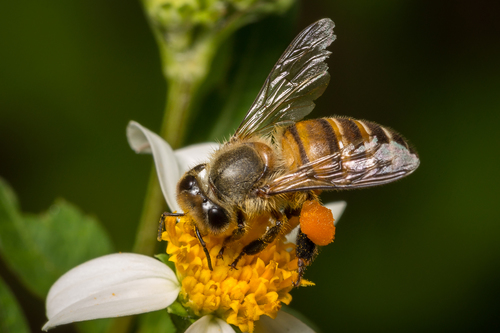
Apis cerana Fabricius, 1793
Apis cerana Fabricius, 1793
Apis cerana is an eastern honey bee species that uses feces for hornet defense and has spread to new regions via human activity.
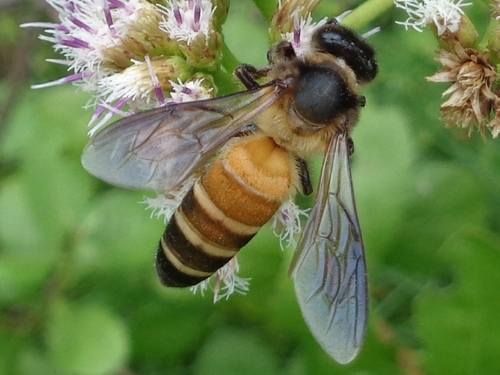
Apis dorsata Fabricius, 1793
Apis dorsata Fabricius, 1793
Apis dorsata (giant honey bee/rock bee) is a large wild migratory honey bee from South and Southeast Asia, harvested for honey in traditional honey hunting.
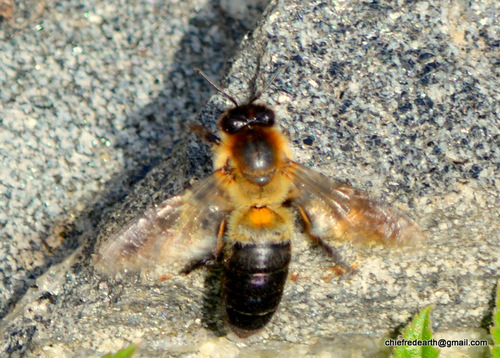
Apis laboriosa Smith, 1871
Apis laboriosa Smith, 1871
Apis laboriosa (the Himalayan giant honey bee), the world's largest honey bee, is a distinct Apis species native to Himalayan mountain regions.
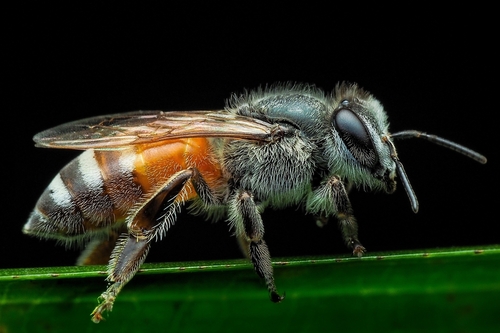
Apis florea Fabricius, 1787
Apis florea Fabricius, 1787
Apis florea, the dwarf honey bee, is a small primitive honey bee native to Asia and Africa, with a 2024 first record of an established colony in Europe.
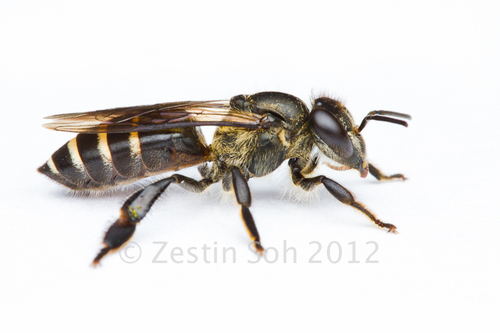
Apis andreniformis Smith, 1857
Apis andreniformis Smith, 1857
Apis andreniformis is a dark southeast Asian honey bee separated from the related A. florea by multiple morphological traits.
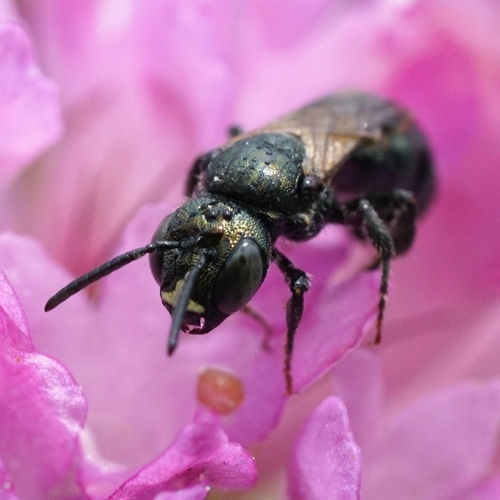
Ceratina calcarata Robertson, 1900
Ceratina calcarata Robertson, 1900
Ceratina calcarata, the spurred ceratina, is an eastern North American small carpenter bee, common native pollinator, and model for social evolution research.
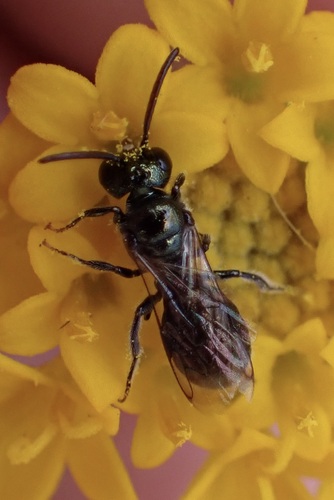
Ceratina acantha Provancher, 1895
Ceratina acantha Provancher, 1895
Ceratina acantha is a small carpenter bee from the Apidae family, found in North and Central America, that nests in dead twigs.
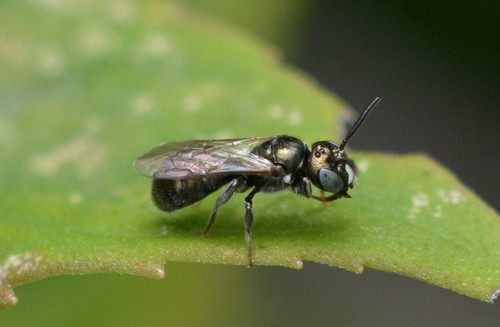
Ceratina strenua Smith, 1879
Ceratina strenua Smith, 1879
Ceratina strenua, the nimble ceratina, is a small carpenter bee of the Apidae family found in North America.
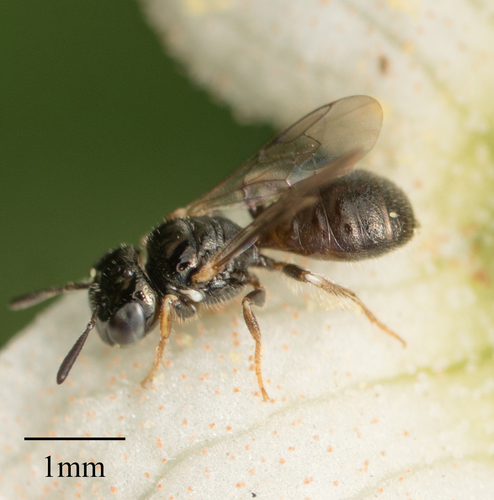
Ceratina arizonensis Cockerell, 1898
Ceratina arizonensis Cockerell, 1898
Ceratina arizonensis is a small carpenter bee species in the Apidae family found in North and Central America.
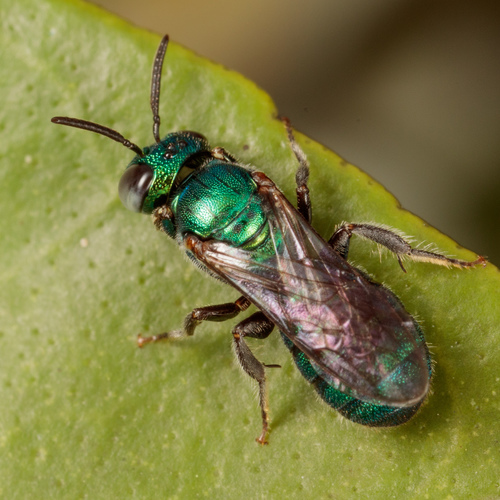
Ceratina cobaltina Cresson, 1878
Ceratina cobaltina Cresson, 1878
Ceratina cobaltina is a small carpenter bee species in the Apidae family that is found in Central America.
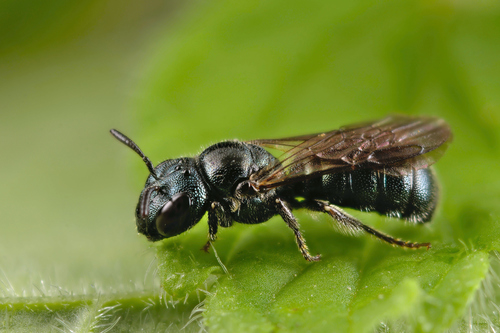
Ceratina cyanea (Kirby, 1802)
Ceratina cyanea (Kirby, 1802)
Ceratina cyanea is a small metallic blue bee found across Western Europe, Northwest Africa, and most of the eastern Palearctic.
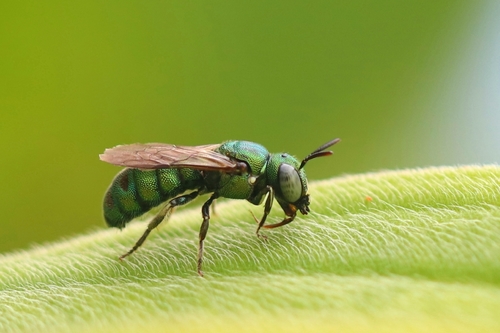
Ceratina smaragdula (Fabricius, 1787)
Ceratina smaragdula (Fabricius, 1787)
Ceratina smaragdula is a species of green metallic bee in the apid subfamily Xylocopinae.
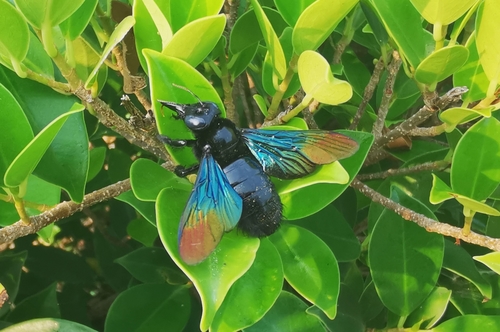
Xylocopa auripennis Lepeletier, 1841
Xylocopa auripennis Lepeletier, 1841
Xylocopa auripennis is a widely distributed species of carpenter bee found in South and Southeast Asia.
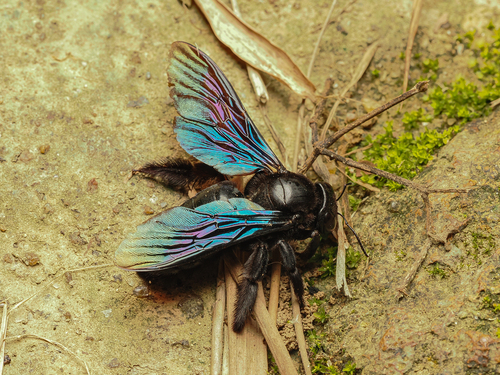
Xylocopa nasalis Westwood, 1842
Xylocopa nasalis Westwood, 1842
Xylocopa nasalis is a large carpenter bee found in tropical and subtropical Southeast Asia, often mistaken for bumble bees.
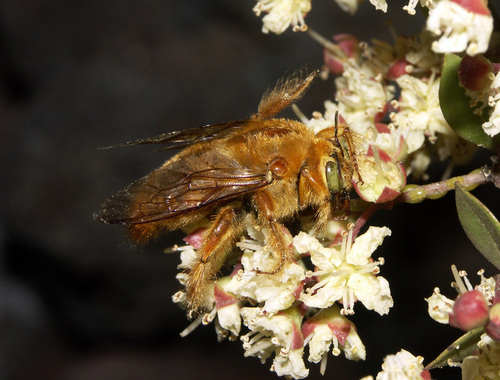
Xylocopa darwini Cockerell, 1926
Xylocopa darwini Cockerell, 1926
Xylocopa darwini, the Galápagos carpenter bee, is the only native bee of the Galápagos archipelago, occurring on 9 of the 12 largest islands.
Related Families
Start Exploring Nature Today
Download iNature for free. 10 identifications on us. No account needed. No credit card required.
Download Free on App Store
