Apidae

Melitoma taurea (Say, 1837)
Melitoma taurea (Say, 1837)
Melitoma taurea, the mallow bee, is a North American chimney bee species in the Apidae family with distinctive features like a long folded tongue that reaches its abdomen.
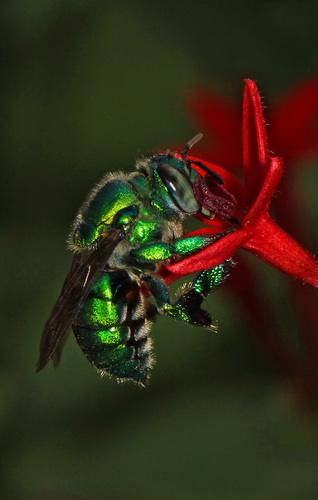
Euglossa dilemma Bembé & Eltz, 2011
Euglossa dilemma Bembé & Eltz, 2011
Euglossa dilemma, the green orchid bee, is a metallic green bee native to Central America, introduced to Florida.
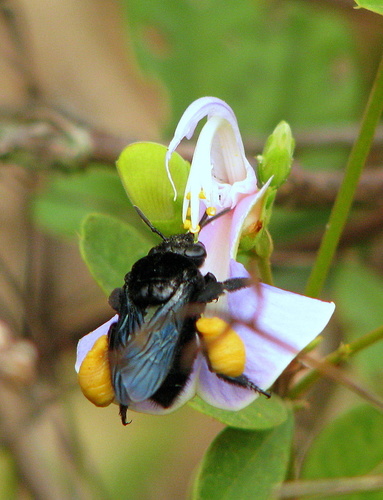
Eulaema nigrita Lepeletier, 1841
Eulaema nigrita Lepeletier, 1841
Eulaema nigrita, the black orchid bee, is a large orchid bee ranging from Costa Rica to northern Argentina that nests in pre-existing cavities.
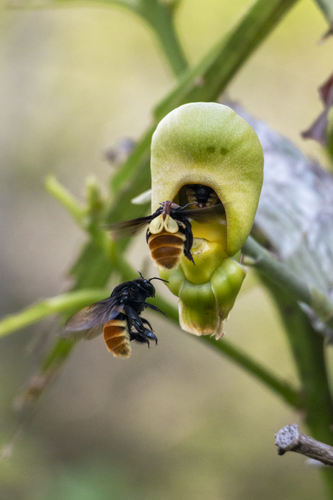
Eulaema cingulata (Fabricius, 1804)
Eulaema cingulata (Fabricius, 1804)
Eulaema cingulata is a large neotropical orchid bee often mistaken for bumblebees, recognizable by its black and orange patterning and facial white markings.
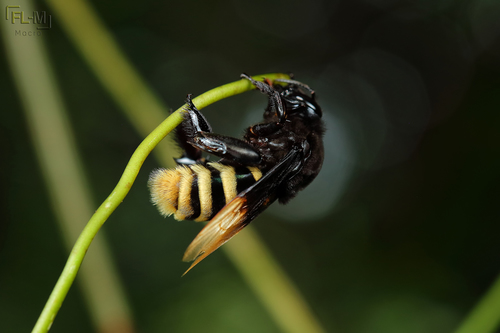
Eulaema meriana (Olivier, 1789)
Eulaema meriana (Olivier, 1789)
Eulaema meriana is a large orchid bee native to northern South America and Panama that pollinates various orchids and contributes to Brazil nut flower pollination.
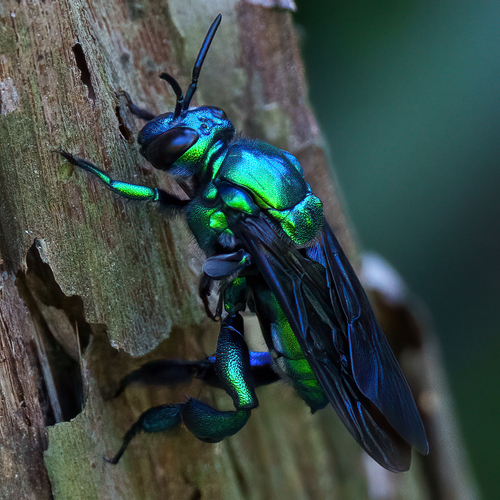
Exaerete smaragdina (Guérin-Méneville, 1844)
Exaerete smaragdina (Guérin-Méneville, 1844)
Exaerete smaragdina is a metallic green cuckoo bee species ranging from Mexico to Argentina, reaching about 20 mm in length.
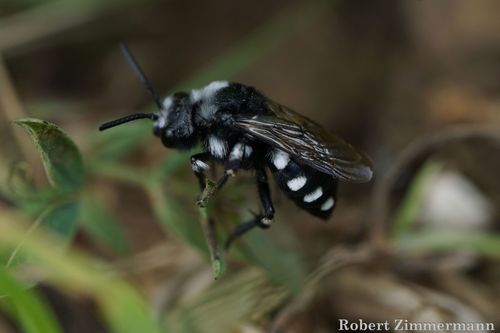
Melecta luctuosa (Scopoli, 1770)
Melecta luctuosa (Scopoli, 1770)
Melecta luctuosa is a 12–14 mm parasitoid bee species distributed across North Africa, Eurasia, and Pakistan.
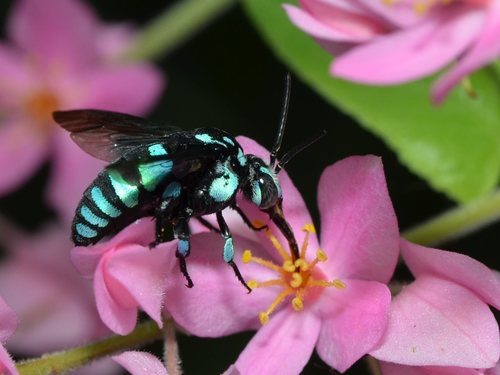
Thyreus nitidulus (Fabricius, 1804)
Thyreus nitidulus (Fabricius, 1804)
Thyreus nitidulus, the neon cuckoo bee, is a parasitic blue-and-black banded bee that targets blue-banded bee nests.
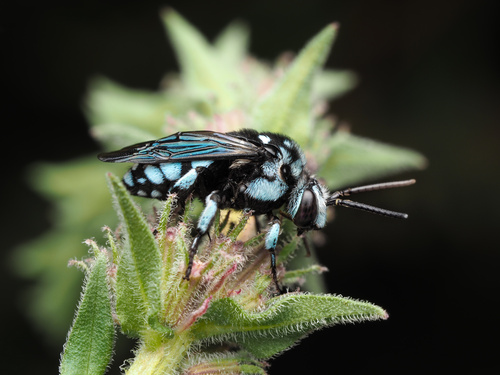
Thyreus caeruleopunctatus (Blanchard, 1840)
Thyreus caeruleopunctatus (Blanchard, 1840)
Thyreus caeruleopunctatus, the chequered cuckoo bee, is a cleptoparasitic solitary bee found in Australia and south-eastern New Guinea.
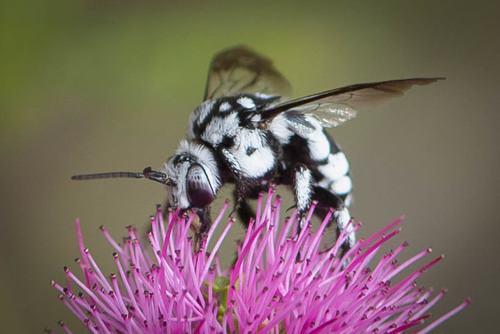
Thyreus waroonensis (Cockerell, 1913)
Thyreus waroonensis (Cockerell, 1913)
Thyreus waroonensis, the Waroona cuckoo bee, is a kleptoparasitic bee found across much of Australia that parasitises Amegilla host nests.
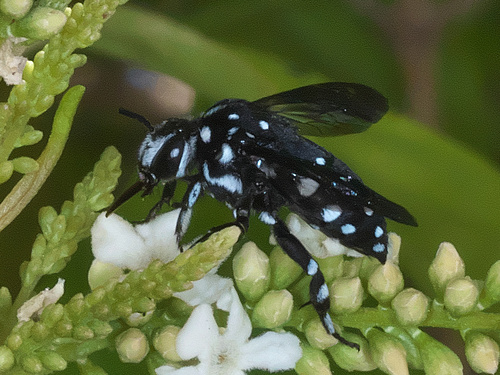
Thyreus lugubris (Smith, 1879)
Thyreus lugubris (Smith, 1879)
Thyreus lugubris, the domino cuckoo bee, is an Australian native bee in the Apidae family, Apinae subfamily.
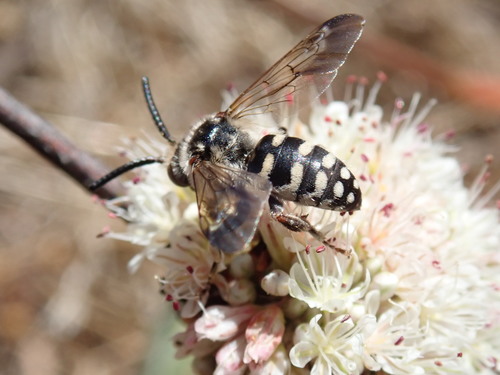
Brachymelecta californica (Cresson, 1878)
Brachymelecta californica (Cresson, 1878)
Brachymelecta californica, the California digger-cuckoo bee, is an Apidae cuckoo bee species found in North and Central America.
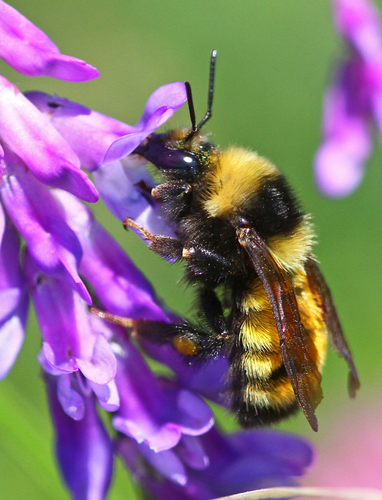
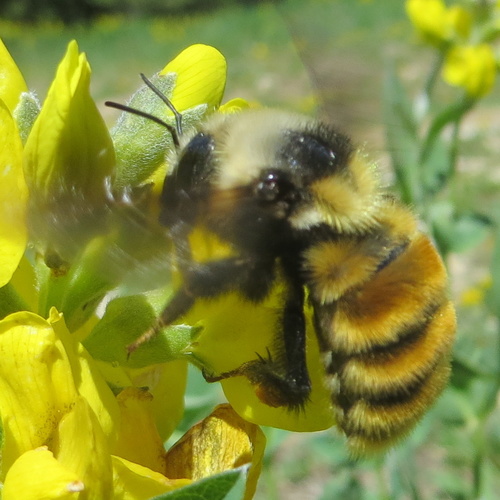
Bombus borealis Kirby, 1837
Bombus borealis Kirby, 1837
The northern amber bumblebee, Bombus borealis, is a North American bumblebee that lives in woodlands and feeds on various plants.
Bombus appositus Cresson, 1879
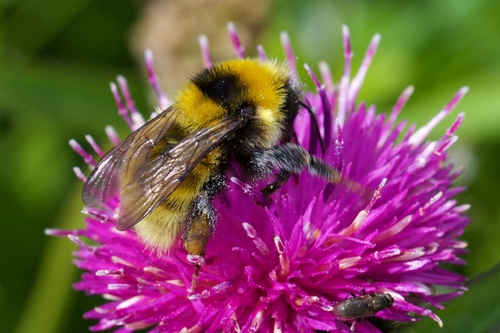
Bombus appositus Cresson, 1879
Bombus appositus, the white-shouldered bumblebee, is a North American bumblebee that pollinates subalpine larkspur and hosts a cuckoo bumblebee.
Bombus distinguendus Morawitz, 1869
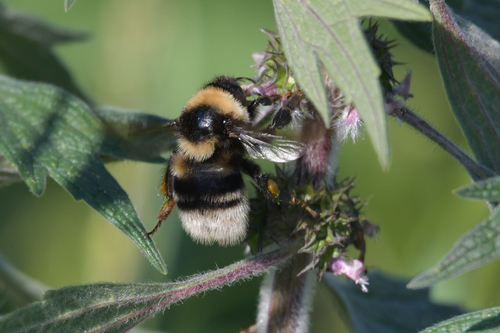
Bombus distinguendus Morawitz, 1869
The great yellow bumblebee, Bombus distinguendus, is a bumblebee species found across parts of Europe, northern Russia, and Alaska.
Bombus subterraneus (Linnaeus, 1758)
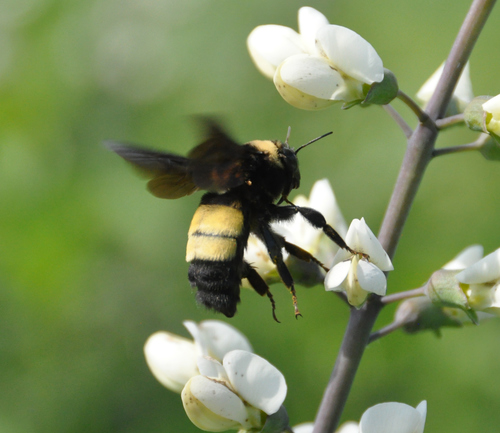
Bombus subterraneus (Linnaeus, 1758)
The short-haired bumblebee is a bumblebee species native to Eurasia, introduced to New Zealand, extinct in the British Isles since 1989.
Bombus auricomus (Robertson, 1903)
Bombus auricomus (Robertson, 1903)
Bombus auricomus, the black and gold bumblebee, is a large native eastern North American bumblebee that nests above ground in open habitats.
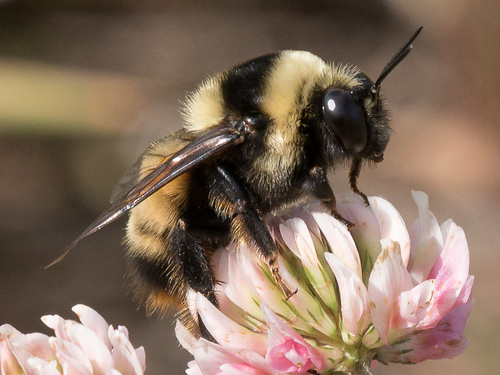
Bombus nevadensis Cresson, 1874
Bombus nevadensis Cresson, 1874
Bombus nevadensis is a bumblebee species with distinct color patterns that lives in open North American habitats.
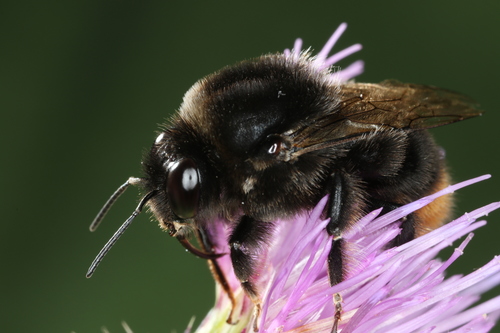
Bombus confusus Schenck, 1861
Bombus confusus Schenck, 1861
Bombus confusus is a European bumblebee that uses two methods to attract females during courtship.
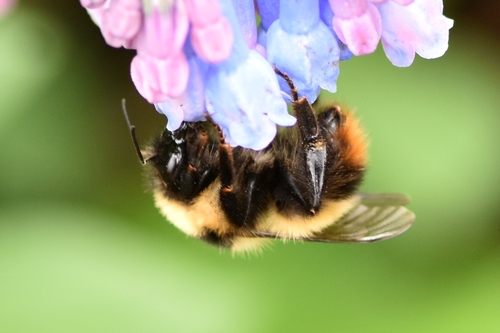
Bombus kirbiellus Curtis, 1835
Bombus kirbiellus Curtis, 1835
Bombus kirbiellus is a bee species found in Canada and the US, listed as data deficient on the IUCN Red List.
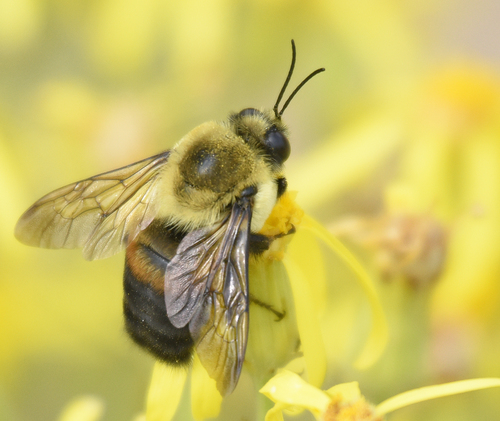
Bombus griseocollis (De Geer, 1773)
Bombus griseocollis (De Geer, 1773)
Bombus griseocollis is a bumblebee species with distinct size and color differences between queens, workers, males.
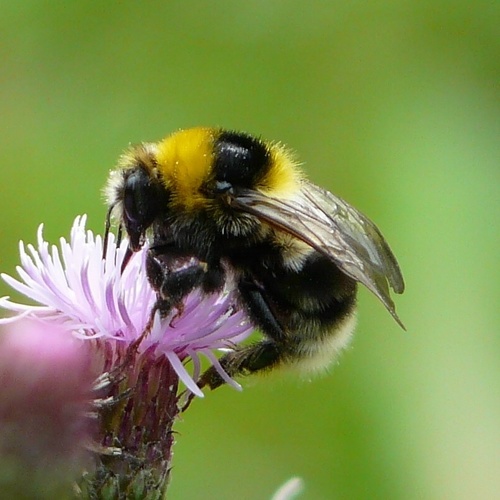
Bombus semenoviellus Skorikov, 1910
Bombus semenoviellus Skorikov, 1910
Bombus semenoviellus is a European bumblebee species expanding westward, living in open forest and grassland habitats.
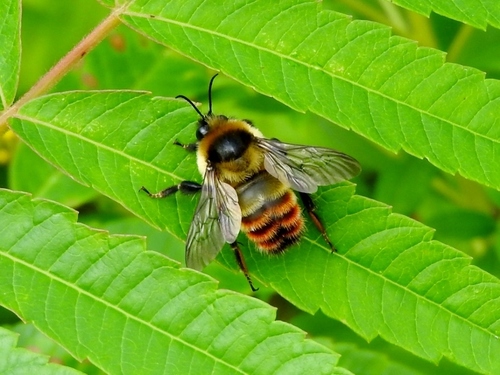
Bombus rufocinctus Cresson, 1863
Bombus rufocinctus Cresson, 1863
The red-belted bumblebee, Bombus rufocinctus, is a North American bumblebee with distinct color forms that lives in wooded and urban areas.

Bombus crotchii Cresson, 1879
Bombus crotchii Cresson, 1879
Bombus crotchii (Crotch's bumble bee) is a narrowly-climatic-tolerant bumble bee native to western North America.
Related Families
Start Exploring Nature Today
Download iNature for free. 10 identifications on us. No account needed. No credit card required.
Download Free on App Store
