Apiaceae — Carrot Family
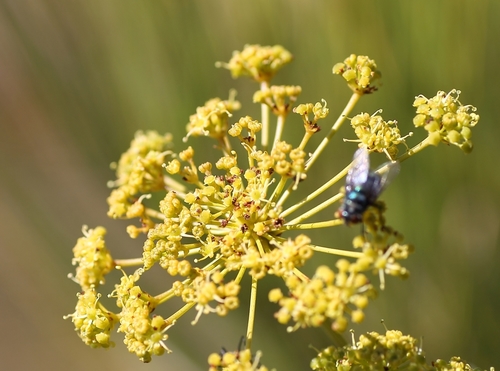
Anginon difforme (L.) B.L.Burtt
Anginon difforme (L.) B.L.Burtt
The lectotype of Anginon difforme is Herb. Linn. No. 335.28's two central leaves at LINN, and the epitype is Allison 50 from South Africa's Robinson Pass, with holotype at PRE and isotypes at JRAU, K, NBG.
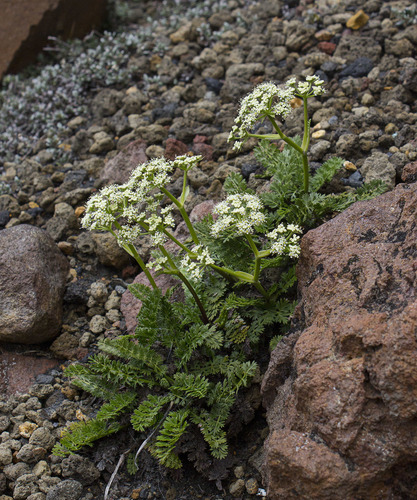
Anisotome aromatica Hook.fil.
Anisotome aromatica Hook.fil.
Anisotome aromatica Hook.fil. is a small white-flowered plant found in subarctic and subalpine areas of both New Zealand islands.
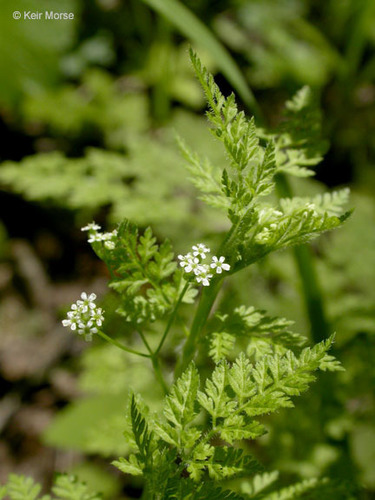
Anthriscus caucalis M.Bieb.
Anthriscus caucalis M.Bieb.
Anthriscus caucalis (burr chervil) is an Apiaceae plant native to parts of Europe and Asia, introduced to regions like North America.
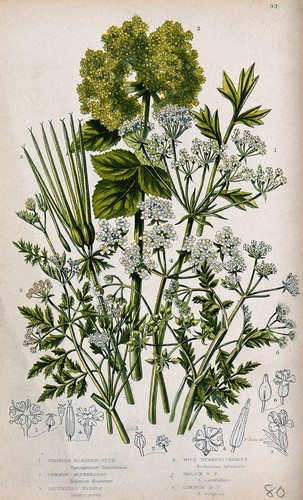
Anthriscus cerefolium (L.) Hoffm.
Anthriscus cerefolium (L.) Hoffm.
Anthriscus cerefolium, commonly called chervil, is an Apiaceae species widely cultivated as a cool-season leafy crop.
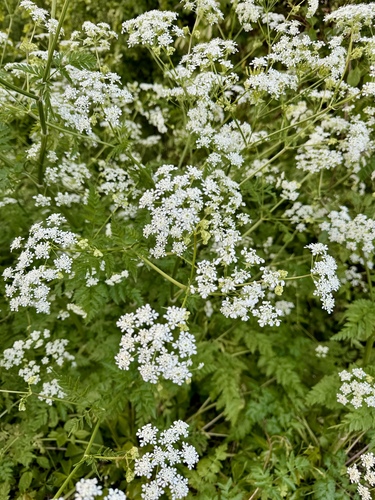
Anthriscus sylvestris (L.) Hoffm.
Anthriscus sylvestris (L.) Hoffm.
Cow parsley (Anthriscus sylvestris) is a common wild herb, invasive outside its native range, with risky foraging due to toxic lookalikes.
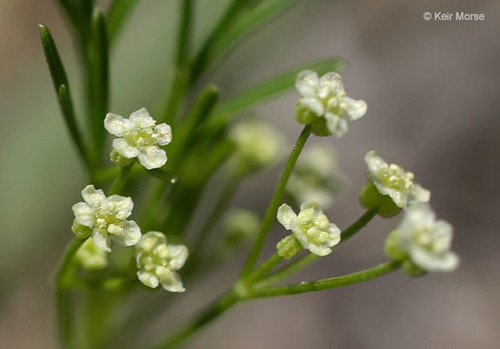
Apiastrum angustifolium Nutt.
Apiastrum angustifolium Nutt.
Mock parsley (Apiastrum angustifolium) is the only species in the monotypic Apiaceae genus Apiastrum, native to western North America.
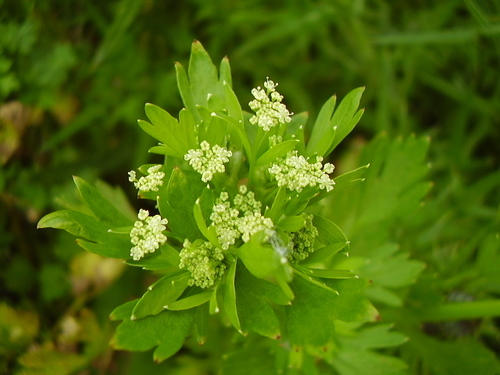
Apium graveolens L.
Apium graveolens L.
Apium graveolens L. (celery) is a cultivated vegetable with specific physical traits, cultivation methods, and culinary uses.
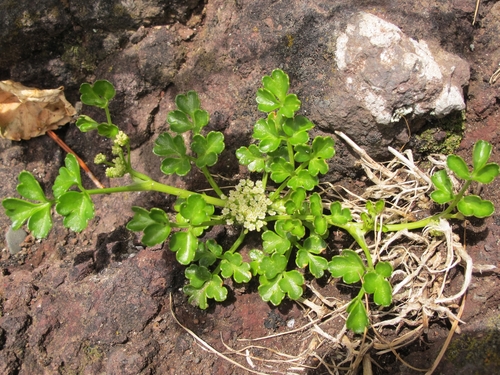
Apium prostratum Labill.
Apium prostratum Labill.
Sea celery (Apium prostratum) is a variable coastal Australian and New Zealand herb, historically eaten to prevent scurvy and still used as food.
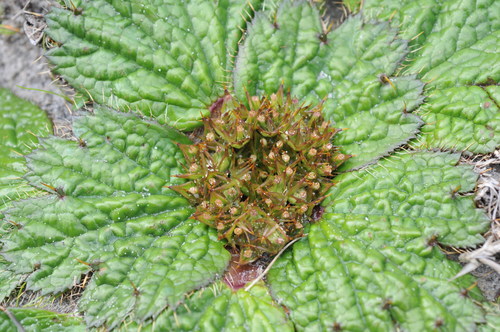
Arctopus echinatus L.
Arctopus echinatus L.
Burtt first suggested Clifford herbarium material as a likely type of Arctopus echinatus, later designated a Burman copperplate as lectotype, but it's A. monacanthus, so Van Wyk et al. proposed its conservation with a conserved type in 2006.
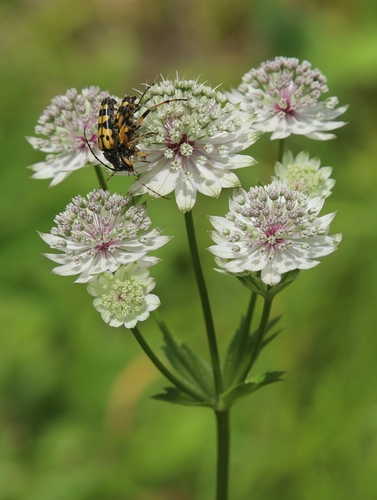
Astrantia major L.
Astrantia major L.
Astrantia major L. is a herbaceous perennial flowering plant native to Europe and the Caucasus, cultivated in gardens.

Astrantia maxima Pall.
Astrantia maxima Pall.
Astrantia maxima Pall. is a perennial flowering plant native to Europe, commonly cultivated for gardens.
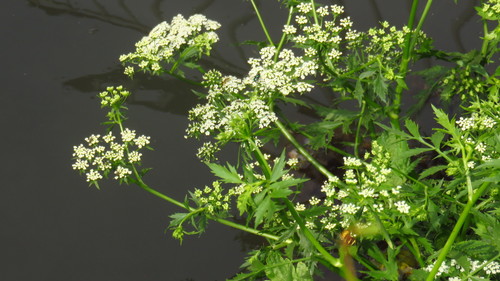
Berula erecta (Huds.) Coville
Berula erecta (Huds.) Coville
Berula erecta is an aquatic perennial with medicinal potential, found in southwestern England.
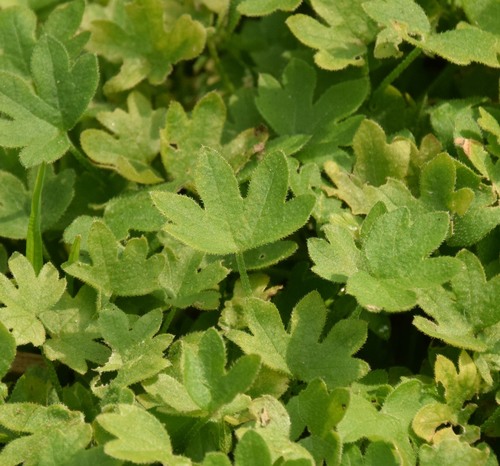
Bowlesia incana Ruiz & Pav.
Bowlesia incana Ruiz & Pav.
Bowlesia incana, or hoary bowlesia, is a small annual flowering herb in the Apiaceae family native to the Americas and introduced to South Asia and New Zealand.
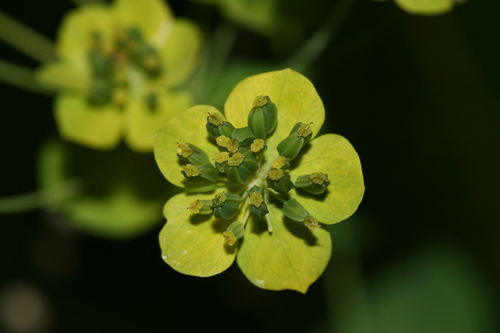
Bupleurum aureum Fisch.
Bupleurum aureum Fisch.
Bupleurum aureum Fisch. is a perennial flowering Apiaceae plant native to central and northern Asia.
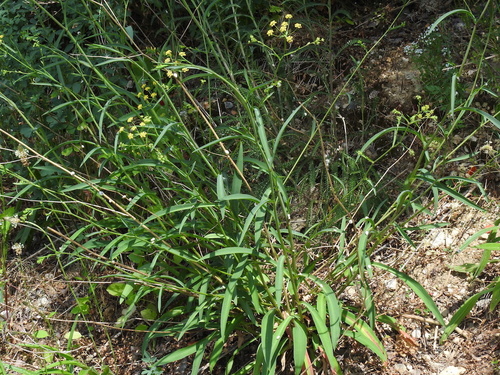
Bupleurum falcatum L.
Bupleurum falcatum L.
Bupleurum falcatum L. is an Apiaceae flowering plant from Europe and the Caucasus with documented antidepressant properties.
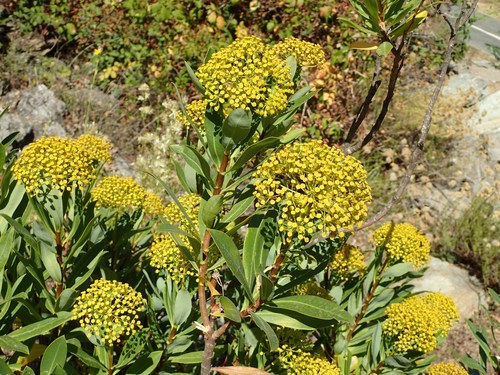
Bupleurum fruticosum L.
Bupleurum fruticosum L.
Bupleurum fruticosum L. is an evergreen flowering shrub grown for hedges and ground cover in warm, well-drained sites.
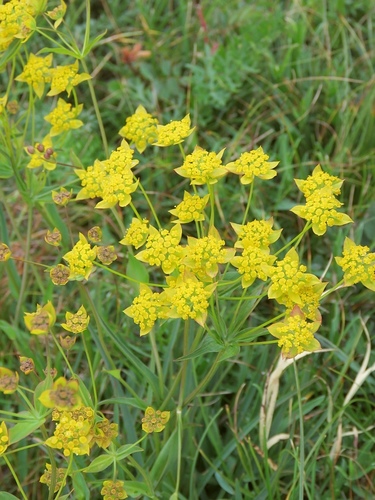
Bupleurum ranunculoides L.
Bupleurum ranunculoides L.
Bupleurum ranunculoides L. has amplexicaul leaves (lower linear, uppermost cordate - oblong), pentaphyllous and longer involucels, and is recorded and described in various botanical references.
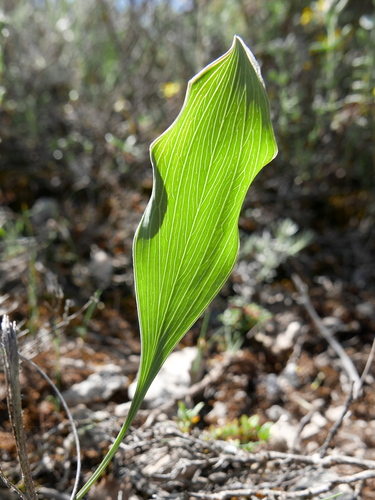
Bupleurum rigidum L.
Bupleurum rigidum L.
Bupleurum rigidum L. has a dichotomous, somewhat bare stem, small pointed involucres, lance - shaped rigid leaves (basal obtuse, stem - borne acute), and is referenced in multiple works.
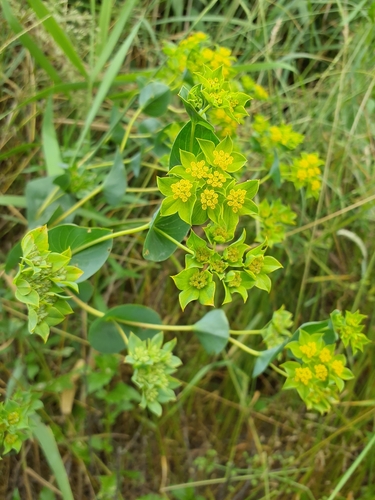
Bupleurum rotundifolium L.
Bupleurum rotundifolium L.
Bupleurum rotundifolium is a flowering plant native to Eurasia and North Africa, now established as a weed in the US and South Africa.
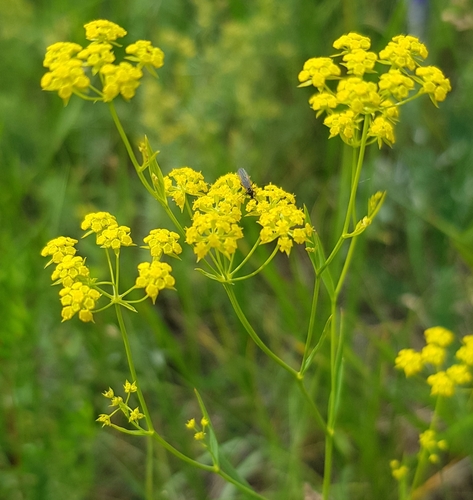
Bupleurum scorzonerifolium Willd.
Bupleurum scorzonerifolium Willd.
Bupleurum scorzonerifolium Willd. is a Bupleurum species whose root is used in traditional Chinese medicine as Radix Bupleuri.
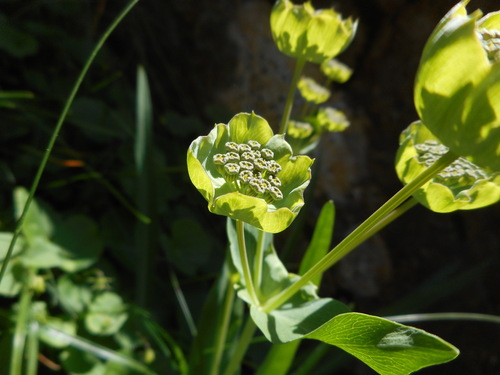
Bupleurum stellatum L.
Bupleurum stellatum L.
Bupleurum stellatum L. is described with united involucels, a three - leaved general involucre, narrow veined leaves, a slightly incised general calyx, and references to other botanical works.
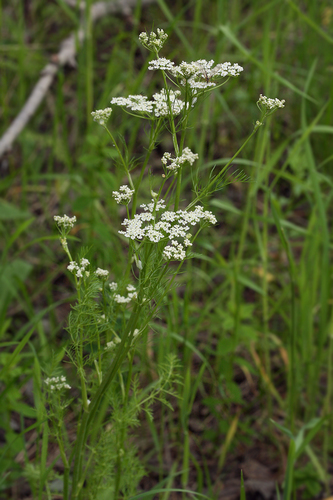
Carum carvi L.
Carum carvi L.
Carum carvi L., or caraway, is a widely cultivated carrot family plant grown for its flavorful culinary fruits, seeds and other edible parts.
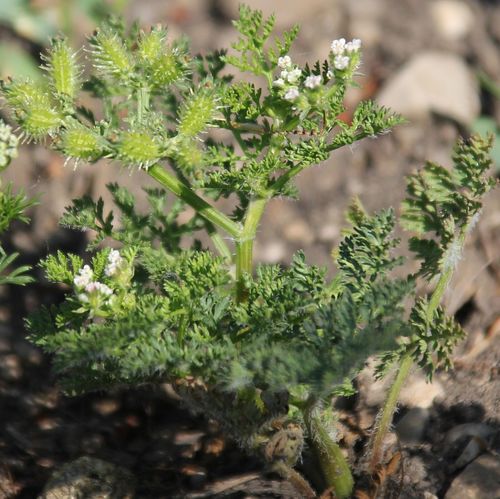
Caucalis platycarpos L.
Caucalis platycarpos L.
Caucalis platycarpos L. is an annual hairy plant distributed across Eurasia and North Africa, growing in open, disturbed sites.
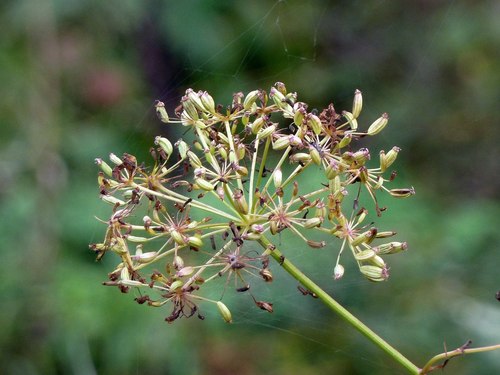
Cenolophium fischeri (Spreng.) W.D.J.Koch
Cenolophium fischeri (Spreng.) W.D.J.Koch
Cenolophium denudatum, or Baltic parsley, is the only species in the Cenolophium carrot genus, a herbaceous perennial native to Europe and Asia.
Related Families
Start Exploring Nature Today
Download iNature for free. 10 identifications on us. No account needed. No credit card required.
Download Free on App Store
