Anacardiaceae
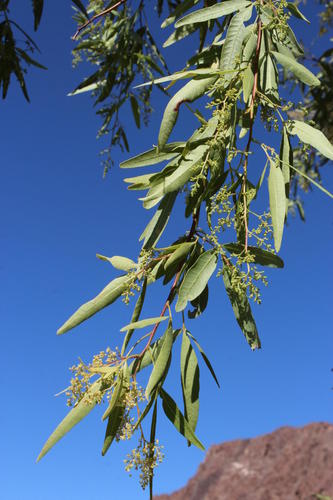
Searsia pendulina (Jacq.) Moffett
Searsia pendulina (Jacq.) Moffett
Searsia pendulina is a fast-growing South African tree widely used for shade and attracting birds and insects.
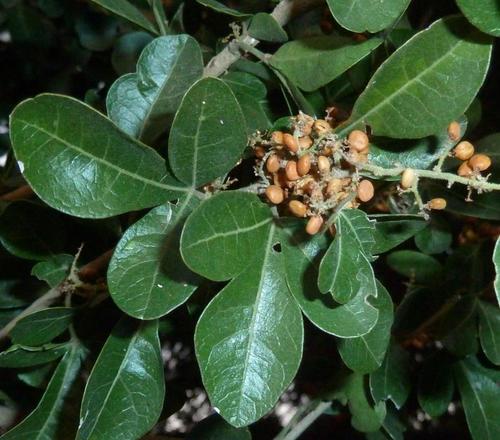
Searsia pentheri (Zahlbr.) Moffett
Searsia pentheri (Zahlbr.) Moffett
Searsia pentheri is a frost-hardy evergreen tree native to large parts of South Africa that produces edible fruits favored by birds.
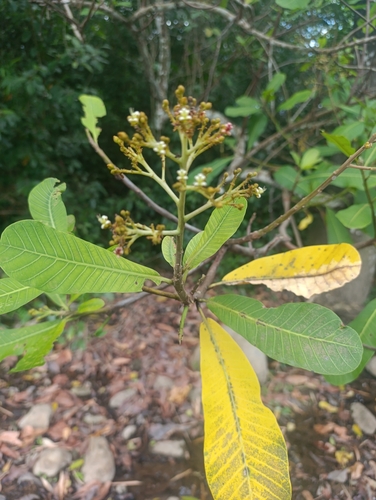
Anacardium excelsum (Bertero & Balb.) Skeels
Anacardium excelsum (Bertero & Balb.) Skeels
Anacardium excelsum, the wild cashew, is a large evergreen riverbank tree with toxic uncooked fruit edible when roasted.
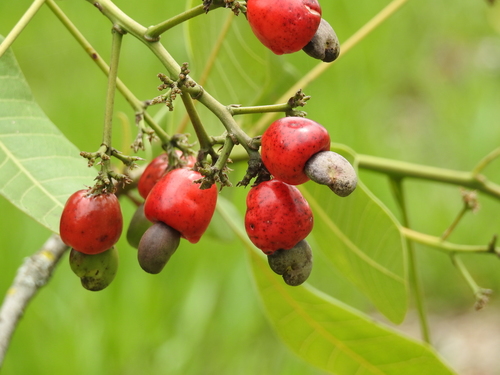
Anacardium humile A.St.-Hil.
Anacardium humile A.St.-Hil.
Anacardium humile is a medicinal, insecticidal shrub found in Brazil’s Pantanal and Cerrado.
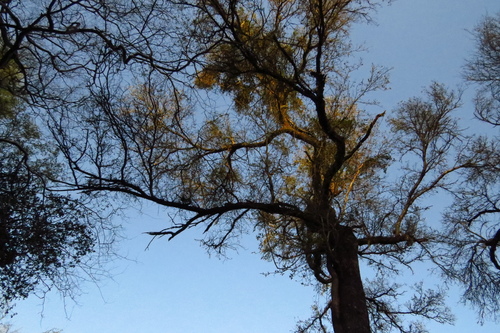
Schinopsis balansae Engl.
Schinopsis balansae Engl.
Schinopsis balansae is a hardwood quebracho tree from central South America, used for tannin-rich quebracho extract.
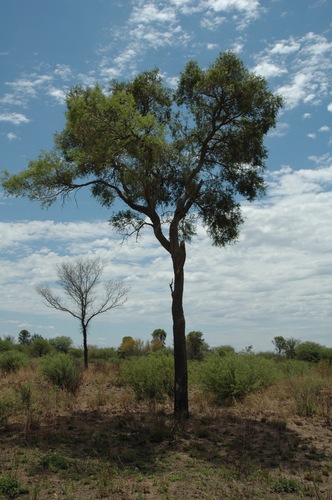
Schinopsis lorentzii (Griseb.) Engl.
Schinopsis lorentzii (Griseb.) Engl.
Schinopsis lorentzii, or red quebracho, is an economically important symbolic hardwood tree native to the Gran Chaco region.
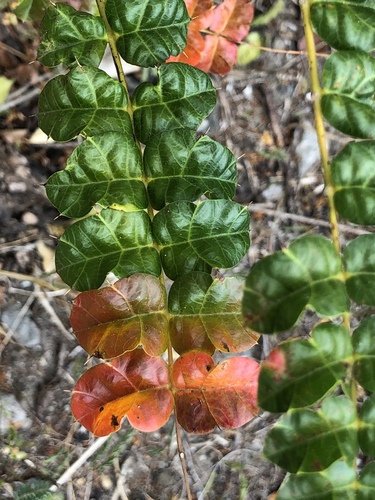
Comocladia dodonaea (L.) Britton
Comocladia dodonaea (L.) Britton
Comocladia dodonaea is a poisonous Caribbean tree in the cashew family that carries urushiol similar to poison ivy.
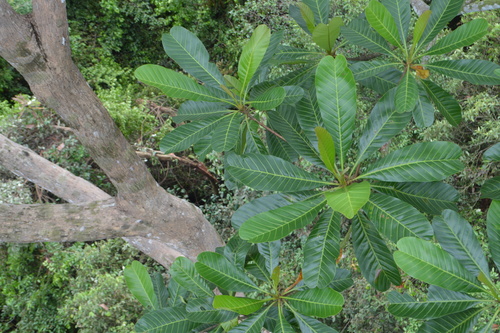
Campnosperma auriculatum (Blume) Hook.fil.
Campnosperma auriculatum (Blume) Hook.fil.
Campnosperma auriculatum is an Anacardiaceae rainforest tree native to the East Indies and Southeast Asia, with distinct leaf forms for saplings and mature trees.
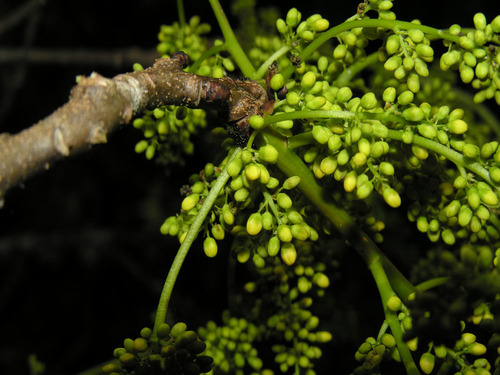
Astronium graveolens Jacq.
Astronium graveolens Jacq.
Astronium graveolens, also called gateado, is a tree with defined physical traits that flowers in the dry season and produces a single-seeded fruit.
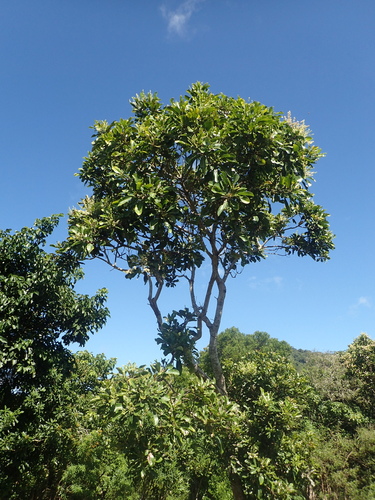
Buchanania arborescens (Blume) Blume
Buchanania arborescens (Blume) Blume
Buchanania arborescens is a small edible-fruited tree native to northern Australia, Southeast Asia, and the Solomon Islands.
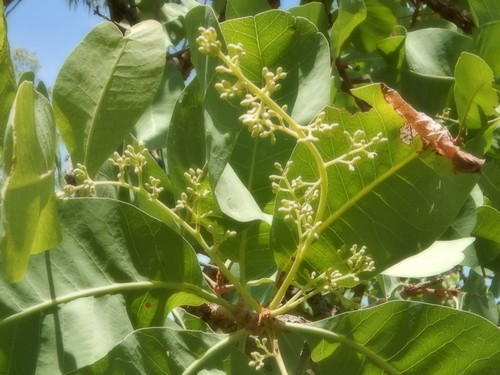
Buchanania obovata Engl.
Buchanania obovata Engl.
Buchanania obovata, the green plum or wild mango, is a northern Australian woodland tree with edible fruit currently studied for commercial crop potential.
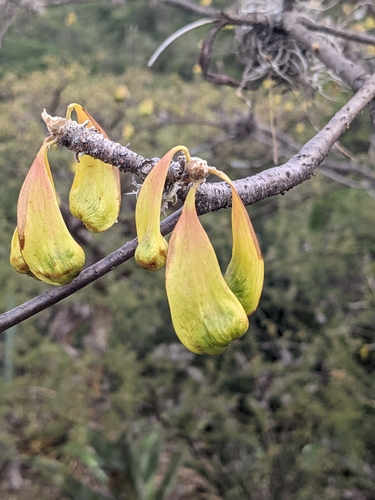
Amphipterygium adstringens (Schltdl.) Schiede ex Standl.
Amphipterygium adstringens (Schltdl.) Schiede ex Standl.
Amphipterygium adstringens (cuachalalate) is an endangered medicinal tree from Mexico, used traditionally for its curative bark.
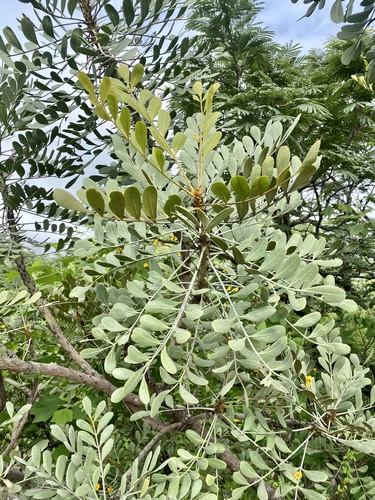
Pseudosmodingium virletii (Baill.) Engl.
Pseudosmodingium virletii (Baill.) Engl.
Pseudosmodingium virletii is a shrubby flowering plant in the Anacardiaceae family, native to northeastern and central Mexico.
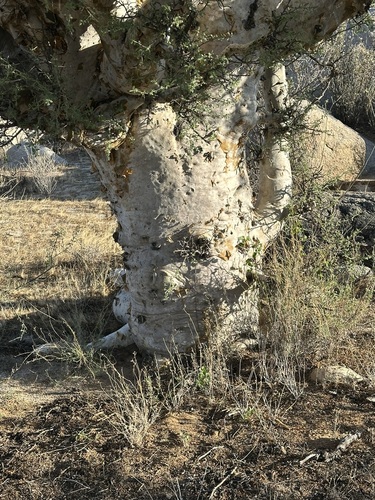
Pachycormus discolor (Benth.) Coville ex Standl.
Pachycormus discolor (Benth.) Coville ex Standl.
Pachycormus discolor is a drought-deciduous tree or shrub endemic to Mexico's Baja California peninsula, grown as a caudiciform succulent.
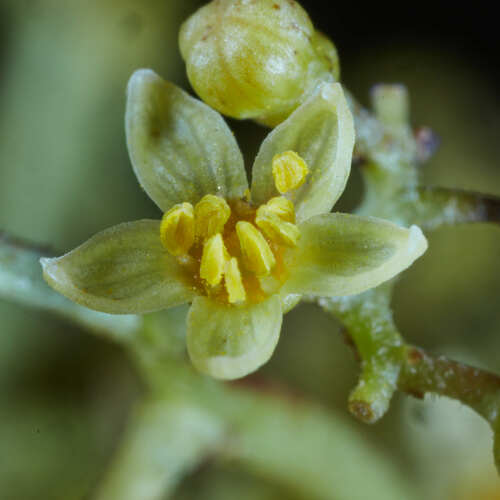
Lithraea molleoides (Vell.) Engl.
Lithraea molleoides (Vell.) Engl.
Lithraea molleoides is a 2.5 to 8 m tall tree native to parts of South America.
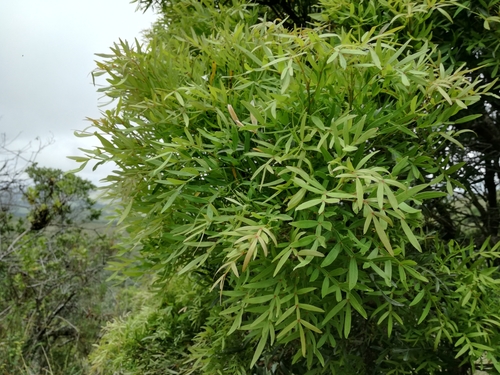
Loxostylis alata Spreng. ex Rchb.
Loxostylis alata Spreng. ex Rchb.
Loxostylis alata, commonly called tar wood, is the only species in the Loxostylis genus, a dioecious perennial native to Southern Africa.
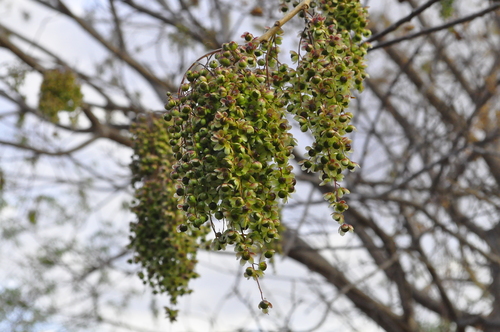
Myracrodruon urundeuva Allemão
Myracrodruon urundeuva Allemão
Myracrodruon urundeuva Allemão is a South American native timber tree often used for beekeeping, common to several Brazilian vegetation types.
Related Families
Start Exploring Nature Today
Download iNature for free. 10 identifications on us. No account needed. No credit card required.
Download Free on App Store
