About Falcataria falcata (L.) Greuter & R.Rankin
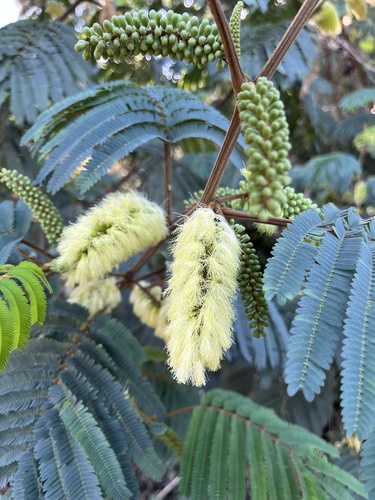
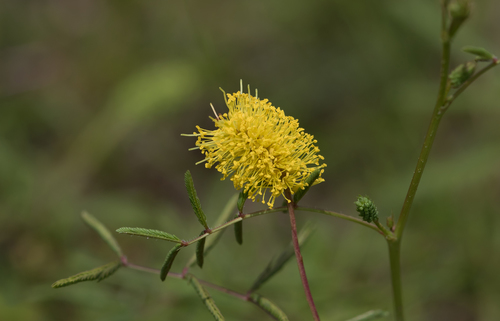
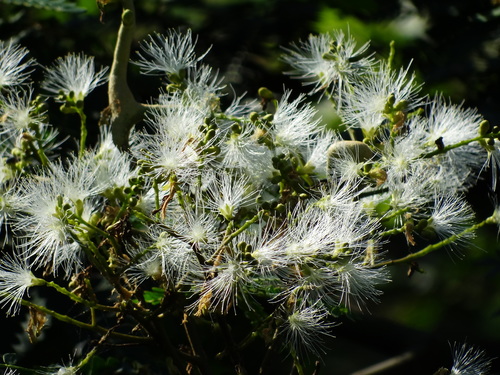
Falcataria falcata (L.) Greuter & R.Rankin has the following distinct characteristics. Its leaves are twice pinnately compound, with small leaflets. It produces small, faintly fragrant creamy white flowers. Mature fruits form pods that drop from the tree when fully developed. Its bark is smooth, and ranges in color from light to white. Its wood is light tan and made up of long fibres, with a measured density of 280 kg/m³ when measured at 18% moisture content. Its documented chromosome number is 2n=26. This tree species has become invasive in forests across Hawaii and other Pacific islands, including New Caledonia. This species has a range of uses. For commercial applications, its softwood is used to manufacture matchsticks, chopsticks, shipping pallets, and wooden boxes. Its pulp is processed for paper-making, and plywood and veneer-based products have become an increasingly important commercial use for the species. For traditional uses, whole tree trunks are carved to make seagoing canoes, and the wood is also widely used for firewood in Timor-Leste and other regions. In agroforestry, it is grown as a shade tree for coffee crops. It is intercropped with Eucalyptus to add nitrogen to soil, and it is used in agroforestry systems with pineapple and other crops in Indonesia and Timor-Leste.