About Eyprepocnemis plorans (Charpentier, 1825)
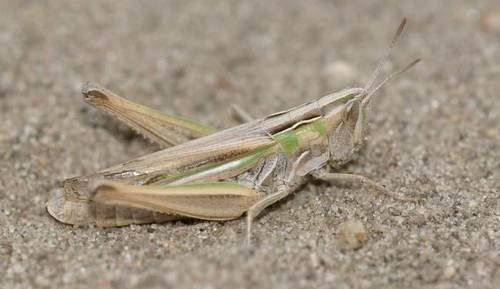
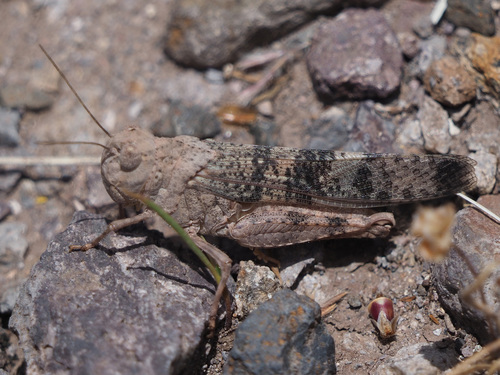
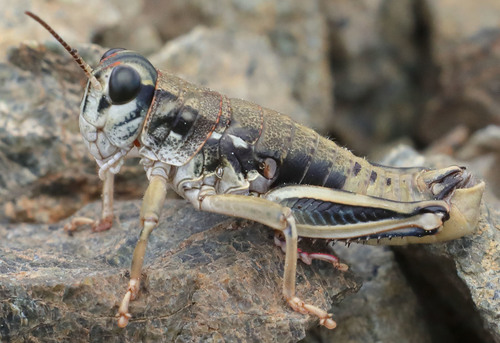
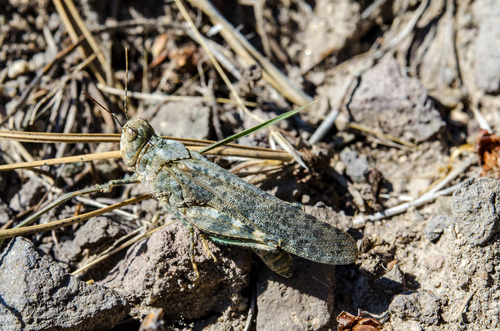
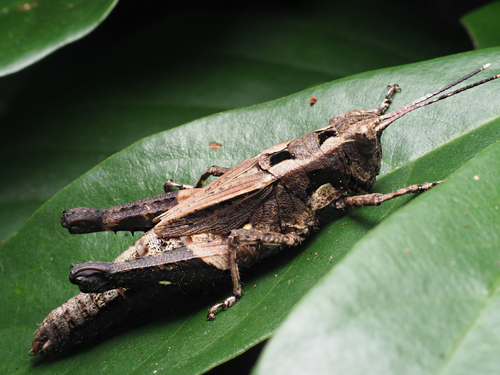
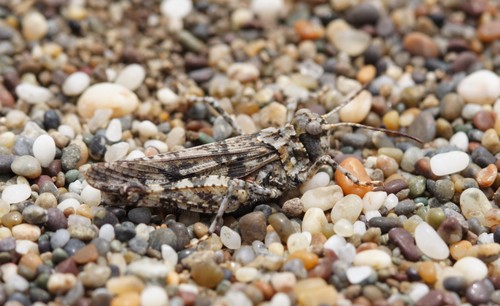
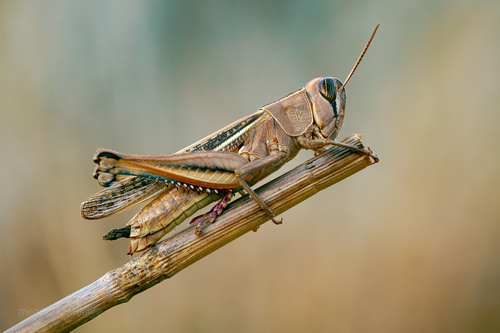
Eyprepocnemis plorans (Charpentier, 1825) is a medium-sized grasshopper. Females reach approximately 4.5 cm (1.8 in) in length, while males are slightly smaller. This species has an overall greyish-brown body color. A central dark band, bordered by paler stripes, runs across its head and prothorax. A longitudinal dark streak on the eye is a marking also found in Anacridium aegyptium, Heteracris annulosa and Heteracris adspersa. The femurs of the hind legs have greenish, blue and yellow striations; the hind tibia show reddish or bluish iridescence, and have black and white spines. Eyprepocnemis plorans is native to most of Africa, portions of the Middle East including Iran, and southern Europe, where it occurs in southern Greece, southern Italy, Sicily, Sardinia and southern Spain. It appears to be expanding its range northward in Italy, potentially due to climate change. It typically inhabits wetlands, reed beds, freshwater and salt marshes, riverside vegetation, coastal vegetation, and man-made habitats. It favors habitats with vertically growing stems such as reeds, and areas with a mix of tall forbs and lower-growing plants. Grasshoppers as a group are generally polyphagous, feeding on vegetation from many different plant sources. Eyprepocnemis plorans feeds primarily on grasses and sedges. Females deposit egg pods into the ground, and eggs hatch in the spring. Nymphs go through five moults, growing increasingly similar to adult grasshoppers with each developmental stage. They do not complete full metamorphosis and reach maturity in the summer. In some parts of the species' range, many adults survive through the winter. This species is quite wary, and is a capable flier.