About Evernia prunastri (L.) Ach.
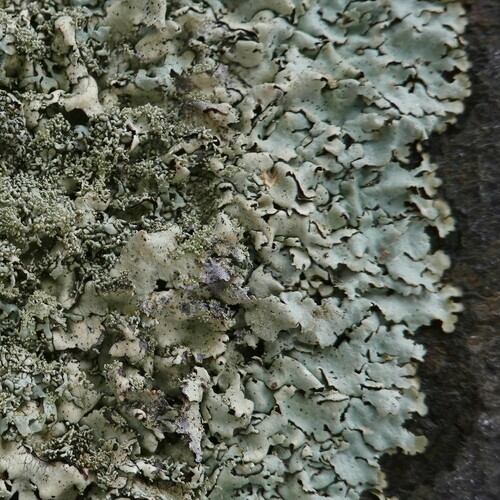
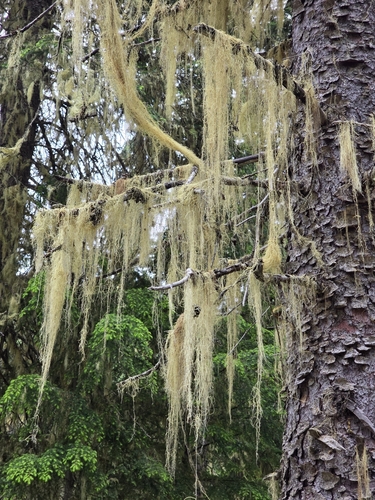
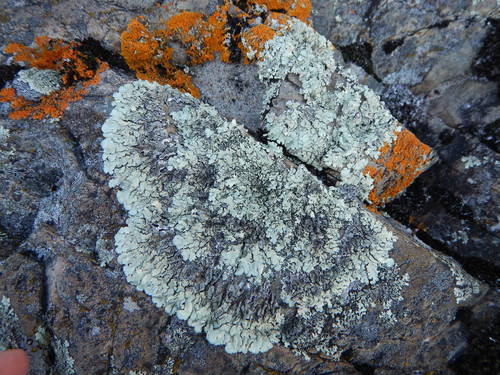
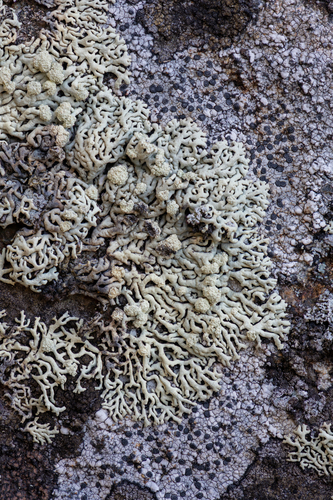
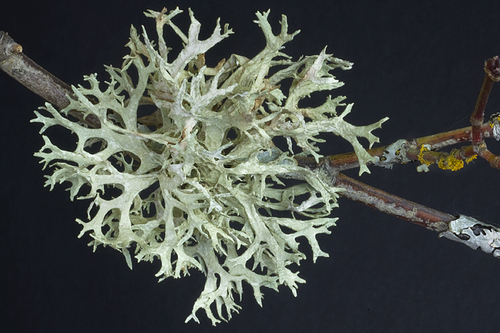
Evernia prunastri (L.) Ach., commonly called oakmoss, has a thallus that is either fruticose or technically classified as foliose, because it has differentiated upper and lower surfaces. The thallus is either erect or drooping, and reaches up to 7 cm long, occasionally reaching 13 cm. It is dichotomously branched, with flattened branches that are 1 to 5 mm wide, sometimes up to 10 mm wide, and more or less flaccid. The upper surface of the thallus is greenish or yellowish green, while the lower surface is whitish. Soredia are present, though they are occasionally very sparse, and apothecia have not been observed. Oakmoss grows on wood or bark, most often on hardwood trees and shrubs, and occasionally grows on conifers. It is widespread across most low-elevation habitats in the Pacific Northwest west of the Cascades, particularly in hardwood forests, savannas, urban areas, and agricultural areas. It is less abundant in lower montane forests. People with known skin sensitization issues should avoid oakmoss. Its use in perfumes is now highly restricted by International Fragrance Association regulations, and many scents have been reformulated in recent years to substitute other chemicals for oakmoss. Oakmoss is commercially harvested in countries of South-Central Europe, and usually exported to the Grasse region of France, where its fragrant compounds are extracted to produce oakmoss absolutes and extracts. These raw materials are often used as perfume fixatives, and form the base notes of many fragrances. They are also key components of Fougère and Chypre class perfumes. The lichen has a distinct and complex odour, described as woody, sharp and slightly sweet. Oakmoss that grows on pines has a pronounced turpentine odor that is valued for certain perfume compositions. In parts of Central Italy, oakmoss has been used for biomonitoring the deposition of heavy metals at urban, rural, and industrial sites. Studies of bioaccumulation of zinc, lead, chromium, cadmium, and copper in lichen samples were performed five times at regular intervals between November 2000 and December 2001. As expected, rural areas showed a smaller impact from these five heavy metals when compared to urban and industrial areas.