About Evergestis forficalis (Linnaeus, 1758)
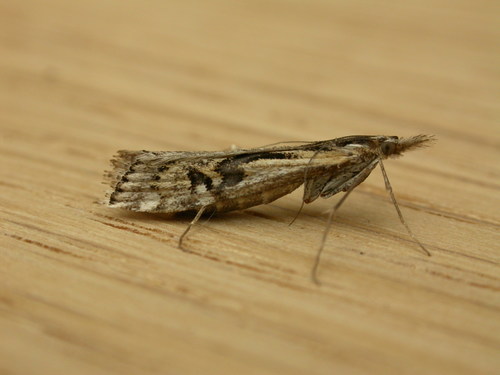
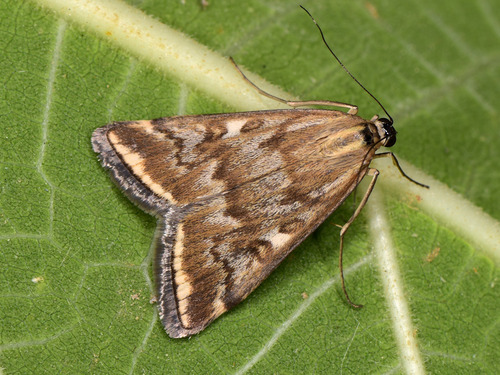
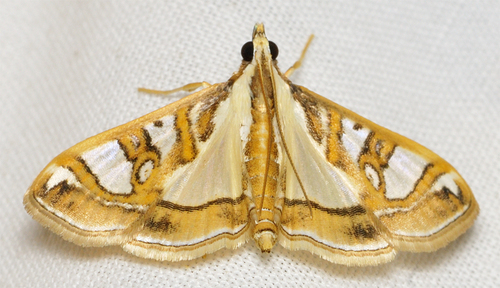
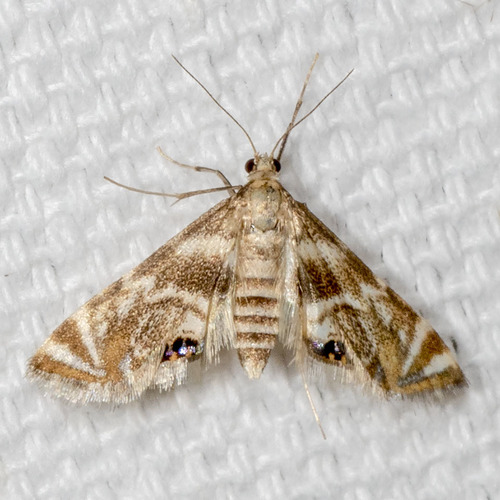
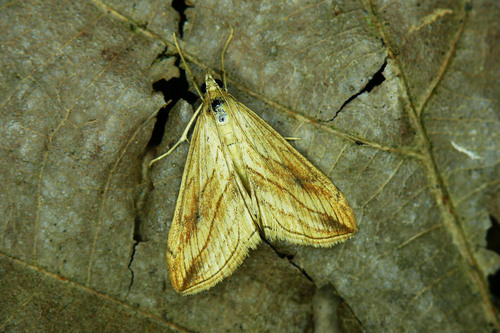
Evergestis forficalis, commonly known as the garden pebble, is a moth species belonging to the family Crambidae. This species was first described by Carl Linnaeus in the 10th edition of Systema Naturae, published in 1758. It is distributed across Europe, the Palearctic realm, and North America, and closely resembles the species Rivula sericealis. The wingspan of this moth measures 25 to 28 millimeters, while forewing length ranges from 12 to 14 millimeters. The forewings are whitish-ochreous, with the disc and apex sometimes tinged yellowish-brown. The forewing lines are fine, dark brown, very obliquely curved, and indented beneath the costa; the first line is very indistinct towards the costa. Two small, transversely placed discal spots are outlined in dark fuscous, with the lower spot being larger. There is a dark fuscous oblique apical streak on the forewing, and the margins of the subterminal line are obscurely brownish. The hindwings are ochreous-whitish, marked with a grey posterior line. Full-grown larvae are yellowish-green, with darker green dorsal and lateral lines, and a yellowish head. Adult moths fly from May to September, with the flight period varying based on location. The larvae feed on species in the plant family Brassicaceae, including cultivated varieties such as Brussels sprout and kale.