About Euxoa obelisca (Denis & Schiffermüller), 1775
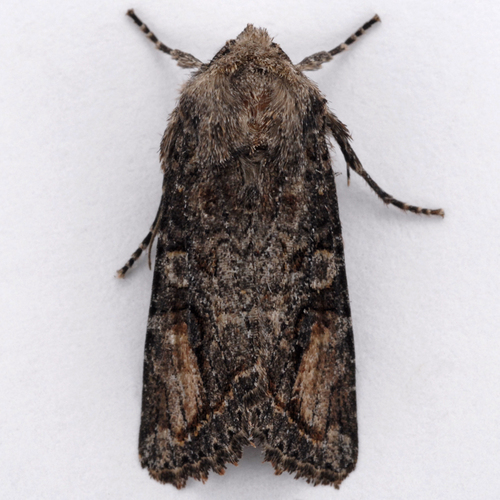
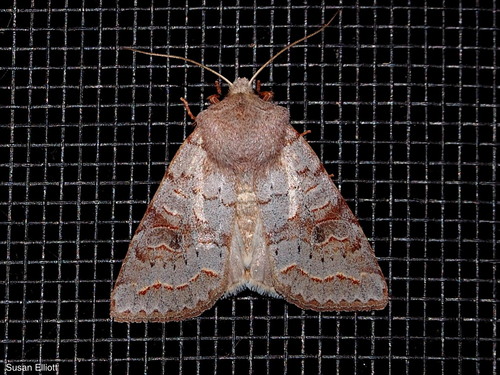
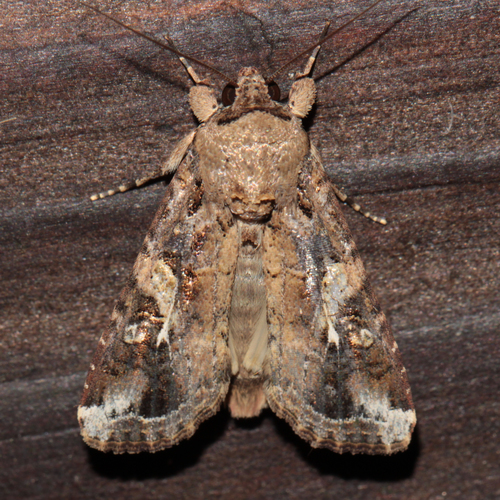
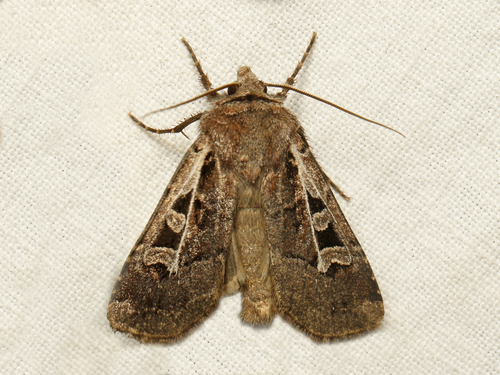
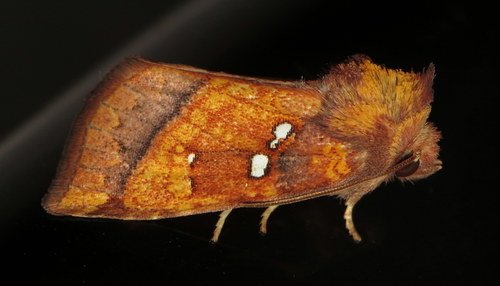
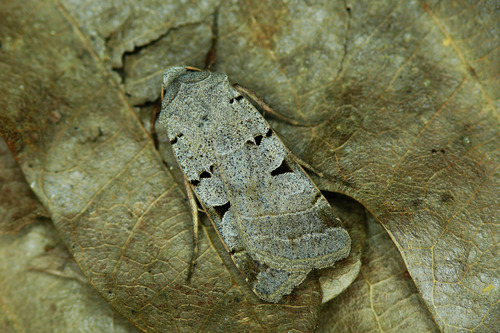
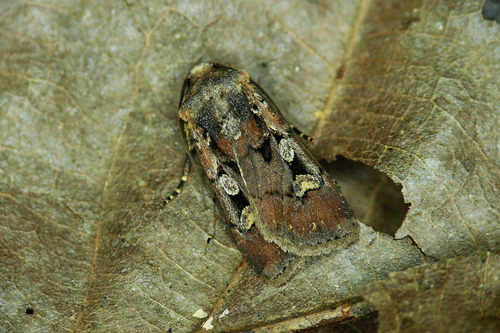
Technical description and variation: The forewing of Euxoa obelisca is purplish brown; the costa is pale up to the outer line, and the cell is dark brown. The stigmata are large and greyish ochreous, while the claviform is dark. In males, the hindwing is white with a narrow grey shade along the margin; in females, the entire hindwing is more or less grey-tinged.
In the aberration fictilis Hbn., the forewing is more variegated, and the submarginal line is preceded by a row of distinct black teeth. Aberration ruris Hbn. is larger than the typical form, with a reddish grey or reddish brown forewing that may or may not have a pale costa; its stigmata are large and pale. Aberration villiersii Guen. is also larger than the typical form; its forewing is ochreous grey, with the costa and both stigmata whitish, and darker coloration in females.
Aberration plectoides Guen. is the same size as the typical form. Its forewing has a more acute apex, and is deep shining violet brown, with only traces of the subterminal line visible. The costa and stigmata (which are small) are pale testaceous; the orbicular stigma is somewhat angulated, and the reniform stigma is constricted in the middle. The claviform is obsolete, and the cell is deep black. The hindwing is very dark. This aberration was described from only a single female collected from Lapland; it was omitted by Staudinger, but is probably a distinct species. A very distinct form from the Urals, which may be called aberration carbonis nov. [Warren], has a purplish black ground colour, with a pale costal streak, pale upper stigmata, a deep black cell, and all indistinct lines. Several specimens of both sexes of this form were sent from Uralsk by M. Bartel.
The caterpillar of Euxoa obelisca is obscure greyish or brownish. It has a dark-edged pale line running along the middle of its dorsum, with a dusky line on each side of this central line. There is an additional dusky line low down on each side of the body.