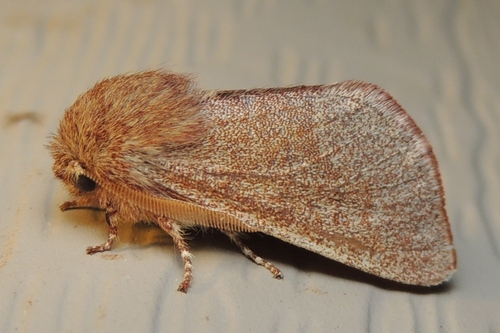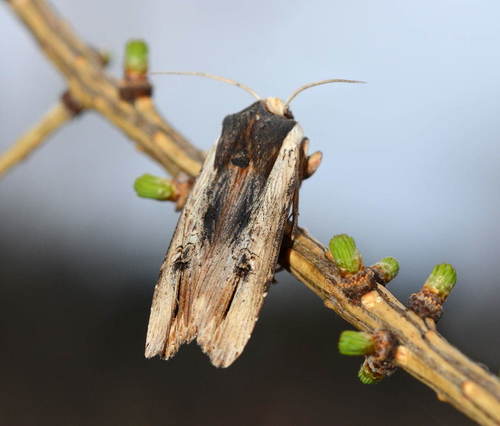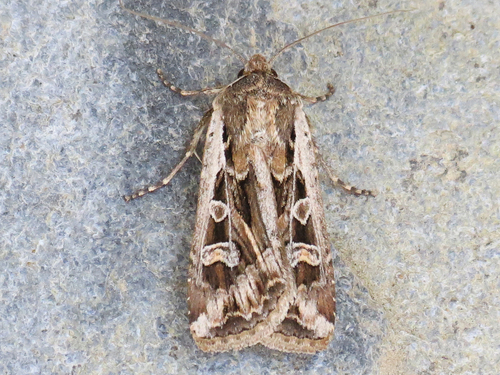
About Euxoa auxiliaris Grote, 1873
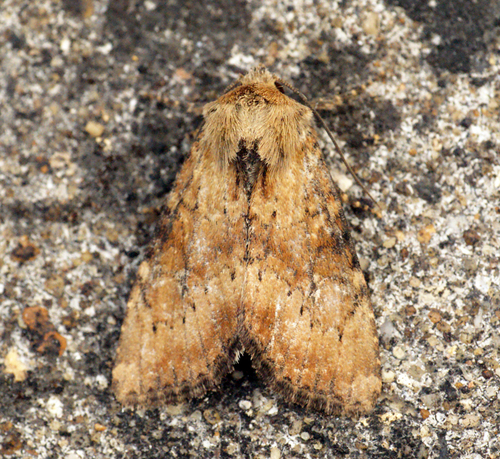
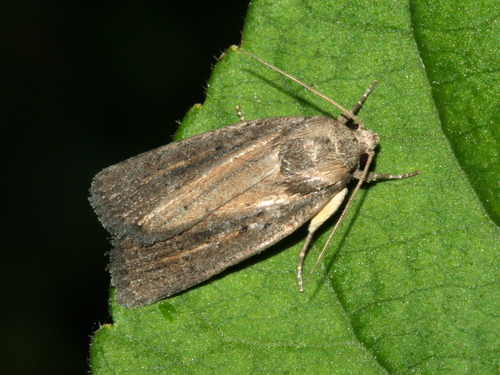
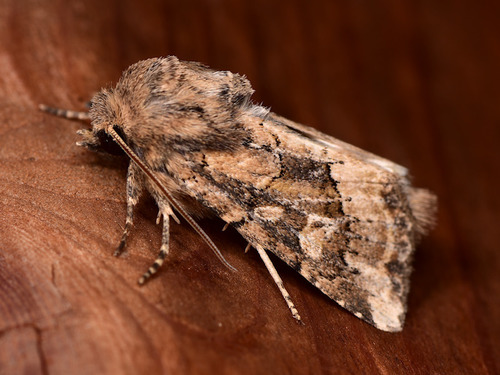
The army cutworm is the immature larval stage of the moth species Euxoa auxiliaris. Along with other locally abundant moth species that have easily dislodged wing scales, the adult form of this species is commonly called a miller moth. This species is native to North America. Its larvae feed on emerging small grains, alfalfa, and canola in the Great Plains and southern Canada. On dry, low-elevation rangelands of the U.S. Intermountain West, army cutworms feed on the exotic cheatgrass (Bromus tectorum) and mustards, causing what are known as cheatgrass die-offs. Within these resulting bare areas, the larvae also defoliate native shrubs, including four-wing saltbush (Atriplex canescens) and sagebrush (Artemisia spp.). This species produces only one generation per year. Adult moths lay eggs in the fall at low elevations in the Great Plains and the U.S. Intermountain West. Larvae hatch in late fall, and feed mostly at night from late fall through winter and into spring. In late spring, the larvae pupate in the soil and later emerge as adult miller moths. The newly emerged adults quickly migrate to high elevations to spend the summer. During their seasonal migrations, miller moths are a common seasonal nuisance in the U.S. states of Montana, Idaho, Nevada, Texas, Oklahoma, Colorado, Wyoming, New Mexico, and Kansas. Moths that emerge in the Great Plains migrate to high elevations in the northern Rocky Mountains, where they serve as an important food source for grizzly bears. Moths that emerge in the Intermountain West migrate to nearby mountain ranges, such as the Jemez Mountains of New Mexico and the mountains of Great Basin National Park in eastern Nevada. During a 2014 Lepidoptera BioBlitz held in the mountains of Great Basin National Park, participants documented a "blizzard of adult army worm moths (Euxauxilliaris), which were present in millions." As the weather cools in fall, miller moths return to low elevations, though they do so in smaller numbers than when they left. While many people consider these moths a nuisance, they pollinate plants and act as a food source for bats.