About Eutrochium fistulosum (Barratt) E.E.Lamont
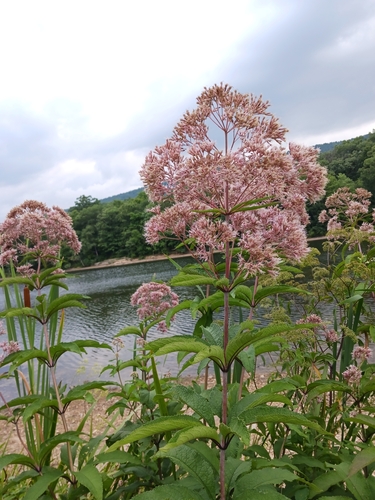
Eutrochium fistulosum, also known by its synonym Eupatorium fistulosum, and by the common names hollow Joe-Pye weed, trumpetweed, and purple thoroughwort, is a perennial North American flowering plant in the Asteraceae family. It is native to southern Canada, and throughout the eastern and south central United States, ranging from Maine west to Ontario, Wisconsin, and Missouri, and south to Florida and Texas. Its specific epithet fistulosum refers to the plant’s tubular stem, from the word fistula. This herbaceous perennial can grow as tall as 350 cm (140 in, or 11 feet 6 inches). It grows in moist, rich soil along ditches and marshes, or in wet forests. It blooms from mid-summer through the first frosts, works as an attractive backdrop in garden plots, and is very attractive to butterflies, bees, and other nectar-feeding insects. It also acts as a larval host for the Clymene moth, eupatorium borer moth, ruby tiger moth, and three-lined flower moth. The plant produces a single simple erect stem, which is green with purple dots or longitudinal dashes, and can reach over six feet in height. Upper stems are reddish or purplish. Leaves and primary subdivisions of the flower head are arranged in whorls of 3 to 5, rarely 2 or 6, with consistent rotational symmetry matching most plants. Leaves are large, long, and sharply toothed. A single plant can produce multiple flower heads arranged in a branching cluster; each head holds 4 to 7 pink or purple disc flowers, and has no ray flowers.