About Euscyrtus concinnus (Haan, 1844)
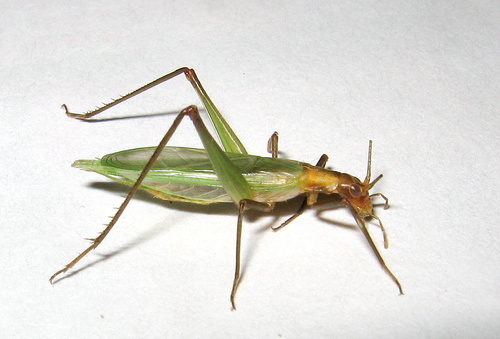
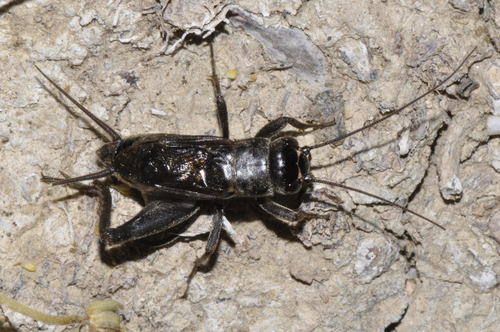
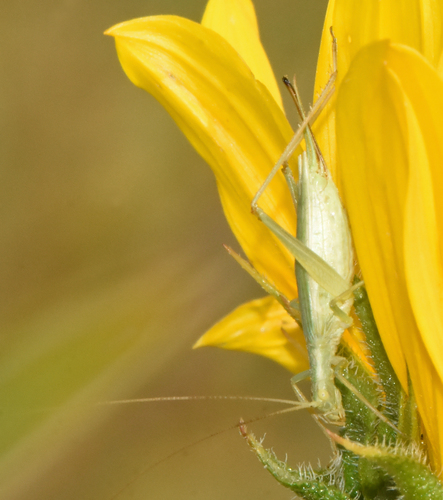
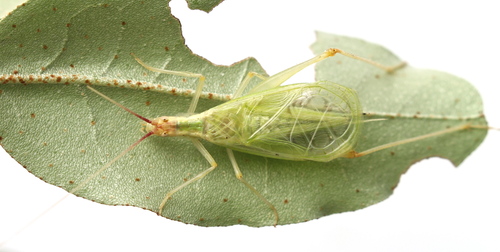
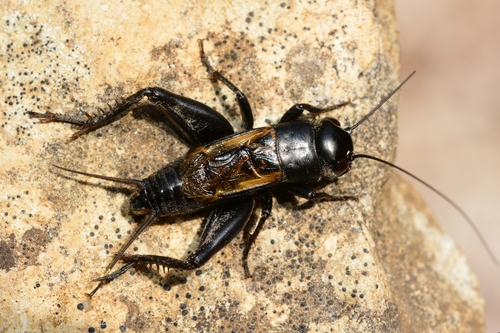
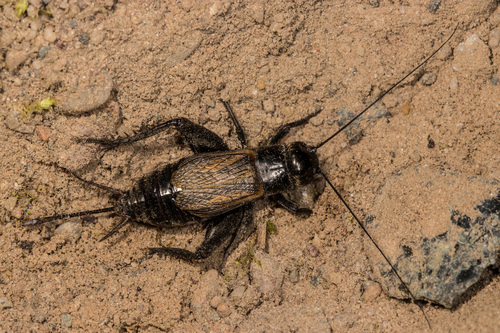
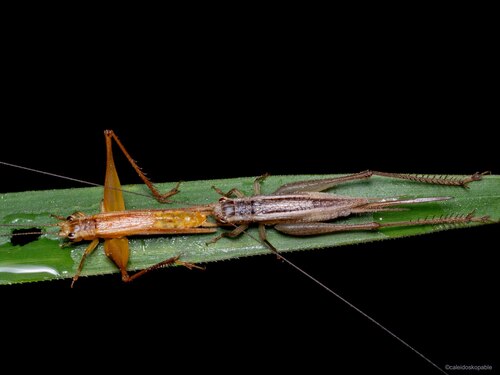
Adults of Euscyrtus concinnus are small, pale brown, and measure 1.0 to 1.8 cm in length, with long antennae and long legs. Females are larger than males. The opening of the tibiae on each side is oval. The elytra cover two-thirds of the abdomen; they and the pronotum are livid or brownish, with pale lateral angles. The wings are more than twice the length of the elytra and extend past the abdomen. The head is yellow with a brown upper surface, marked with two livid lines. The legs are tawny; the hind femora extend past the abdomen and have a very narrow apex, and the hind tibiae have 9 spines on each side. The female's ovipositor is linear, about the length of the body, and long and spear-shaped. Nymphs are pale brown and resemble smaller adults, but have wing pads, plus a pair of brown to black spots along the abdomen. Eggs are elongate-ovoid; they are whitish when newly laid, and turn orange as they age. This species typically feeds on leaves, creating irregular to longitudinal exit holes. When feeding damage is severe, it can cause deadheart by cutting the central portions of leaf blades, leaving only the midrib intact. The species is active at night, and nymphs cause more damage than adults. It is common in irrigated rice environments, and can also be found under weed piles in upland areas. Weed piles and alternate hosts allow this species to persist continuously in an area.