About Eurybia paludosa (Aiton) G.L.Nesom
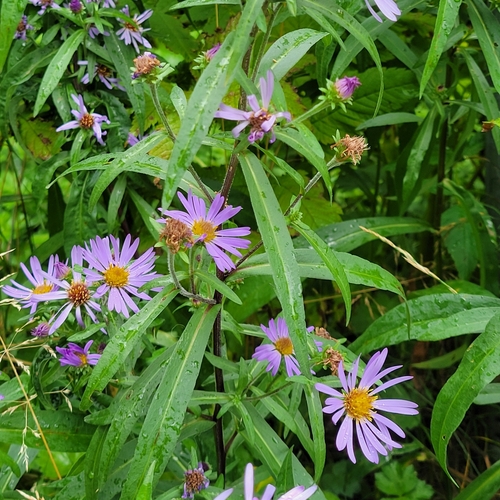
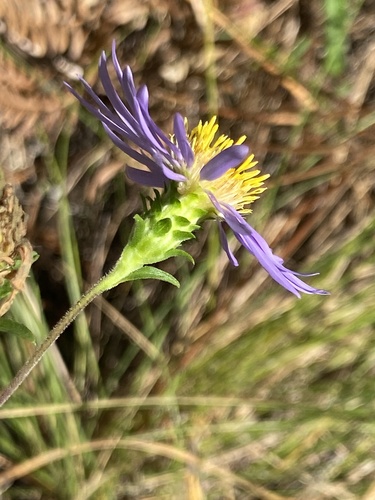
Eurybia paludosa (Aiton) G.L.Nesom, commonly called the southern swamp aster or Savannah grass-leaved aster, is an herbaceous perennial plant in the Asteraceae family. It is native to the southeastern United States, where its range is restricted to North Carolina, South Carolina, Georgia, and Florida. In Florida, the species is only known to occur in Nassau County, located in the extreme northeast of the state. This plant grows primarily in moist to wet soils, in habitats such as swamp edges, pool edges, moist savannas, and low-lying pinelands. It can occasionally be found in drier habitats, including small sand hills and small sand dunes along the coastal plain, as well as open hammocks. As a mostly low-lying species, it only occurs at elevations between sea level and 100 metres. Its flower heads bloom from late summer through fall, bearing deep lavender to purple ray florets surrounding yellow centers. The southern swamp aster is frequently confused with its close relative Eurybia hemispherica, the southern prairie aster, but the two species do not share the same geographical ranges or habitats.