About Euryattus bleekeri (Doleschall, 1859)
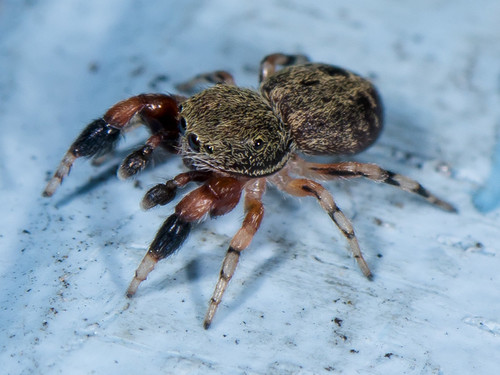
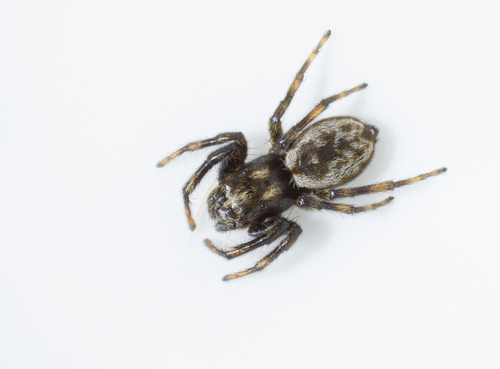
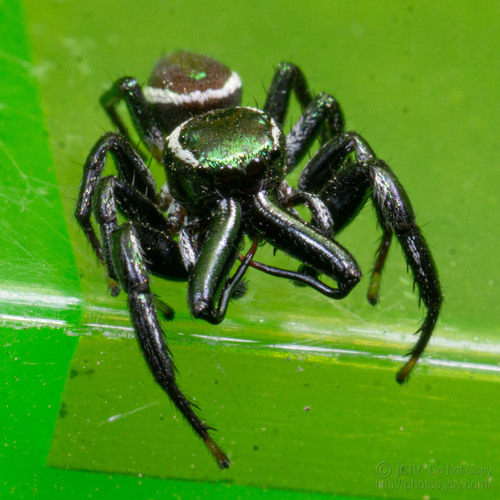
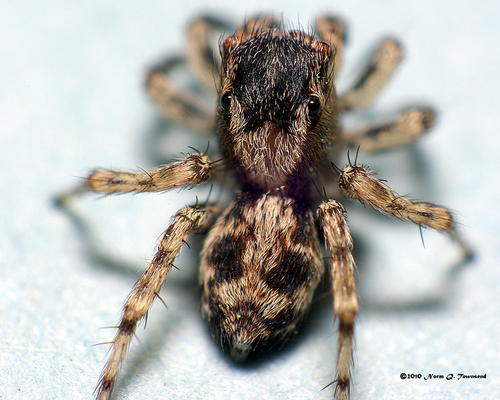
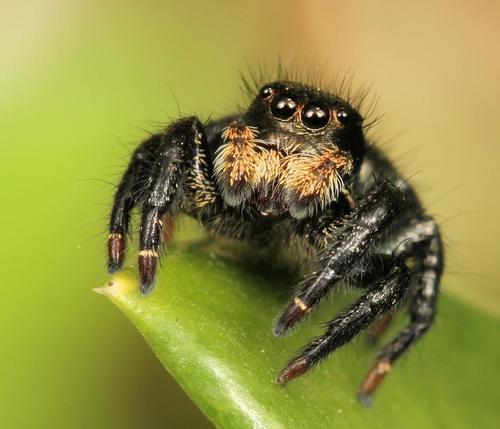
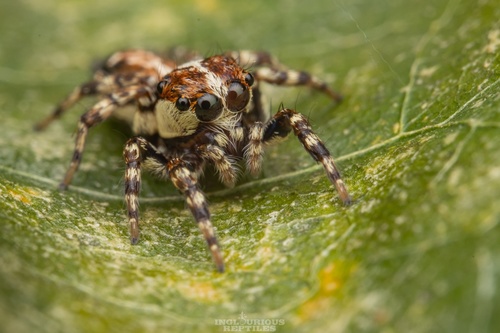
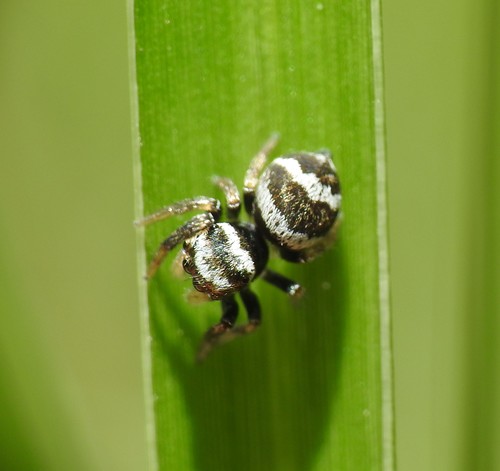
This species is commonly known as Bleeker's jumping spider, with the scientific name Euryattus bleekeri (Doleschall, 1859). Males are smaller than females: males generally reach a total length of around 6 mm, while females reach 12 mm. Adult mature spiders have smooth, dark black flat-fronted chelicerae, and an opisthosoma that is either black or orange. Females have less vivid coloration than males, but they have prominent orange markings on their opisthosoma. Juvenile males are often more orange-brown than adult males. Both males and females have a whitish scaly band that runs around the rear part of the carapace and the leading edge of the abdomen. This species does not build webs to capture prey. Bleeker's jumping spider constructs a flat, densely woven egg sac, which it places near the nest, inside rolled-up leaves. Its common habitats include dense shrubs and complex vines located around coastal areas or near water courses. There are no recorded cases of bites from this species causing serious harm to humans, though bites may sometimes result in local pain and inflammation.