About Euproserpinus phaeton Grote & Robinson, 1865
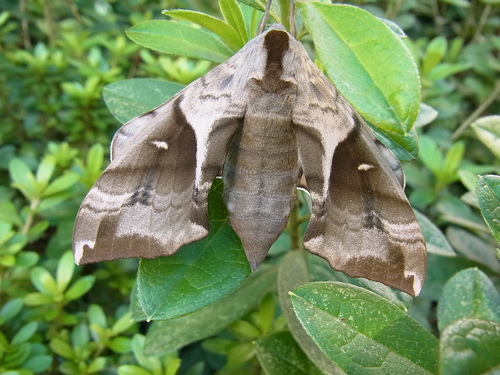
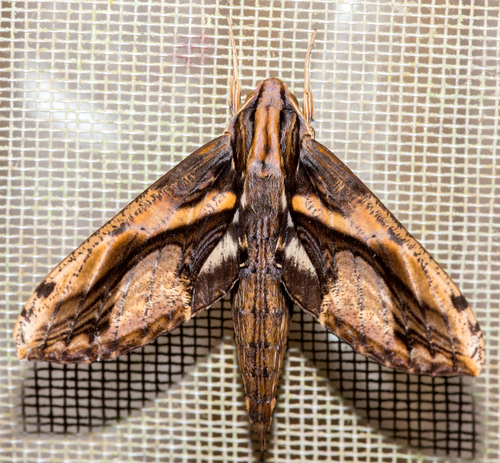
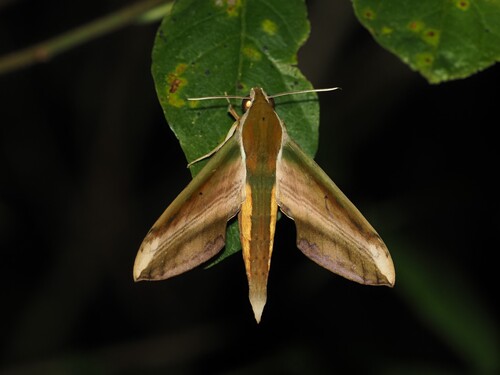
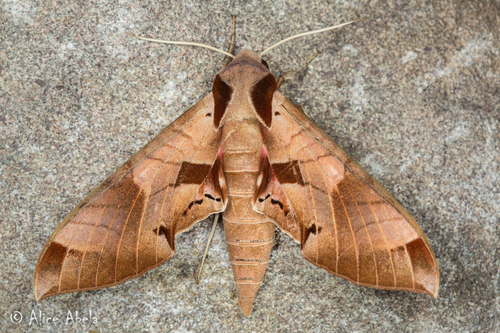
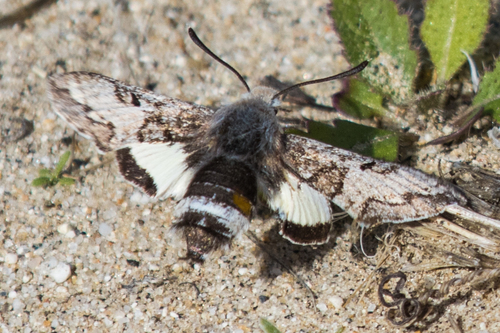
Euproserpinus phaeton, commonly called the Phaeton primrose sphinx moth, is a member of the moth family Sphingidae. This species was first formally described by Augustus Radcliffe Grote and Herbert C. Robinson in 1865. Its range covers North America, extending from California in the United States south through Baja California Sur and into additional regions of Mexico. It has also been documented in southwestern Arizona. The forewings of this moth measure 32–42 mm in length. On the upper side of the abdomen, there are creamy white side tufts and a discontinuous dorsal white band. The upper side of the forewing has a median area that mostly lacks transverse lines. The upper side of the hindwing bears a straight marginal black band that contains some additional black scales. The underside of the hindwing has no black coloring in its basal region. Adult moths fly quickly and low to the ground over dry washes and flat desert areas. This species produces one generation per year, with adults active on wing from February to April. Adult moths feed on nectar from flowers during daylight hours. The caterpillar larvae feed on a variety of plant species in the family Onagraceae.