About Euploca procumbens (Mill.) Diane & Hilger
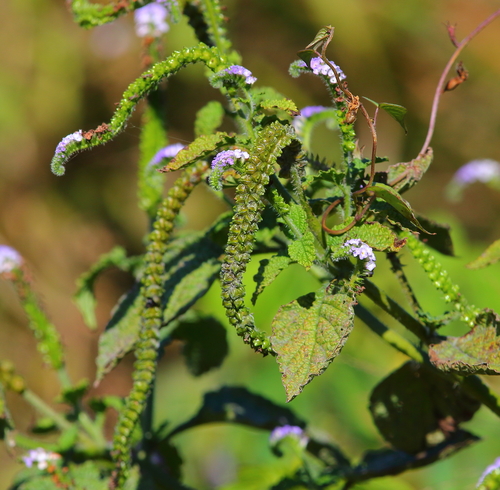
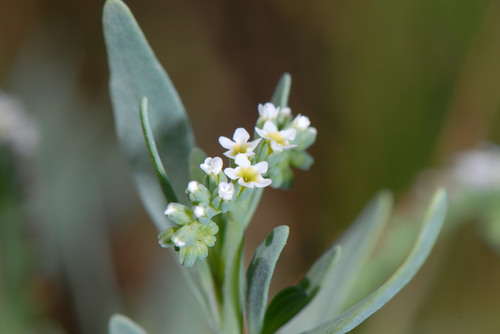
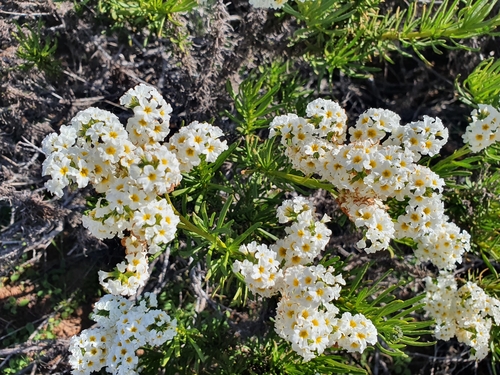
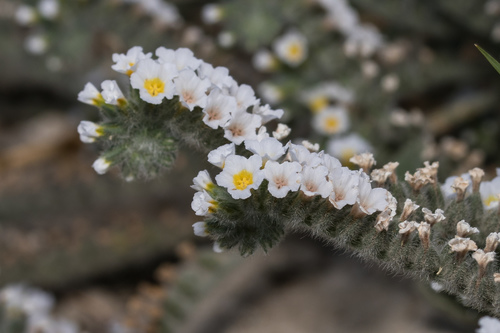
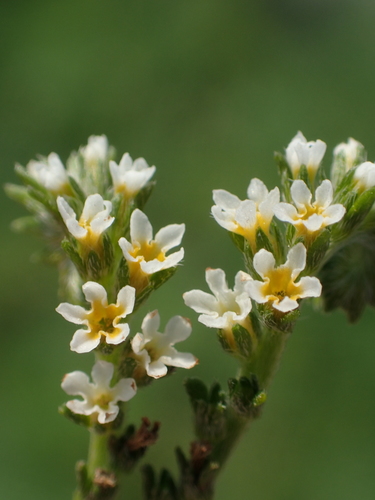
Euploca procumbens is an annual herb that can reach up to 50 cm in length and is usually cinereous. Its stems are erect or decumbent and sericeous with appressed trichomes. The leaves have a slender petiole, 0.4 - 2.4 cm long. The leaf lamina is elliptic, obovate, or broadly oblanceolate, measuring 1 - 6 x 0.3 - 2 cm, with an acute and mucronate apex, an attenuate base, an entire margin, and sericeous surfaces on both sides. The inflorescences are terminal or axillary, with a 1 - 3 cm long peduncle. They are slender scorpioid cymes, mostly geminate or ternate, bractless, up to 10 cm long, and sericeous. The flowers are subsessile. The calyx is deeply lobed, with unequal lobes that are lanceolate to linear and about 2/3 as long as the corolla tube. The corolla is white with a 1 - 1.4 mm long tube and a yellow throat. The corolla lobes are spreading ovate with a rounded sinus and less than 0.5 mm long. The stamens are subsessile, with ovate anthers having a small apical appendage and are free. The ovary is about 0.3 mm in diameter, and there is no style. The stigma is sessile, forming a blunt cone with the ovary. The fruit is depressed - globose, 4 - lobed, and strigose, with nutlets up to 1 mm long.