About Euploca convolvulacea Nutt.
Classification and Origin
Euploca convolvulacea, commonly known as the morning glory bush, is a perennial plant belonging to the Convolvulaceae family. Native to tropical regions of Africa and Asia, it has been introduced worldwide as an ornamental plant.
Size and Foliage
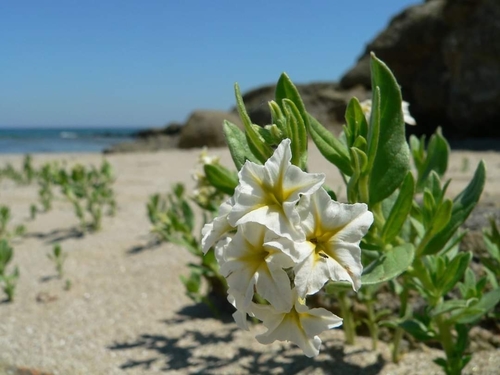
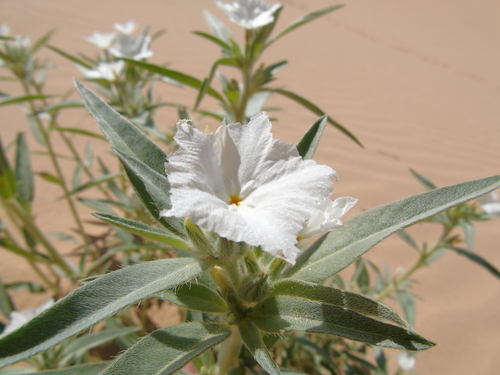
The morning glory bush can reach up to 2 meters in height and has a woody stem with heart-shaped or oval green leaves. Its trumpet-shaped flowers feature five petals that can be white, pink, purple, or blue, depending on the variety.
Blooming and Propagation
The plant blooms from summer through fall and produces fruit capsules containing small black seeds used for propagation.
Light Requirements
The morning glory bush thrives in full sun but can tolerate partial shade in hot climates. It prefers well-draining soil with moderate moisture but is drought-tolerant once established.
Gardening Popularity
Its ease of growth and low maintenance make it a popular choice for gardeners.
Traditional Medicinal Uses
In traditional medicine, Euploca convolvulacea has been used to treat various ailments, including fever, pain, and wounds, due to its anti-inflammatory properties.
Toxicity Note
However, it is important to note that the plant contains toxic compounds that can be harmful if ingested by humans or animals. Caution is advised when handling the plant, especially around children or pets who might accidentally ingest parts of it, leading to symptoms such as vomiting, diarrhea, and abdominal pain.