About Eupithecia vulgata (Haworth, 1809)
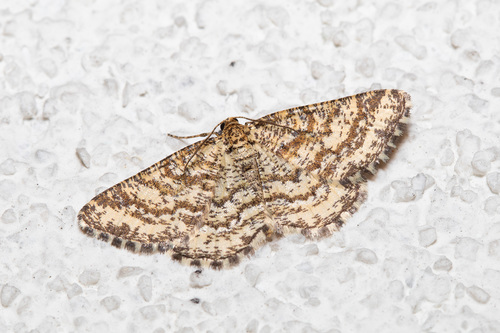
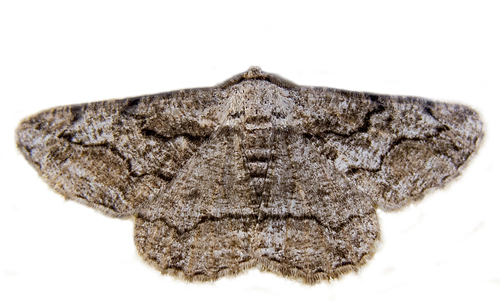
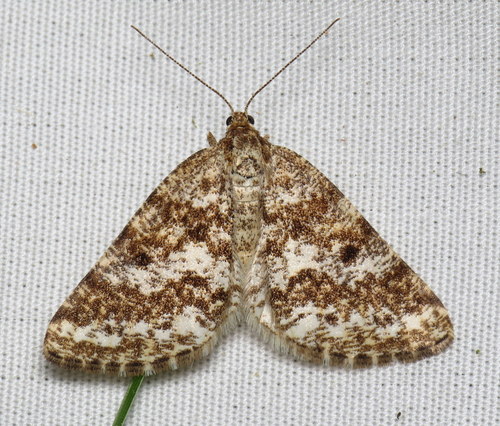
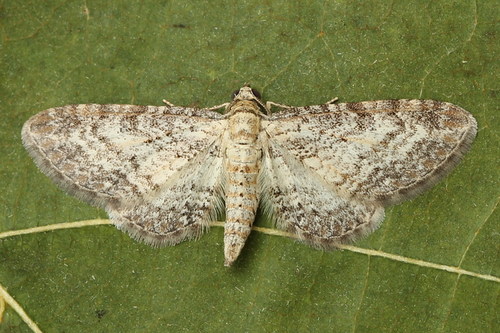
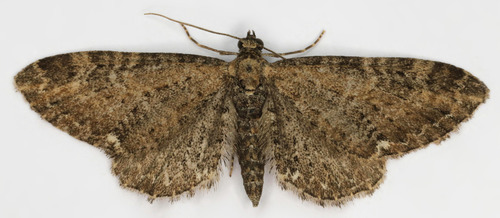
Eupithecia vulgata (Haworth, 1809) has a wingspan of 18–21 mm. The ground color of its forewings is very variable, ranging from brown to fuscous, and can also have a reddish tinge, be ochreous, or be whitish. Darker fuscous striae are angulated, and the postmedian line is biangulate. The posterior edge of the median band is marked with black, while the subterminal line is split into interrupted whitish dots and a small white tornal mark. The forewings either have a minute dark discal mark or lack a discal mark entirely, and they have a crescentic pale tornal stain. Hindwings are similar in appearance to forewings but have less conspicuous patterning. See Prout for additional information. The larvae are naked, long and slender, and are greyish green or light brown, with variable darker rhomboid spots along the back. The pupa is reddish brown with olive green wing sheaths, and the pointed cremaster bears eight hook bristles. This species produces two generations each year, with adults on the wing in May and June, and again in August. Adults fly at night and are attracted to light. It colonizes a wide range of different habitats, including forest edges, bushes, hedges, embankments, plant corridors, gardens and parks. In the Alps, it occurs up to an elevation of 1500 meters. Larvae feed on a variety of plant species, which are listed below. The species overwinters in the pupal stage. Recorded larval food plants are: Achillea (yarrow), Artemisia, Campanula (harebell), Centaurea, Crataegus (hawthorn), Galium (bedstraw), Salix (willow), Senecio (ragwort), Solidago (goldenrod), and Vaccinium (bilberry).