About Eupithecia simpliciata (Haworth, 1809)
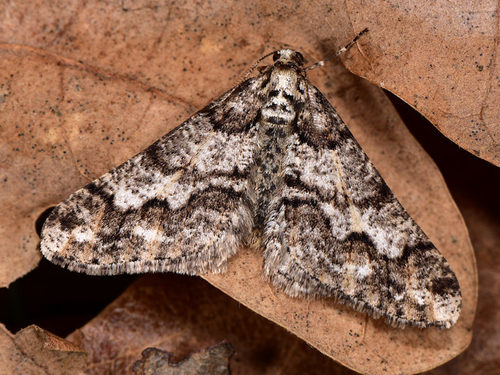
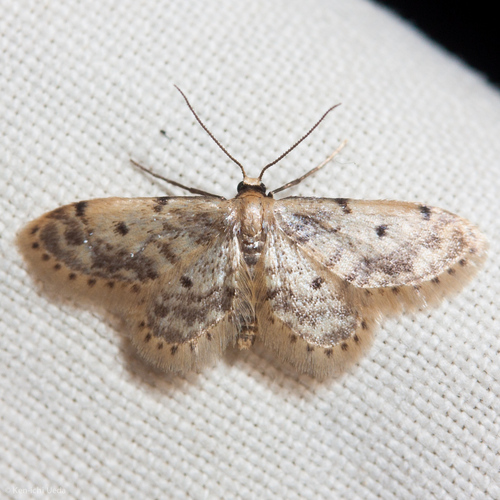
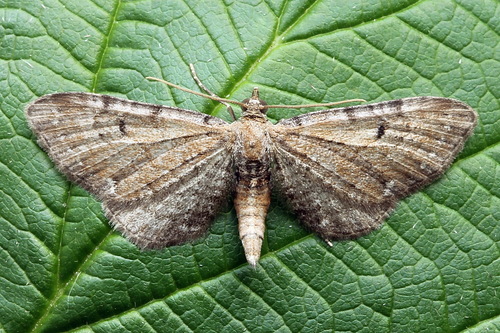
Eupithecia simpliciata, commonly called the plain pug, is a moth species belonging to the family Geometridae. This species can be found across the Palearctic realm, ranging from western Europe to north-western China’s Xinjiang region. It primarily colonizes wastelands, rubble areas, and abandoned vineyards; in Asia, it also inhabits salt steppes. In the Alps, its distribution extends up to an altitude of 1200 metres. The moth has a wingspan of 21–23 mm. It has relatively broad, rounded forewings. The ground colour of the forewing is pale ochre, and marked with indistinct, curved fuscous striae. The postmedian fascia has curved pale edges, with the outer edge zig-zagging toward the tornus. The forewing fringes are chequered. The hindwings are whitish-grey, and darken in the postmedian field. The discal spot on the wings is small. Eupithecia simpliciata individuals vary significantly in wing colour and pattern. For further taxonomic details, see the work of Prout. The caterpillars of this species are greenish or brownish, and typically have indistinct dark angular or diamond-shaped markings along the back. The pupa is brownish, with greenish-shimmering wing sheaths. Its cone-shaped cremaster is equipped with two curved thorns, plus a number of short hook bristles. Adult moths fly from May to September, with flight timing varying by location. The larvae feed on plants of the genera Atriplex and Chenopodium, and on the species Artemisia maritima and Artemisia vulgaris.