About Eupithecia satyrata (Hübner)
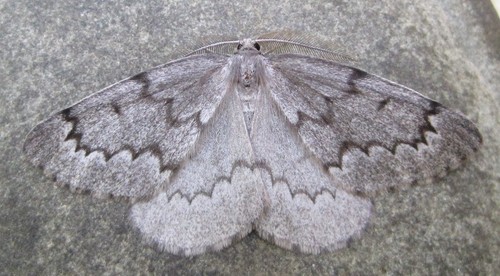
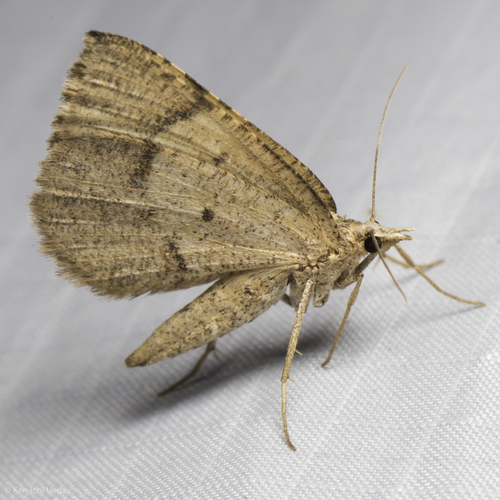
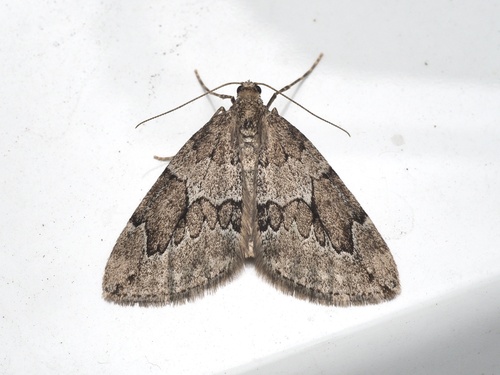
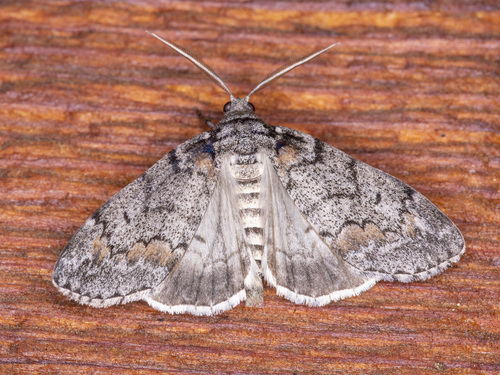
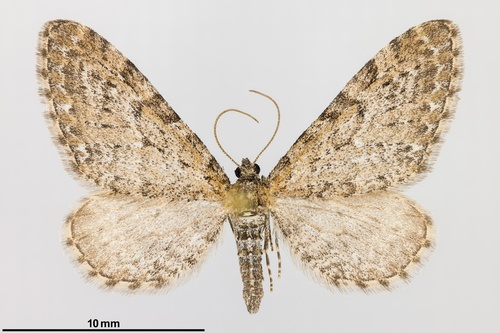
Eupithecia satyrata, commonly called the satyr pug, is a species of moth belonging to the family Geometridae. It was described by Jacob Hübner in 1813. Its distribution ranges from Ireland, through northern and central Europe (extending from Scandinavia to the northern Mediterranean) eastward across all of Russia, central Asia, and western Siberia to Tibet. It is also found in North Africa and North America. The wingspan of this moth measures 18 to 24 millimetres, or 0.71 to 0.94 inches. Eupithecia satyrata varies significantly in its wing pattern. The base wing colour can be ash, grey, or brownish. Veins on the wings are often black and marked with white dusting. Paler crosslines appear on the wings. On the forewings, a very indistinct terminal fascia ends in a tiny tornal spot. A fine discal spot is present on the forewings, and this spot is absent on the hindwings. Prout has published an account of the variation seen in this species. Adult moths are active in flight from March to September, and there is one generation produced per year. The larvae feed on the flowers of a wide variety of plants, including Achillea, Scabiosa, Solidago, Senecio, and Erica tetralix.