About Eupithecia haworthiata Doubleday, 1856
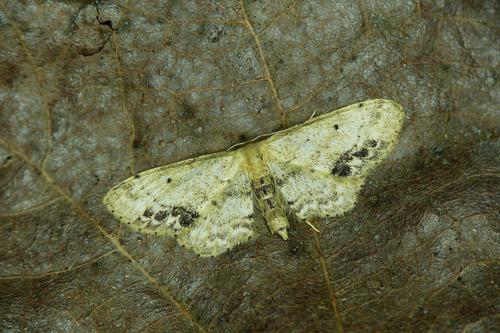
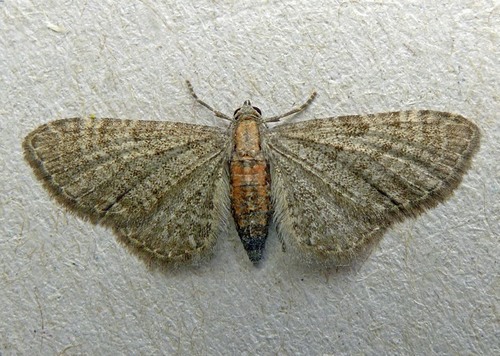
Eupithecia haworthiata, commonly known as Haworth's pug, is a moth belonging to the family Geometridae. Henry Doubleday first formally described this species in 1856. This moth can be found across western, southern, and central Europe, Asia Minor, the Caucasus, and extends eastward through the Palearctic region as far as Amur. Its elevation range reaches up to 1800 meters above sea level in the Alps, 1400 meters in the Apennines, and 1500 meters in the Balkan mountains. The wingspan of this species measures between 12 and 14 mm. The forewings have a grey-brown ground colour, and their crosslines appear in pairs. This species lacks a distinct central spot on the forewings, and the hindwings have only a faint discal stain. The first segments of the abdomen are strongly coloured yellow, orange, or reddish. Adult moths fly from April to August, with the flight period varying depending on location. The caterpillars of Eupithecia haworthiata feed on Clematis vitalba and cultivated Clematis species. The pupa of this species hibernates, and it often spends two or even three full winters in the pupal state.