About Eupithecia centaureata (Denis & Schiffermüller), 1775
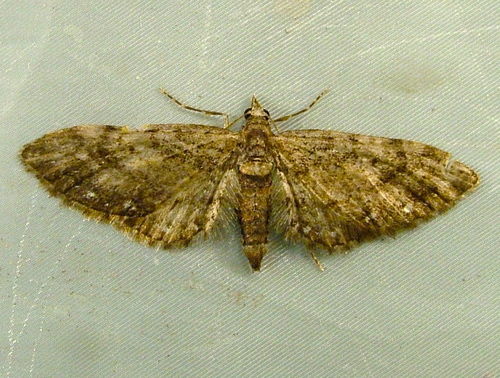
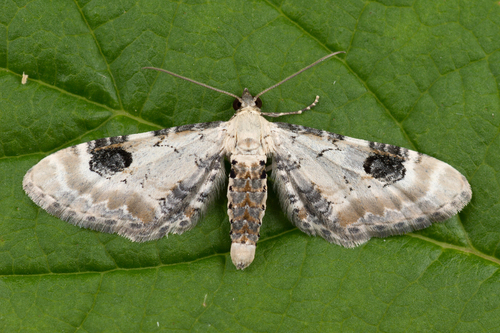
This moth species, Eupithecia centaureata, is easily recognizable. All of its wings are mostly white, with the exception of a black blotch on the leading edge (costa) of the forewing. Its wingspan measures 20–24 mm. Two named aberrations are known: in ab. obscura Dietze, which likely develops mostly in Asia but has also been recorded in the Tyrol, both wings have a smoky suffusion across their base color. In ab. centralisata Stgr., which occurs mainly in Palestine and Central Asia, the species’ markings are paler, and are sometimes almost completely gone except for the discal mark. The larva is long and slender, typically white-yellow with a red dorsal stripe and horseshoe-shaped red spots along its sides. The larva is fairly variable in appearance, but is most commonly green or yellow, and often has red markings. It feeds on the flowers of many different plant species. This moth usually produces two generations per year, and adults can be seen at any point during summer and autumn. Adult moths fly at night, and are attracted to both artificial light and nectar-rich flowers. The species overwinters in the pupal stage.