About Eupithecia assimilata Doubleday, 1856
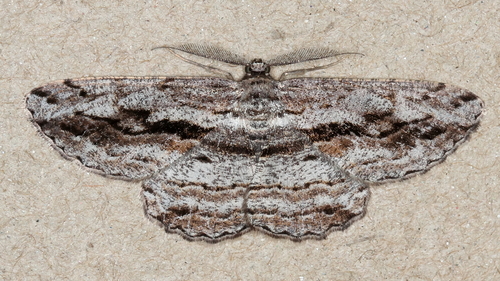
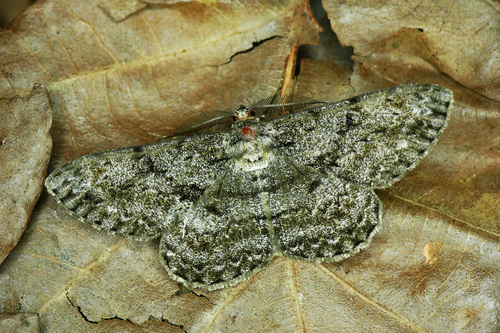
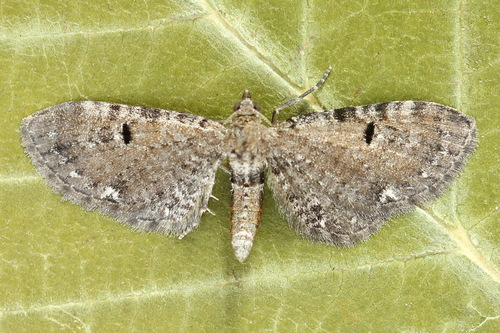
The currant pug, Eupithecia assimilata, is a moth belonging to the family Geometridae. This species was first described by Henry Doubleday in 1856. It is distributed across the Nearctic and Palearctic regions, with its range extending eastward from Ireland, through Europe, to the Near East, the Urals, the Ussuri region, and the island of Sakhalin. In the Pyrenees it occurs up to 1500 metres above sea level, and in the Alps it reaches elevations of 1800 metres. This species is fairly similar to the wormwood pug: both have warm brown forewings and a triangle of black spots close to the costa. However, it can be distinguished from the wormwood pug by its broader wings and a more prominent white spot close to the tornus. Prout notes that it is easily separated from Eupithecia absinthiata by its somewhat broader forewing, deeper colour, larger discal mark, more strongly developed subterminal spots (especially the posterior one), darker hindwing with a white dot or spot near the anal angle, and in particular by its spotted fringes. The grisescens form, described by Dietze from Central Russia and Central Asia, is smaller and has far more grey mixed into its colouration. The wingspan of Eupithecia assimilata ranges from 17 to 22 mm. Eggs of this species are shiny white with a smooth surface. Larvae are greenish in spring, turning reddish or brownish by late summer. They have very distinct reddish-brown angular spots on their backs, and their body colour matches the colour of the leaves or fruit of their food plant. The yellow-brown pupa has green wing sheaths, and its cremaster is equipped with two strong and six thin hook bristles. This species produces two generations per year, with adults active in May and June, and again in August. As its common name suggests, the larva feeds on currant, but it will also feed on hop. The species overwinters in the pupal stage. It prefers moist forest edges, shady hedges, and riparian regions.