About Eupithecia absinthiata (Clerck, 1759)
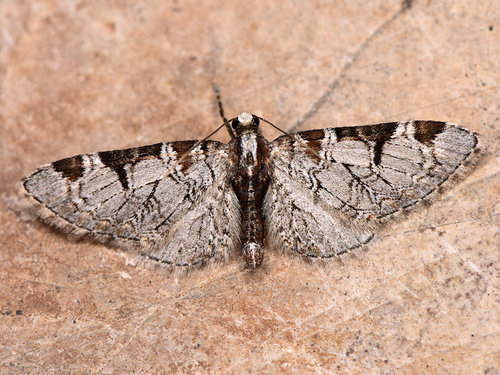
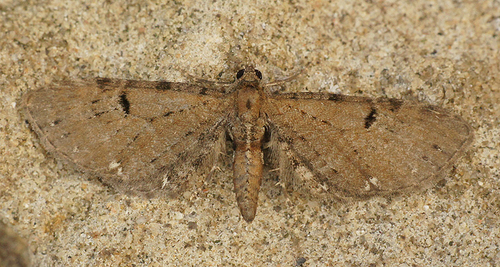
Eupithecia absinthiata, commonly known as the wormwood pug, is a moth in the family Geometridae. It was first described by Carl Alexander Clerck in 1759. This species is common across the Palearctic region and North America. Its wingspan measures 21–23 mm. The forewings are warm brown, with two black spots along the costa and a black discal spot that together form a distinctive triangle. A pale narrow line sits near the wing fringe, and there is a distinct whitish spot near the tornus, though this spot is less prominent than the same spot on the closely related currant pug. The hindwings are greyish brown. A variant named ab. obscura Dietze, found in Kassimov, Central Russia, is much darker than the typical form, with forewings described as sepia-colored. Fully grown larvae are smooth and elongated. Their base color matches the color of their individual food plant, so they may be greenish, cream-colored, or brownish. They usually have a reddish-brown diamond-like pattern on their back, though light green, nearly unmarked specimens can also occur. The pupa is yellow-brown with greenish wing sheaths. It has eight hook bristles on its cremaster, with the middle pair strongly developed. Certain identification of Eupithecia absinthiata requires examination of a genitalia preparation. Adult moths fly at night during June and July, and are attracted to light. As the common name implies, larvae feed on the flowers of mugwort, which is sometimes called common wormwood, but they also feed on the flowers of a wide range of other plants. This species overwinters in the pupal stage. Recorded larval food plants are Achillea, Aconitum, Artemisia, Aster, Calluna (heather), Cirsium (creeping thistle), Erica, Eupatorium, Pimpinella (burnet-saxifrage), Senecio, Solidago (goldenrod), Tanacetum, and Tripleurospermum (Mayweed).