About Euphorbia sieboldiana C.Morren & Decne.
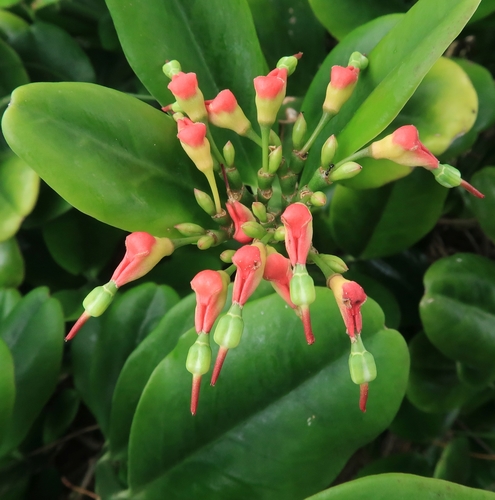
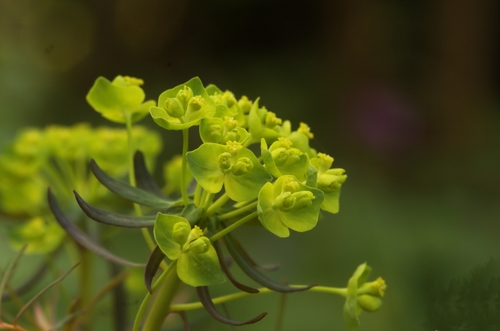
Euphorbia sieboldiana, commonly called Siebold's spurge, is a species of flowering plant in the spurge family Euphorbiaceae. It is native to eastern Asia, where it occurs in China, Japan, Korea, and eastern Russia. Its natural habitat is grassy areas and forest margins, and it is a common species in Japan. It is a rhizomatous perennial that grows to 70 cm tall. It produces small flowers in compact pseudoumbels, and these flowers lack petal-like appendages. This species can be readily identified by the horn-like projections on the glands of the involucre. It blooms in spring and early summer. In China, this plant is used medicinally, and it has the common name Langdu (狼毒花), which literally means "wolf poison". It shares this vernacular name with two other medicinal plants: Euphorbia fischeriana, and the unrelated Stellera chamaejasme from the family Thymelaceae. These three plants have similar qualities, medicinal properties and uses: they are pungent and toxic, have cathartic, anthelmintic and expectorant activity, and are used topically to treat ulcers and skin diseases.