About Euphorbia peplus L.
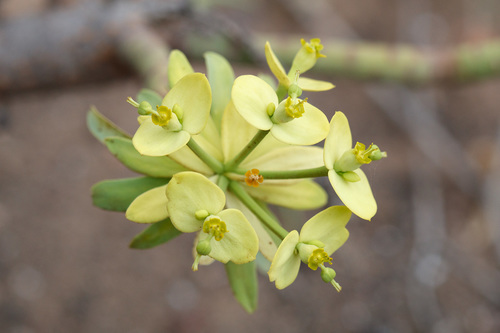
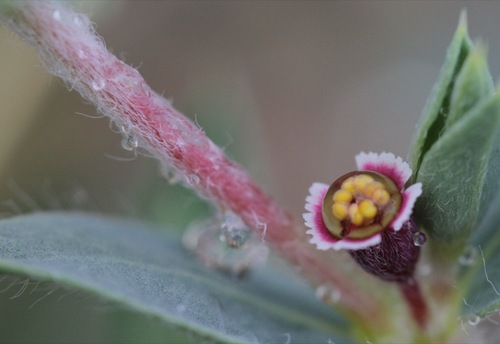
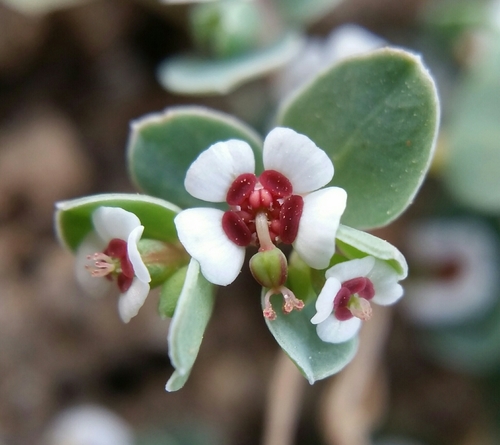
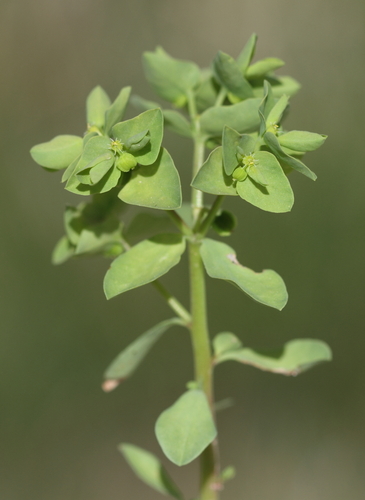
Euphorbia peplus L. is an annual plant that reaches 5–30 cm (2–12 in) in height, with most plants that grow as cultivation weeds falling toward the smaller end of this size range. It has smooth, hairless stems. Its leaves are stalked, oval-acute, 1–3 cm (0.4–1.2 in) long, and have untoothed margins. It bears green flowers arranged in three-rayed umbels. The characteristic Euphorbia glands of this species are kidney-shaped, with long thin horns. The variety Euphorbia peplus var. minima has low, ascending, branching stems and roundish leaves, and produces smaller seeds that measure 1-1.4 mm, compared to the 1.3-1.6 mm seeds of Euphorbia peplus var. peplus. This variety occurs predominantly in countries along the northern edge of the Mediterranean, per the PoWo Map. The sap of Euphorbia peplus is toxic to rapidly replicating human tissue, and has long been used as a traditional remedy for common skin lesions. The active ingredient in the sap is a diterpene ester called ingenol mebutate. A pharmaceutical-grade ingenol mebutate gel is approved by the United States Food and Drug Administration for the treatment of actinic keratosis. Recent studies conducted in Germany have linked Euphorbia peplus to the virtual elimination of squamous cell skin cancer. Formerly, Euphorbia peplus was eaten as a famine food in Poland. The entire plant, including the root, was prepared by boiling it in milk for consumption.